Best Time to Visit Huangshan Mountain
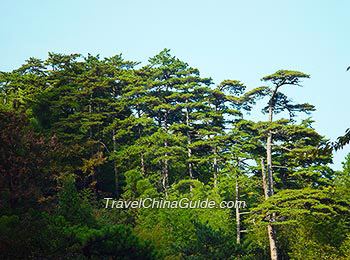 |
| Huangshan Mountain in Spring |
In general, it’s recommended to tour Huangshan scenic area from April to November within its peak season because of the comfortable climate. But actually, each of the four seasons on Huangshan Mountain (Yellow Mountain) has its respective beauty and distinct natural landscapes. Springtime brings fresh greenery and blossoming wildflowers, spectacular waterfalls and pretty sunglow in summer, colorful trees and mysterious sea of clouds in autumn and snow-white mountains and frosted pines in winter. This means it won’t disappoint you any time during the year when making a trip to the Huangshan Mountains. Remember to avoid Chinese holidays such as October 1-7 for a less crowded sightseeing environment.
Best Time to Visit in Spring - Mid-Mar. to May
In the spring, Mount Huangshan is like a maiden - all is new, fresh and tender, and full of wild flowers as well as sprouting plants. The sound of birdsong is also pleasant in this quietness while you are enchanted by a great show of vitality. However, you are not suggested to go there during May Day, when Huangshan usually receives more visitors than usual. For instance, there were almost 1.6 million sightseers within the 3-day vacation in May Day Holiday of 2018.
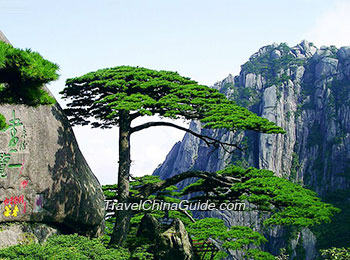 |
| Huangshan Mountain in Summer |
Best Time to Visit in Summer - Jun. to Sep.
Due to increasing rainfall, numerous streams and waterfalls compose an exciting and vigorous symphony for you to enjoy in summer. If you are lucky you will see a vivid rainbow flying over two peaks. Dawn in summer is the most splendid as the rising sun lights the sky while the peaks, the plants and the whole world take on a brilliant glow. Sunset is no less enchanting than sunrise. Between July and August, Huangshan is a paradise-like summer resort in which to escape high temperatures of southern China. However, thunderstorms are also frequent during this time period and the growing number of tourists will increase hotel expenses and waiting times in queues for cable cars or buying tickets. It would be advisable to tour Mount Huangshan in June and September.
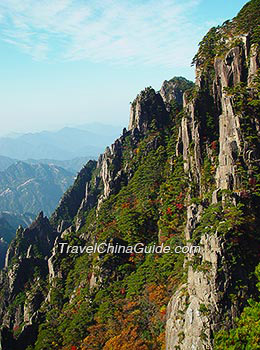
Best Time to Visit in Autumn - Sep. - Nov.
|
|
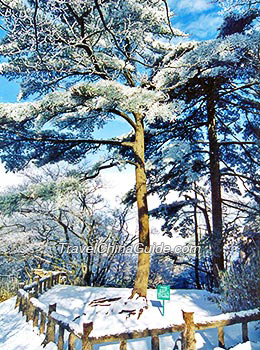
Best Time to Visit in Winter - Dec. to Mid Mar.
A poem has it that Huangshan Mountain is beautiful all year round but with the winter scenery being the best because of the spectacles of sparkling frosted trees, frequent Sea of Clouds and silver icy peaks in this crystal palace. Winter is also the most economical time for visiting as the prices for hotels and the entry fee are lowered by 15% to 40% compared to those of the peak season. However, Spring Festival is an exception during which the price is the same as normal seasons, and the tourists are more abundant.
Best Times and Locations to See Sunrise
Time:
Spring: 05:30-06:00
Summer: 04:40-05:10
Fall: 04:50-05:20
Winter: 05:30-06:00
Locations:
Dawn Pavilion, Refreshing Platform, Lion Peak, Rosy Clouds Peak, Bright Peak Summit, Jade Screen Peak, Lotus Blossom Peak and Heavenly Capital Peak
Best Times and Locations to See Sunglow
Before and after sunrise is the best time to see sunglow. As with viewing the sunrise, you should be in position early.
Best Times and Locations to See Seas of Clouds
From September to next May is the best season for cloud viewing, especially on a clear day after rainy or snowy weather. Seas of clouds are infrequent in summer. To best experience the beauty of seas of clouds, tourists should change their viewing locations points according to the height of clouds.
 Huangshan Mountain
 Best Time to Visit Four Wonders Scenic Areas Cable Cars Travel Tips Winter Tour Tips Huangshan Weather
 Reply
Reply 0
0 0ReplyReply00ReplyReply
Is there any bus to Taiping cable car from Tangkou and how much is the fare?
00ReplyReply00ReplyReply00Reply