Moat of the Forbidden City (Tongzihe)
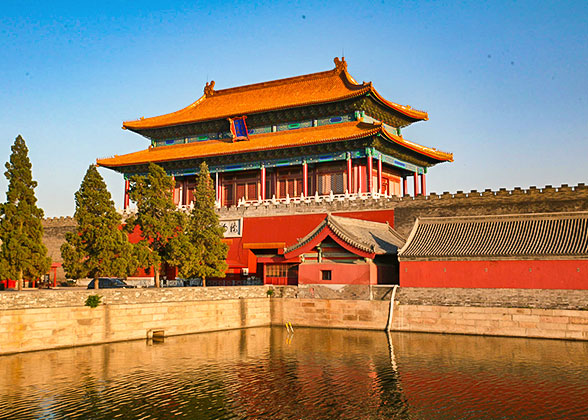 |
| Moat around imperial city |
A 600-Year-Old Moat Built in Two Time Periods
Tongzihe has a history of 600 years, initially built 1420 together with the Forbidden City. During the Ming Dynasty (1368-1644), the Tongzihe only surrounded the Forbidden City on the east, north and west sides, which were respectively called Donghuamen Tongzihe, Xuanwumen Tongzihe and Xihuamen Tongzihe.
Since it is a defensive moat, it should encircle the whole Forbidden City, instead of leaving the south side empty. In 1760 during the resign of Emperor Qianlong in Qing Dynasty (1644-1911), the emperor ordered the workers to build the south moat to the south of Meridian Gate (Wumen), named Wumen Tongzihe. At this point, the moat of the Forbidden City became what it is today.
In 1999, a project to clean the Forbidden City moat was carried out. Also, the revetment was renovated, and the river bottom was all paved with bricks.
River Way of the Moat of the Forbidden City
The water of Tongzihe originates from Yuquan Mountain in the west suburb of Beijing. According to the five elements theory of ancient China, west belongs to the metal/gold, so the moat is also called Golden Water River. Starting from Yuquan Mountain, it flows eastward into Jishuitan, then Beihai, and then into the moat to the northwest corner of the Forbidden City. After, it keeps flowing along the wall of the Forbidden City until reaching the southeast corner and ends in Changpu River.
One thing needs to be mentioned is that some of the water flows into the Forbidden City from the northwest corner of the palace wall and out from the southeast corner, which forms the Inner Golden Water River inside the royal palace. At this point of meaning, the moat is also called Outer Golden Water River.
What was the Forbidden City moat used for?
Defend the Forbidden City from Attack
Tongzihe served as the first defense line of the Forbidden City, preventing the enemy from crossing the river to attack the palace. The moat surrounds the Forbidden City, with a width of 52 meters and a depth of 4.1 meters, so it’s not easy to get over it.
Put out the Fire
Most of the buildings in the Forbidden City are made of wood, which catches fire easily. The moat can provide enough water for fire protection at a very short time.
Discharge Rain Water
The whole Forbidden City is high in the north and low in the south. The advantage of this design is that on heavy rainy day, the water in the palace can flow from high to low, then through the Inner Golden Water River into the moat and finally discharge out of the palace.
Best Sites to View the Moat of the Forbidden City
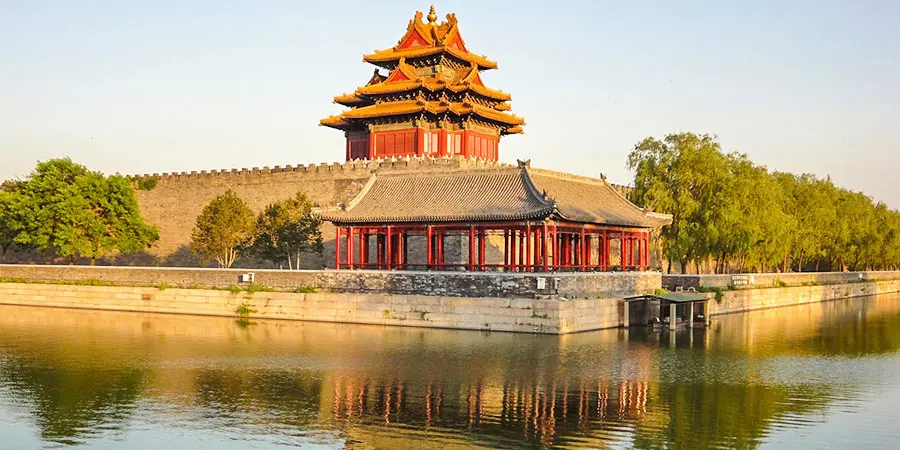 |
| Moat of Forbidden City |
 1. To the northeast and northwest of the Forbidden City, visitors can stand on the lawn and admire the moat reflecting the corner towers. They are also good sites for taking photos.
2. The passageway between the wall of Shenwumen - Wumen and Tongzihe. It takes about 15 minutes to finish it on foot. Planted with green trees and different flowers, you can have a leisurely walk along it while enjoying the rippling moat.
3. The Outer Golden Water River Bridge in front of Tian 'anmen Tower is also a good place to see the moat.
 Further Reading:
How to visit the Forbidden City
Amazing Drainage System of the Forbidden City
 Reply
Reply 0
0 0Reply00ReplyReply11ReplyReply21ReplyReply41Reply