National Centre for the Performing Arts (NCPA)
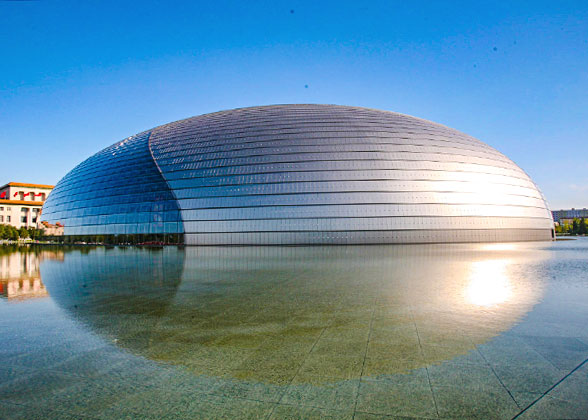 |
| The Oval Exterior |
Symphonies, dance shows, ballets, dramas, operas and other kinds of performances are frequently staged in the National Centre of the Performing Arts. If time is allowed, you can enjoy any shows that you like. The NCPA visiting tour includes art exhibitions, thematic activities, as well as facilities. You will both appreciate the magnificent architectural style and enjoy the profound art environment of thematic exhibitions here.
The Exterior - A Giant Oval Shell
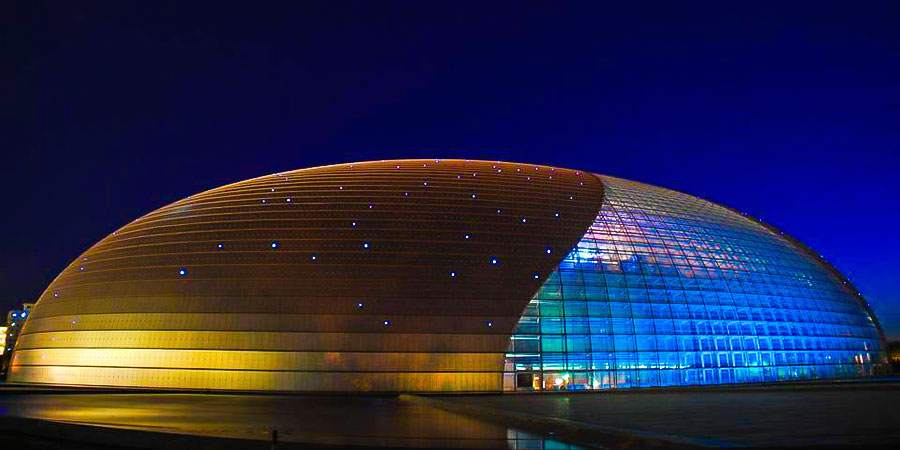
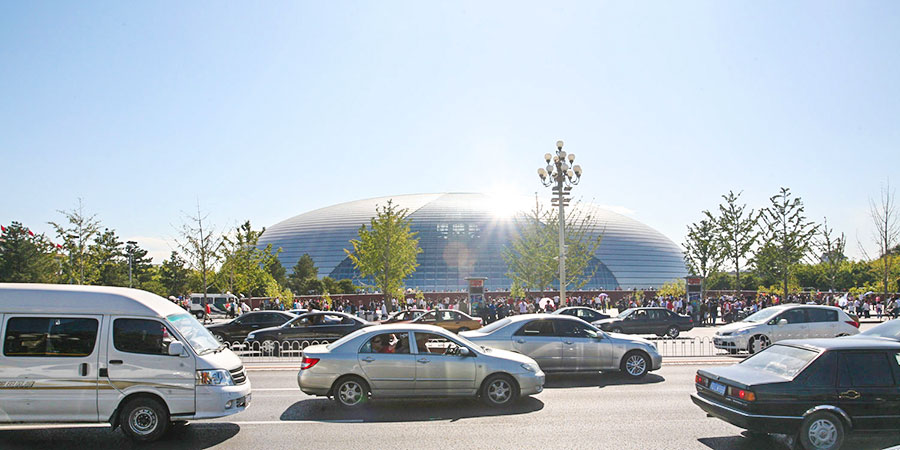
The exterior of the National Centre for the Performing Arts, like a steel-structured oval shell, is an ingenious material integration of over 18,000 titanium plates and over 1,000 sheets of ultra-white glass, which creates a vivid visual effect as if the curtain is drawn apart slowly before your eyes. With the weight of 6,457 tons and the longest axis of 696 feet (212 meters), the steel-structured oval shell is the largest dome in the world at present. Surrounding the centre is a crystal-like artificial lake. By using high technology, it will not ice in winter and the algae won't grow in it in summer either. The National Centre for the Performing Arts and its reflection in water add radiance and charm to each other. All the passages and entrances are built underwater. When you walk into the center, a layer of water is above your head, which will also give you a special felling. Around the lake is a greenbelt, which does not charge fees from visitors. People wander there to feel the valuable tranquility in a busy city.
Three Performance Venues
 Opera House:
The Opera House with golden color as its main hue is the most magnificent building inside the National Centre for the Performing Arts. Operas, dance dramas, ballets, and large-scale shows stage here. It has 2,091 seats; and the tickets for standing room are also available. The arc-shaped metal-net wall of the auditorium allows lights and shadows changing according to the progressing of the performance. The audience can easily immerse themselves in the artistic atmosphere. The seamless ballet stage is believed to be the largest one in China, whose surface is made of Oregon timber. The three-layer structure of the stage gives it good resilience and provides the best protect to the dancers' feet.
Concert Hall:By the east side of the Opera House sits the Concert hall where the large-scale symphonies and Chinese traditional music are performed. The silver white color makes it elegant and serene. Auditorium is around the stage, which makes it possible for the audience to enjoy performances from any angle. The ceiling of the hall rolling like waves is propitious to the diffusion of the sound. All the specialized designs realize the perfect integration between architectural and acoustic aesthetics. 1,859 seats are available here.
One thing cannot be missed that the pipe organ placed in the hall with 94 stops and an impressive array of 6,500 pipes is the largest one in Asia. It is the most valuable treasure in the Concert Hall.
Theater:The design of the theater has a distinct Chinese traditional style, where traditional Chinese operas, stage plays and national songs and dances are performed. 957 seats are set here, excluding the orchestra. Zhejiang's silk on the walls are flameproof, full of strong Chinese traditional taste. The advanced stage can not only satisfy the special needs of Chinese traditional opera's performance but also highlight the closeness between the audience and the performers.
Auditorium
How to Get To National Centre for the Performing Arts
 By Subway:
1. Take Subway Line 1 and get off at Tiananmen Xi Station. Get out from Exit C. There is an underground passage to the theater directly.
2. Take Subway Line 2 and get off at Hepingmen Station. Get out from Exit B1. Or get off at Qianmen Station and get out from Exit C.
 By Bus:
Take bus 1, 52 or Night Line 1 to West Tian'anmen. You can see the north gate after getting off.
Beijing Bus / Subway Search
| Visit Ticket | Sep. 1 - Apr. 30: CNY 30 for adults; May 1 - Aug. 31: CNY40 for adults; free for children under 3.9 feet (1.2m) |
| Opening Hours | 09:00-17:00, last entry at 16:30; closed on Monday except public holidays. |
| Show Ticket Booking | At the ticket office near the north gate: 09:30-18:00 for days without performances; 9:30-19:30 for days with performances |
 Note: Children under 1.2 meters (3.9 feet) is not allowed to watch the shows in theatres, except for shows for children.
 Further Reading:
Beijing Night Tours – Top 8 Night Activities
 Nearby Attractions:
Zhongshan Park
Zhongnanhai
- Last updated on Dec. 07, 2023 by Kate Liu -
Questions & Answers on National Centre for the Performing Arts
Asked by Jaroslav from CZECH | May. 17, 2023 08:10 Reply
Reply
ReplyWhat are the the opening hours of the music shop? Same 09:00-17:00?
Answers (1)
Answered by Maria | May. 17, 2023 23:35 0
0 0Reply
00ReplyWhat do you mean by music shop? The site is open for sightseeing 9:00-17:00. However, it closes much later because the performances are always given at night.
Asked by Kumiko Lancet from UNITED STATES | Apr. 09, 2019 07:40Reply
ReplyWhat is the date for the opera Il trovatore? It says only October. I want to know the date.
Answers (1)
Answered by Ina from CANADA | Apr. 15, 2019 01:3000Reply
00ReplyI found some information on the Internet. But I am not sure. It says that the performance will be held from Oct. 23rd to 27th, 2019. You are suggested to recheck it before going there.
Asked by fe from INDONESIA | Mar. 26, 2018 02:54Reply
Replytake picture of National Centre for the Performing Arts
i just want to take picture from outdoor, is that possible ? is there entry ticket also ? and can i visit at night around 8pm, is the light of the building still on ?
Answers (1)
Answered by Eglise from FRANCE | Mar. 26, 2018 20:2300Reply
00ReplyYes, you can take the outdoor picture of it and no charge is needed!
I was told the light will be on when there is a show in night, so you can go there and check it out!
I was told the light will be on when there is a show in night, so you can go there and check it out!
Asked by Greg from GREECE | May. 22, 2017 02:54Reply
ReplyIt seems that the booking engine for NCPA Tickets is only in Chinese.
How can we book tickets in advance for a performance on August 12th?
Answers (1)
Answered by Marry from ITALY | May. 25, 2017 02:5100Reply
00ReplyYou can dial their booking line +86 10 6655 0000 to get the information. Besides, you can also ask your Chinese friend to help you book it online.
Asked by Batulzii from MONGOLIA | Jan. 21, 2017 21:30Reply
Reply Irish Dance Performance on Feb 2 in Beijing Performing Arts Center?
Is there will be Irish Dance Performance on Feb 2? I saw an ad in the newspaper China Daily 1/21-22, 2017? But I can't see this in 2017 NCPA Performance Schedule?
Thank you.
Thank you.
Answers (1)
Answered by Wyatt from CANADA | Jan. 25, 2017 01:0710Reply
10ReplyYes, you will see the Irish Dance Performance on Feb.2. The performing dates are from Jan.29 to Feb.2, 2017. You can find this information on the official website of NCPA. The website has English version. Just look through it.