Hall of Jade Ripples (Yulantang)
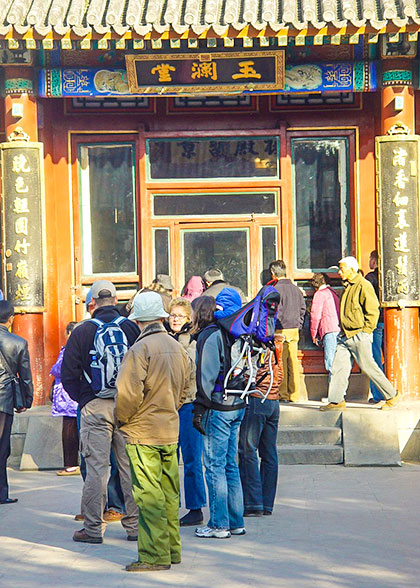 |
| Hall of Jade Ripples |
Hall of Jade Ripples is also notable for a historical event -after the failure of the Reform Movement in 1898, Emperor Guangxu, who advocated reform, was put under house arrest here by Empress Dowager Cixi. The Reform Movement, also known as the "Hundred Days Reform", was aimed at reforming the outdated feudal system and creating a new edict. However, because of sharp disagreements between Guangxu and Empress Dowager Cixi as well as their fellows, the movement only lastedfor 103 days. Emperor Guangxu was consigned to the Hall of Jade Ripples, and his six associate reformists were beheaded. In order to prevent him from escaping and accessing the outside world, brick walls were built in both annex halls so that both exits in the east and west were blocked. To the south, Cixi assigned eunuchs to watch himcontinuously. Although most of the walls have been dismantled now, a vestige of them can still be seen, as a witness of that part of Chinese history.
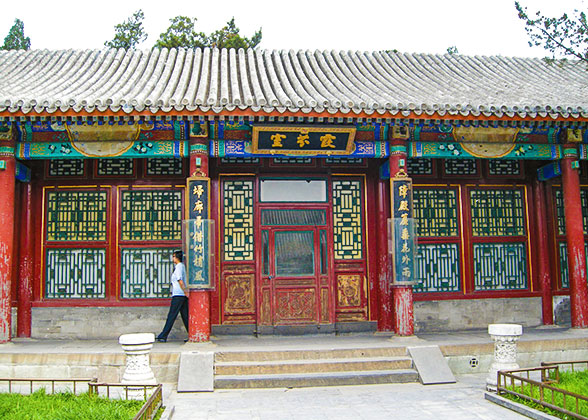 | 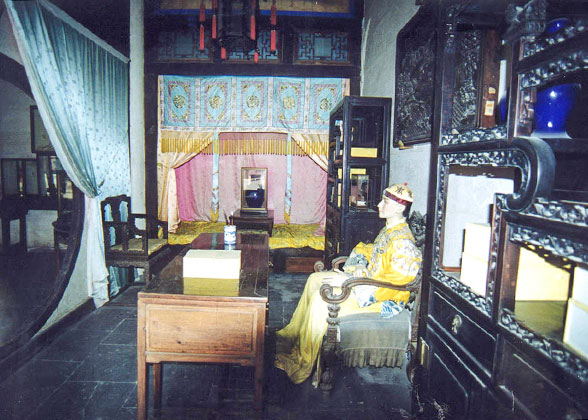 |
However, according to record, after the Reform Movement, Hall of Jade Ripples was mainly furnished with ordinary furniture, as only 105 pieces of furnature remained. Also, objects that were set out in the two annex halls were moved due to the walls built in 1898. After the foundation of the People’s Republic of China in 1949, all furnishings in the yard were restored, to combine characteristics of both Qianlong and Guangxu periods.
 Next: Yiyun House
 Related Link: Summer Palace Travel Tips
- Last updated on Dec. 01, 2023 by Kate Liu -
Questions & Answers on Hall of Jade Ripples
Asked by Mrs.Rompis from SOUTH KOREA | Jan. 07, 2009 01:28 Reply
Reply
ReplyMy husband and I are planning to travel to Beijing during the Chinese new year (lunar new year)on Jan 23-26, but we are afraid that most of tourist attractions will be closed. So, it that a good time to visit Beijing?
Answers (2)
Answered by Mr.Greg from USA | Jan. 07, 2009 17:01 1
1 0Reply
10ReplyNot a good idea... next month would be a good idea
Answered by Mr.Nie from U.S | Jan. 15, 2009 13:0900Reply
00ReplyEverywhere should be open during the Chinese New Year. On the very first day of Chinese New Year, go to Tiantan for the biggest celebration while other places might be closed for that one day.
Asked by Mr.van der Helm from THE NETHERLANDS | Dec. 28, 2008 13:54Reply
ReplyIn the beginning of March 2009 I'll be visiting Beijing.
What kind of weather can I expect ?
What kind of weather can I expect ?
Answers (2)
Answered by Ms.Huang from CHINA | Dec. 29, 2008 00:2600Reply
00ReplyThe highest temperature in early March is about 10-15 centidegree, so it is still cold. Generally spearking, it will be very dry and windy as well.
Answered by Ms.Jane from USA | Dec. 29, 2008 00:3610Reply
10ReplyI think it will have enough sunshine then, but warm sweaters are still needed. You'd better to focus on the weather forcast one week before your travel. Good luck!