Zhanyuan Garden
Among the five most famous gardens of Southern China, Zhanyuan Garden is the only well preserved Ming Dynasty (1368-1644) architectural complex in Nanjing. It is the oldest (over 600 years) among all the others in the city. Emperor Qianlong of the Qing Dynasty (1644-1911) once came here and gave it the name of Zhanyuan. After the establishment of the Taiping Heavenly Kingdom (1851-1868), known as Taiping Tianguo in Pinyin, it became the residence of the Taiping Rebellion leaders Yang Xiuqing, Xiao Youhe and Lai Hanying. With frequent wars, it lay deserted for many years until its restoration by the government in 1960.
The Zhanyuan Garden is divided into two parts. The east part is the museum where the cultural relics of Taiping Heavenly Kingdom are displayed. The Taiping Rebellion was a dynamic resistance against the government led by farmers. The farmers finally overcame the authorities and set up their own kingdom, namely the Kingdom of Heavenly Peace. The museum has collected over 1,600 cultural relics, including twenty cannons, the imperial seal and robe of the Heavenly King, and the flag and sword of the army.
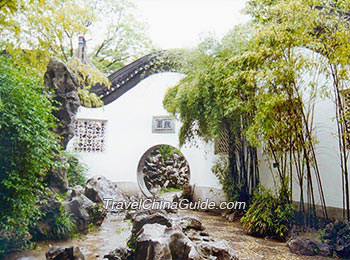
The west part is typical garden scenery consisting of exquisite pavilions, clear water pools, winding pathways and a variety of rockeries. Upon entering, you will see a large Taihu stone, a type of limestone found in the mountains around Taihu lake, named Xianren Feng standing under crab-apple trees. This is the most precious treasure of Zhanyuan Garden. It is said to be the stone relic of the Northern Song Dynasty (960-1127). The stone boasts five special features of being tall and straight, bright and clear, pretty and elegant, having natural stripes decorated and knotted holes linked with each other.
Jingmiao Tang (Jingmiao Pavilion) is the main structure of the Zhanyuan Garden. Encircled by water and rockeries, the hall resembles a water pavilion. To its east, there is another strange Taihu stone called 'Xuelang Shi'. It is said that the three Chinese characters on the stone were carved by Su Shi, a great poet of the Northern Song Dynasty. There are countless hollows and wave-like stripes on the surface of the stone. Under the different lights, every side of the stone takes on a different appearance.
Standing on the south side of the hall, you can appreciate the South Rockery covered by colorful flowers and green trees. Although it is less than 10m (33 feet) high, the skillfully designed crags, waterfalls, valleys and stone caves make it look like a natural hill. The North Rockery is famous for its stone caves, such as 'Twisted Dragon', 'Lying Tiger' and 'Three Apes' which have been renowned since the Ming Dynasty. Additionally, the two rocks projecting over the water are first class examples among similar examples in any of Southern China gardens. The West Rockery, like a dragon winding its way over the horizon, boasts the pavilion 'Suihan Ting'. Around the pavilion, bamboos, pines and plums are scattered, making the pavilion both poetic and charming. These three rockeries, together with the crystal clear pools linking them with each other, form an amazing picture of the Zhanyuan Garden.
|
|

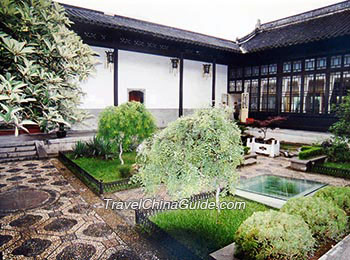
Taiping Heavenly Kingdom Museum
Xianren Feng Limestone
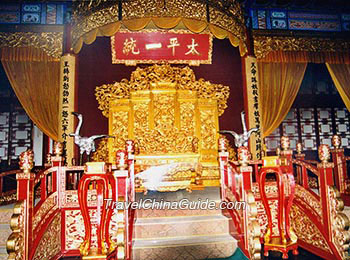 |
| Cultural Relics of Taiping Rebellion |
Jingmiao Tang (Jingmiao Pavilion)
South Rockery
How to get to Zhanyuan Garden
 Metro:
1. Take Metro Line 1 to Sanshanjie and go out from Exit 4. Walk east for 2 minutes to Zhanyuan Garden.
2. Take Metro Line 3 to Fuzimiao and go out from Exit 2. Walk west for 10 minutes to get there.
Bus:
Take bus 2, 16, 26, 44, 46, 49, 166, 202, 302, or G5 to Zhonghualu, Zhanyuanlu.
Nanjing Bus / Metro Search
| Day Time | Night Time | |
|---|---|---|
| Entrance Fee | CNY30 | CNY40 |
| Opening Hours | 8:00 - 17:30 | 17:30 - 20:00 |
 Further Reading: Top 10 Things to Do in Nanjing
- Last updated on Apr. 08, 2021 -
Questions & Answers on Zhanyuan Garden
Asked by Maria from USA | Sep. 13, 2012 19:19 Reply
Reply
ReplyConfucious Temple,Nanjing
Is the Conficious Temple close to this garden? If so is it walking distance?
Answers (1)
Answered by Tony | Sep. 14, 2012 04:48 3
3 1Reply
31ReplyIt is about 700m between them. Walk about 10 minutes, you will get from one place to the other.