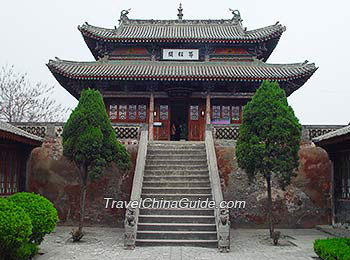
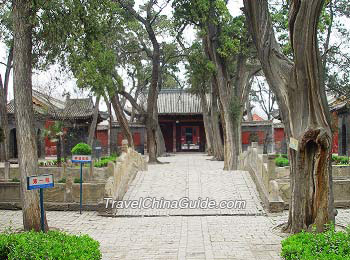
Hancheng Confucius Temple in Dongxue Lane is the third largest shrine specially built for offering sacrifices to
Confucius, a great thinker and educator in ancient China. He was respected by monarchs of many dynasties since Emperor Wu of the
Han Dynasty (206 BC - 24 AD).
Confucius Temple is a set of architecture groups of the
Yuan Dynasty (1271-1368) that are preserved intact. Currently, it has 22 main and complementary buildings, altogether 78 rooms, and is the largest and best preserved ancient architecture in western China.
The Confucius Temple is made up of five main buildings and four tightly connected courtyards. Lingxing Gate is the portal of the temple. After walking through the portal, one will enter the first courtyard with masses of flowers and shady trees. On the eastern and western side of the courtyard, the Clothes Changing Pavilion (Gengyi Ting) and Fasting Room stand symmetrically, and the three rooms to the north are situated by the Vouge Gate (Ji Men), which leads to the second courtyard. Further north lies the Dacheng Palace, the main building here, in which sacrifices were performed on the memorial tablet of Confucius. Passing through the doorway of the angle will lead to the third courtyard, the place in which Confucius gave lessons of disabusing. The fourth courtyard lies across Minglun Hall, as well as the Zunjing Pavilion, which is used to store volumes of sermons.
This Confucius temple also features the Hancheng Museum, in which thousands of cultural relics are stored.
How to get to Hancheng Confucius Temple from Xi'an
Take a bus from Xi'an Fangzhicheng Bus Station to Hancheng Bus Station; or take an early train from
Xi'an Railway Station to Hangcheng first.
From Xincheng Bus Station or Hancheng Railway Station, take Hancheng 101 to Zhangxiangkou, then walk eastward for 600 meters (656 yards) to find the temple. | Entrance Fee | Free |
| Opening Hours | 8:00 - 18:00 |
| Recommended Time for a Visit | one hour |

Suggested Tour Itinerary:
Hancheng Trip: to visit Sima Qian Temple, Dang Village, and Confucius Temple.
 Other Confucius Temples in China:
- Last updated on Sep. 19, 2023 by Gabby Li -
 Hancheng