In March of 1974, located 1.5 km (0.9 miles) to the east of Qin Shi Huang Mausoleum mound, the terracotta army was discovered in wasteland near Xiyang Village by some local farmers while digging a well.
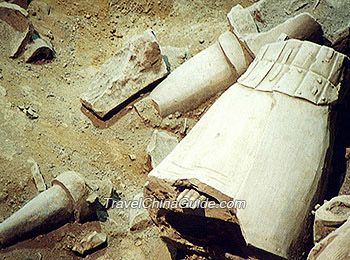 | | Unearthed Terracotta Warriors Pieces | | 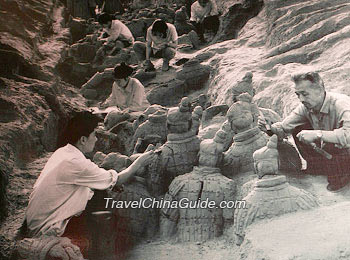 | | Early Excavation of Terracotta Army | |
How Was the Terracotta Warriors Found? – During a Well Digging
In March of 1974, some farmers of the local Xiyang Village, currently a part of Terracotta Army Village or Xiahe Village, began digging a well to find a water resource on some waste land. Firstly, they found some unique red soil about 2-meter (6.6-feet) in depth underground. On the fifth day after the work started, a digger excavated a life-sized terracotta warrior, and the villagers originally believed that the warrior was the Pottery God. Thereafter, they continued to find some bronze arrows, crossbows and broken warriors from the well.
Someone in charge reported the finds to the local protection department of cultural relics. The local cultural workers thought the Pottery God and the weapons could be national treasures, and they collected the arrows and crossbows and the broken pieces of the warriors, and then sent these relics to the local cultural center for restoration.
The restoration work drew the attention of a journalist who was visiting local relatives. He wrote an internal reference to the central government to report the discovery, which drew the government’s great attention. Then the government established an excavation team to unearth the terracotta army on 15th July. Since then, the terracotta army has gradually become known to the world.
When Was the Terracotta Warriors Discovered? – March 29, 1974
The well digging began on March 24, 1974, and on March 29, one of the diggers named Yang Zhifa accidentally discovered a man-sized pottery figure with grey appearance. Then many fragments of the terracotta warriors, copper weapons as well as floor tiles were found in succession. That was the current Pit 1 of the terracotta army.
Where Was the Terracotta Warriors Found? – 1.5km to the East of Qin Shi Huang Mausoleum
The terracotta warriors were discovered under wasteland of southern Xiyang Village, Lingtong District, about 1.5 km (0.9 miles) to the east of the mound of the Qin Shi Huang Mausoleum, and 40km (25 miles) east from Xi'an city. The discovery site, or the well digging site is in the eastern most edge of the present Pit 1.
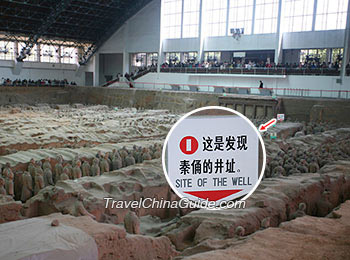 | Site of the Well,
Where Terracotta Army was Discovered | | 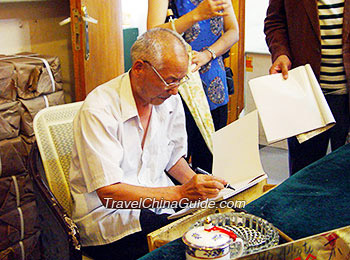 | Yang Zhifa, the Discoverer of
Terracotta Army | |
Yang Zhifa, one of the well-digging members was the first one who dug out a head of a terracotta warrior with an agricultural hoe. After the Emperor Qinshihuang's Mausoleum Site Museum opened to the public, he became the first book signer as the discoverer of the terracotta army. Furthermore, he signed and presented a book to the former American president, Bill Clinton in June, 1998 under the subject of the discovery of the terracotta army. In addition, the other eight members of the well digging group involving Yang Peiyan, Yang Xinman, Yang Quanyi, Yang Wenxue, Yang Yanxin, Yang Yizhou, Yang Wenhai and Wang Puzhi are also considered as the founders of the underground army.
Besides, a local archaeologist Zhao Kangmin is the first one recognizing the Qin warriors, having the excavated ones under protection and repairing the first a few warriors. Although the farmers are the actual ones who first excavated the terracotta warriors, Zhao should be the first one “discovering” them from a historical point of view, believed by some people.
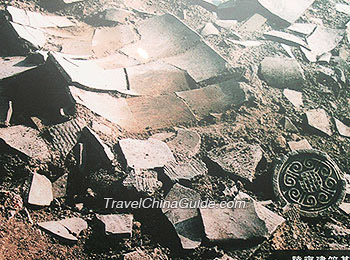 | | The Foundation of the Mausoleum | | 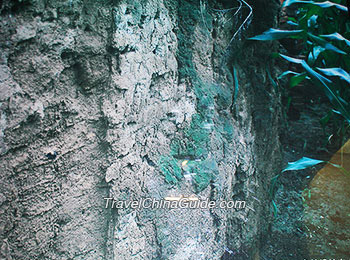 | | The Architectural Ruins of the Mausoleum | |
 Further Reading:
Where are the Terracotta Warriors Located?
Why was the Terracotta Army built?
When was the Terracotta Army Built?
How many Terracotta Warriors are there in China?
Recommended Tour Itinerary:
Terracotta Warriors Tour: One-day to visit Terracotta Warriors and Horses and more
More Xi'an Tours
 Next: World Leaders & Celebrities Who Have Visited the Terracotta Army
- Last updated on May. 30, 2023 -
 Reply
Reply 0
0 0
0