Mentsekhang (Tibetan Traditional Hospital)
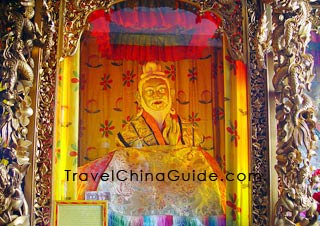
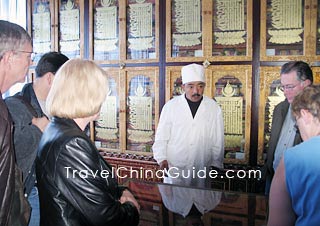
Originally built in 1916, Mentsekhang (also called 'Tibetan Medical and Astrological Institute' at that time) was the place of research for Tibetan medicine and calendar calculations for the former local government. After a large expansion in 1980, it became the center for the treatment, training, research and production of Tibetan medicine. Covering an area of more than 40,000 sq meters (about 10 acres) and with a staff of 450, it is also the biggest Tibetan traditional hospital in that region.
|
|
 Mentsekhang (Tibetan Traditional Hospital) Pictures
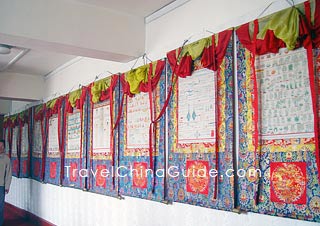
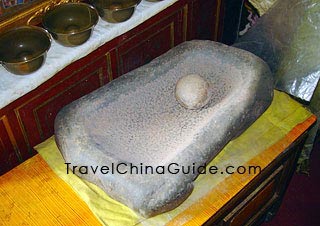
Mentsekhang contains special medical departments for brain blood vessels, orthopaedics, paediatrics, internal medicine and surgery, etc. It also has two institutes of Tibetan traditional medicine and calendar calculations, and also one Tibetan medicine factory. The history of Tibetan medicine can be dated back to 2,300 years ago. It summed up the local people's experiences as they fought against diseases and assimilated their local treatments with traditional medicine of the Chinese, Indian, Nepalese and even Sri Lankan. Because of its efficacy on many diseases, Tibetan medicine has drawn wide attention from home and abroad since the 1980s. Doctors do use traditional methods to diagnose in the hospital. For example, doctors talk with patients; observe their appearances and tongues, and take their pulses. Most of the prescriptions are compounds because there are fewer side effects when a prescription is composed of two or more recipes of herbal medicines. What's more, Tibetan medicines also have special effects on such ailments as hypertension, heart disease, paralysis, gastric ulcers, falling sickness, etc.
Tibetan medicine has a close relationship to the Tibetan calendar. Local doctors believe that the body changes with the seasons. Therefore, they pay more attention to observing the changing of the stars, clouds, winds, lakes and even birds. According to local custom, Mentsekhang is also the place for astronomy and calendar calculations. Experts there not only calculate and edit Tibetan calendars but also do research in astronomy. The Tibetan Medicine Factory was founded in 1964 and after an expansion in 1995, became the largest one in that region. With modern technology in manufacturing, the factory produces more than 350 kinds of medicines, most of which are famous both at home and abroad.
|
|
How to get to Mentsekhang
2. Take bus 20 to Zangyiyuan Zhuyuanbu.
 Reply
ReplyQuestion is: Can tibetian medicine help me without the use of dialysis and surgery? If really "Yes", please advice me the way.
Thank you in advance,
Dr. Mikheil Odisharia
 1
1 2ReplyReply13ReplyReply
Iam looking for a intership in tibetian Hospital. I will start to study human medicine next year and looking forward to enrich my Knowlege.
Do you have any adress or contact for the Mentsekhang?
I would apreciate every hint
thank you
11Reply52Reply