Three Parallel Rivers of Yunnan Protected Areas
In the 1980s, an expert at the United Nations found a marvelous natural scene on a satellite map of the Northern Hemisphere. In the northwest area of Yunnan Province, there are three rivers flowing parallel from the Qinghai-Tibet Plateau to the south, but never converge. This is the 29th project of the World's Cultural and Natural Heritage in China, Three Parallel Rivers of Yunnan Protected Areas.
Originating in the Tanggula Mountain on the Qinghai-Tibet Plateau, the Jinsha River, Lancang River and Nu River flow parallel along the Hengduan Mountains for several hundred kilometers. It is a very rare phenomenon that the shortest distance between the Lancang River and Jinsha River is only 66 kilometers (about 41 miles) and between the Lancang River and Nu River the distance is less than 19 kilometers (about 12 miles). Interestingly, their entrances to different seas are thousands of kilometers away.
This protected area covers Nu Jiang Lisu Autonomous Prefecture, Diqing Tibetan Autonomous Prefecture and Lijiang District. The Three Parallel Rivers have spectacular scenery that is composed of the rivers, mountains, rare plants, animals and 16 ethnic groups' inhabitation.
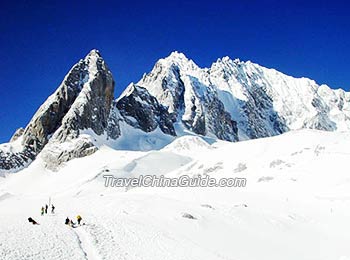
In this protected area, you can see the typical topographic feature of Yunnan, comprised of the wonderful view of the parallel rivers, high mountains and deep gorges. The height of snow-covered mountains in this area varies from 2,000 meters (about 6562 feet) to 6,000 meters (over 19,600 feet), and there are over 100 snow-covered mountains higher than 5, 000 meters (over 16, 400 feet). Among them, the most famous one is the Meili Snow Mountain, which is regarded as a Holy Mountain by the local Tibetan People.
Correspondingly, the gorges are very deep. Nu River Gorge, Lancang River Gorges and Jinsha River Gorges are particularly famous. The average depth of Nu River Gorge is 2,000 meters (about 6562 feet) and it was so named 'the Oriental Grand Gorge'. The famous Tiger Leaping Gorge , which is a part of Jinsha River Gorge, is the deepest gorge of the world. The gorge bottom consists of the subtropical climate, dry and hot, while half way up the mountains it is cool and pleasant. The summits of the mountains are covered with snow all year round. Within the height of several thousand meters, the climate and natural landscape change greatly.
Due to vertical climate differences, there are 20% Higher Plants and over 25% more animals in this area. Some rare plants and animal can also be found here, such as Yunnan golden monkeys, antelopes, snow leopards, Bengalese tigers and black necked cranes.
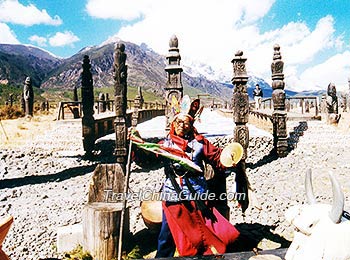
The protected area of the Three Parallel Rivers is also a region inhabited by 16 different ethnic groups. It is a peculiar place where multi-ethnic groups, different languages, various religions, cultures and manners and customs co-exist. The place where the Naxi Dongba Religion culture originated, Baishui Tableland and the Lijiang Old Town , as well as the Mosuo People which has the characteristic of a matriarchal society attract numerous visitors from all over the world.
The protected area of the Three Parallel Rivers has great value in science, aesthetics and a unique culture of ethnic groups. It is a stirring attraction for scientists, explorers and visitors world wide.
Visitors need to get to Liuku Bus Station in Nujiang Lisu Autonomous Prefecture first, and then they can take bus from there to Fugong or Gongshan. This itinerary gives visitors a chance to explore the Nu River Gorge.
Visitors can take regular bus from Kunming West Bus Station to Liuku. Buses depart at 10:00, 14:30, 20:00. It takes around 9 hours.
Take bus from Lijiang Bus Station to Liuku at 09:00, which takes 6-7h. Then, follow the above-mentioned route.
Take a bus from the Express Bus Station (near Longxi Road Crossing) to Liuku. Buses are available from 09:20, 12:20 and 14:40 and it takes about 4-5h. Or take a bus at Dali Bus Station at 08:40, 11:50 and 14:10 to Liuku.
|
|
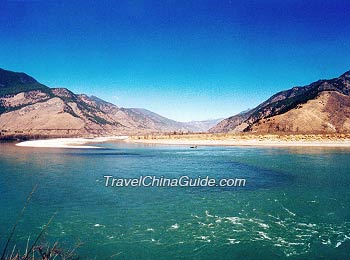
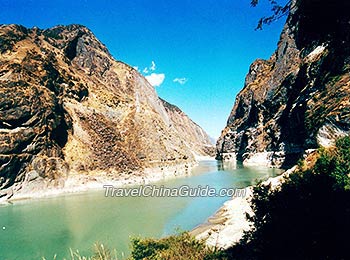
This protected area covers Nu Jiang Lisu Autonomous Prefecture, Diqing Tibetan Autonomous Prefecture and Lijiang District. The Three Parallel Rivers have spectacular scenery that is composed of the rivers, mountains, rare plants, animals and 16 ethnic groups' inhabitation.
In this protected area, you can see the typical topographic feature of Yunnan, comprised of the wonderful view of the parallel rivers, high mountains and deep gorges. The height of snow-covered mountains in this area varies from 2,000 meters (about 6562 feet) to 6,000 meters (over 19,600 feet), and there are over 100 snow-covered mountains higher than 5, 000 meters (over 16, 400 feet). Among them, the most famous one is the Meili Snow Mountain, which is regarded as a Holy Mountain by the local Tibetan People.
|
|
Due to vertical climate differences, there are 20% Higher Plants and over 25% more animals in this area. Some rare plants and animal can also be found here, such as Yunnan golden monkeys, antelopes, snow leopards, Bengalese tigers and black necked cranes.
The protected area of the Three Parallel Rivers is also a region inhabited by 16 different ethnic groups. It is a peculiar place where multi-ethnic groups, different languages, various religions, cultures and manners and customs co-exist. The place where the Naxi Dongba Religion culture originated, Baishui Tableland and the Lijiang Old Town , as well as the Mosuo People which has the characteristic of a matriarchal society attract numerous visitors from all over the world.
The protected area of the Three Parallel Rivers has great value in science, aesthetics and a unique culture of ethnic groups. It is a stirring attraction for scientists, explorers and visitors world wide.
How to get to Three Parallel Rivers of Yunnan Protected Areas
From Kunming
From Lijiang
From Dali
- Last updated on Apr. 23, 2024 by Gabby Li -
Questions & Answers on Three Parallel Rivers of Yunnan Protected Areas
Asked by Wendy from MALAYSIA | Jan. 31, 2024 22:51 Reply
Reply
ReplyBus schedule from Dali to Liuku
Can I know the latest time schedule of the bus from Dali to Liuku?
On a general basis, is it better to book bus ticket in advance to such remote places or is it better to buy like a day before the departure?
On a general basis, is it better to book bus ticket in advance to such remote places or is it better to buy like a day before the departure?
Answers (1)
Answered by Hailey | Feb. 02, 2024 00:56 0
0 0Reply
00ReplyThe bus departs from Dali to Liuku from 08:40 to 14:40. It is okay to buy it on the same day.
Asked by Wendy from MALAYSIA | Jan. 31, 2024 22:29Reply
ReplyInterested in churches, ancinet tea horse route & minorities
1) Is it best to stay in Bingzhongluo to visit villages like Dimaluo 迪麻洛, Qiunatong 秋那通 village?
2) Are there public transport to go around?
3) I plan to come from Lijiang,, what is the best way to go there by public transport?
4) Which village(s), churches do you recommend?
5) Also, where can I see the dulong 独龙 people?
Sorry for so many questions, I'm really excited to visit these places, lol! I read & speak Mandarin so I think the communication is easier.
Thanks a mil!
2) Are there public transport to go around?
3) I plan to come from Lijiang,, what is the best way to go there by public transport?
4) Which village(s), churches do you recommend?
5) Also, where can I see the dulong 独龙 people?
Sorry for so many questions, I'm really excited to visit these places, lol! I read & speak Mandarin so I think the communication is easier.
Thanks a mil!
Answers (1)
Answered by Hailey | Feb. 02, 2024 00:3400Reply
00ReplyI can only answer some of the questions. It is better to hire a private car to tour around because it is very hard to find the public transport information. And you can only see Dulong people at Dulong Jiang Town.
Asked by calvin chong from MALAYSIA | Nov. 06, 2015 01:05Reply
Replywhat is the distance from three parallel to lijang old town?
Answers (1)
Answered by Mayer from CANADA | Nov. 06, 2015 19:5731Reply
31ReplyThe distance is about 73 miles.
Asked by Jolan from CANADA | Feb. 05, 2015 00:16Reply
ReplyThree Parallel Rivers Tour
Where can I find organized tours in Lijiang to the Three Parallel River area (Laojunshan Mountain, Golden Monkey etc.) Which month of the year the rhododendron forests are in bloom?
Answers (1)
Answered by Michuyi from JAPAN | Feb. 05, 2015 00:4410Reply
10ReplyWell, the best time to watch the rhododendron blossom is May.
For tours, I really don’t know. But you can ask the hotel you book there to help you with this.
For tours, I really don’t know. But you can ask the hotel you book there to help you with this.
Asked by Lily | Dec. 27, 2013 18:15Reply
Replyi'm wondering what lake is better to visit among these three: Bita, Shudu or Napa Lake? Which one is the most beautiful in May?
Answers (1)
Answered by Angela from USA | Dec. 27, 2013 20:3602Reply
02ReplyDuring yout trip there in May, both Bita Lake and Napa Lake are very beautiful and they both derserve a visit.