Fangchenggang Travel Guide
Fangchenggang Facts
Chinese Name: 防城港 (fáng chéng gǎng)
Population: 1,000,000
Area: 6,238 square kilometers (2,408 square miles)
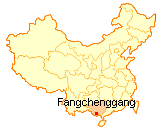
Location: in the south of Guangxi Zhuang Autonomous Region, southwestern China
Administrative Division: 2 districts (Gangkou, Fangcheng); 1 county (Shangsi); 1 county-level city (Dongxing)
Area Code: 0770
Zip Code: 538000
GDP (2018): CNY 69.5 billion (USD 10.5 billion)
With the Largest Port in Western China
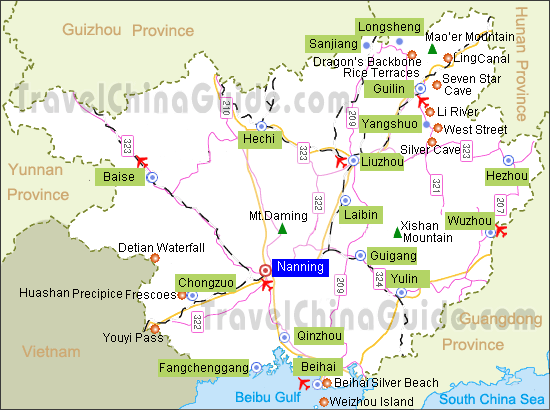
Lying along the southwest end of China's continental coastline, Fangchenggang is a unique port, border and bay city. It is located in the south of Guangxi and neighbors to Nanning, Qinzhou and Vietnam. Fangchenggang is the most convenient gateway for the hinterland of China to enter ASEAN as it shares land, sea and rivers with the countries of ASEAN. It has five national ports and five border trade areas, among which Dongxing port is the largest land border port in China. Fangcheng Port, the largest port in western China, deals with business with more than 190 countries and regions around the world. Fangchenggang is also an ecological city showing excellent sea views and enjoys the reputation of China's oxygen capital, the hometown of longevity and egrets. The world's only national Jinhua tea nature reserve and China's largest and most typical Bay Mangrove are located there.
Fangchenggang Attractions - Things to Do
 Volcano Island: Situated in Beibuwan Bay, it is a beautiful subtropical island consisting of six small islets. The rocks were formed 500 thousand years ago due to the volcanism. Fishing Family Tour is a must on the island. Jiangshan Peninsula: It is the largest peninsula of Guangxi in Beibuwan Bay. Forming a shape of dragon, it is also called White Dragon Peninsula by the locals. Many tourism sites such as Moon Bay, Strange Stones Bay offer an ideal holiday resort. Golden Camellia Reserve: Located in Fangcheng District, it has the most varieties of golden camellia genes in the world. From December to March the next year, golden camellia flowers blossom and cover the whole area. Jingdao Holiday Resort: Located in Wanwei Island in Dongxing, it is where Gin ethnic minority groups live together. Delicate sand, pure sea and profound Gin people's local custom make it one of the hottest tourist spots in Guangxi. Shiwan Dashan National Forest Park: Located in the southeast of Shangsi County, it is an ideal place for summer escape and sightseeing. The well protected primitive forest, pure rivers and natural herb bathing pool are highlights. Hu Chi Minh Path: During the Vietnam War, China and other European countries sent aid materials to Vietnam via this path. Fangchenggang Harbor was set up just on the site of the path in the 1970s and became an important access between Vietnam and China. China-Vietnam Border Tour: The advantageous location of neighboring to Vietnam enables Fangchenggang develops its border tour to Vietnam conveniently. Visitors can simply apply a Vietnam-Visit Exit procedure at Dongxing Harbor. It cost about CNY300. Then they can go to Mong Gai, Ha Long Bay and other tourist spots in Vietnam.
How to get to/around Fangchenggang
Weather
 C (72F). It is usually attacked by typhoon from June to September. When to Go: It is good to visit the city at any time of a year due to the warm and humid climate all year round. May to October is the best period anyway. Please remember to check the weather if you want to go there from June to September because it is when typhoon frequently happens.
Fangchenggang Travel Tips
History: As early as in the Neolithic Age, human beings started to live in this beautiful land. After Qin Shihuang unifying the whole China in 221BC, it belonged to Xiangjun Shire. The name of 'Fangcheng' firstly appeared in the history in the Song Dynasty (960-1279). Later in the Qing Dynasty (1644-1911), Fangcheng County was set up under the control of Guangdong government. In 1985, Fangcheng District was formed in Guangxi and later in 1993, it was changed into a prefecture-level city. Physical Features: Mountains, hills and terraced land interlace in Fangchenggang. Hills lie in its south and north and mountains are in the middle. Its southeast is mainly harbors off the Beibuwan Bay. Local Highlights: As a harbor city in southwest China, Fangchenggang plays quite an important role in the trade between China and Southeast Asian countries. It attracts visitors with its extremely beautiful subtropical and bay scenery as well as convenient way to visit Vietnam. Special Local Products: pearl, golden camellia, aniseed and cinnamon
 Reply
Reply 0
0 0ReplyReply
Gang Kou District
Fang Cheng Gang City
Guang Xi China
00ReplyReply00Reply00ReplyReply00ReplyReply10Reply10Reply00ReplyCould you tell me more infromation about this boat cruise from FCG to Halong City?
Do they have this boat cruise even in October/November?
Thank you,
10Reply