Henan Travel Guide
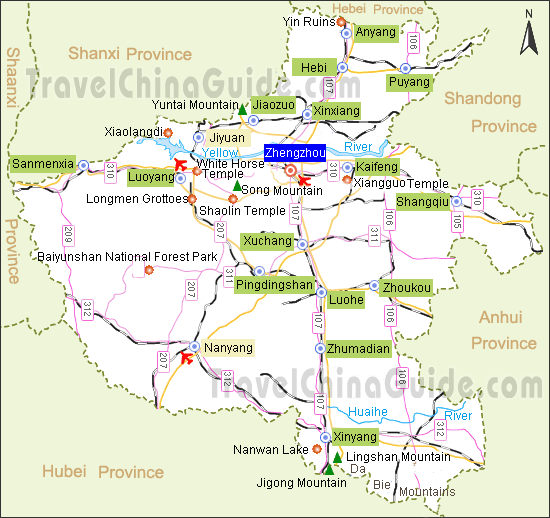
Henan Facts
Chinese Name: 河南 (hé nán)
Abbreviation: Yu
Population: 109,060,000
Area: 167,000 square kilometers (64,479 square miles)
Location: in the east-central of China
Administrative Division: 18 cities (Zhengzhou, Kaifeng, Luoyang, Pindingshan, Anyang, Hebi, Xinxiang, Jiaozuo, Puyang, Xuchang, Luohe, Sanmenxia, Nanyang, Shangqiu, Xinyang, Zhoukou, Zhumadian, Jiyuan); 21 county-level cities; 83 counties; 53 directs
GDP (2019): CNY 5,425.92 billion (USD 786.48 billion)
Cradle of Chinese Civilization & China’s Most Populous Province
Henan is located in the east-central of China and borders with Anhui and Shandong to the east, Shanxi and Hebei to the north, Shaanxi to the west and Hubei to the south. At present, Henan is China’s most populous province with more than 100 million inhabitants. The name of the province Henan comes from its geographic location. Henan means 'the south of the river', indicating that the province lies in the south of China's Yellow River. Given the superior location, Henan is an important comprehensive transportation hub. It is also the cradle of Chinese Civilization since it had been the political, economic and cultural center of the country for more than 3,000 years. More than 20 dynasties set their capitals here and the four great inventions of ancient China all originated from Henan. A visit to Henan is like a talk with many historical sites. While traveling to Henan, you cannot miss the Zhengzhou's Shaolin Temple, Luoyang's Longmen Grottoes, Sanmenxia’s Hangu Pass, and Kaifeng City Wall.
Cities in Henan
When to Go
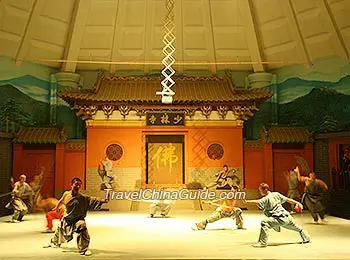 |
| Martial Art Performance, Shaolin Temple |
 C in the north to 15.5C in the south.
History
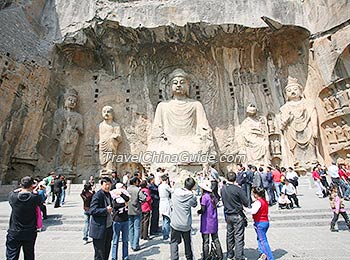
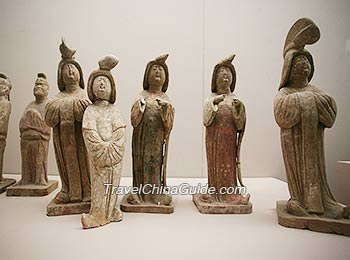
Luoyang City has been the capital of nine dynasties since the time of the Eastern Zhou Dynasty (770BC-221BC). There are many historical sites to be viewed in Luoyang as well as the opportunity to purchase replicas of the famed Tang three-glaze horses. Luoyang's Longmen Grottoes, famous for its grand treasure trove of Chinese Buddhist statues, are located 12km (7 miles) south of Luoyang. First sculpted and chiseled around 493 AD when the capital of the Northern Wei Dynasty (386-534) was moved from Datong City to Luoyang, the grottoes of Luoyang house an awe-inspiring collection of sculpted Buddha and other religious subjects.
|
|
 See also: Henan Food
|
|
 Recommended Henan Tour:
Spotlights of Luoyang: 3 days tour to White Horse Temple, Shaolin Temple, Longmen Caves...with cheap price
More China Tour Packages
 Reply
Reply 0
0 0ReplyReply
I would like to travel to the following places:
Shennong Mountain
Longma Futu Temple
Nezha Temple
Erlang mountain
Xianglong Valley Scenic Spot
淮陽太昊陵景
Need advice on the duration required and how to travel there.
00ReplyReply00ReplyReply00ReplyDuring Sep., the temperature may range from 20 to 30C and in Oct., it may down to 10-20C. There are more sunny days in Sep. but more rainy days in Oct. As for clothes, you are suggested to take the T-shirts, shirts, jeans, and thin coats.
Many large shopping malls can be found in Zhengzhou like Capital City in 1188 Zhongzhou Avenue, Jinshui Dis., Manhattan Square in the junction of Weilai Rd and Jinshui Rd, Jinshui Dis. and Qiansheng Square in 33 East Nongye Rd, Jinshui Dis.
Reply00Reply