Baoji Travel Guide
Baoji Facts
 Chinese Name: 宝鸡 (bǎo jī)
Population: 3,771,000
Area: 18,117 square kilometers (6,995 square miles)
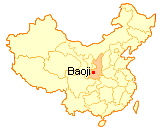
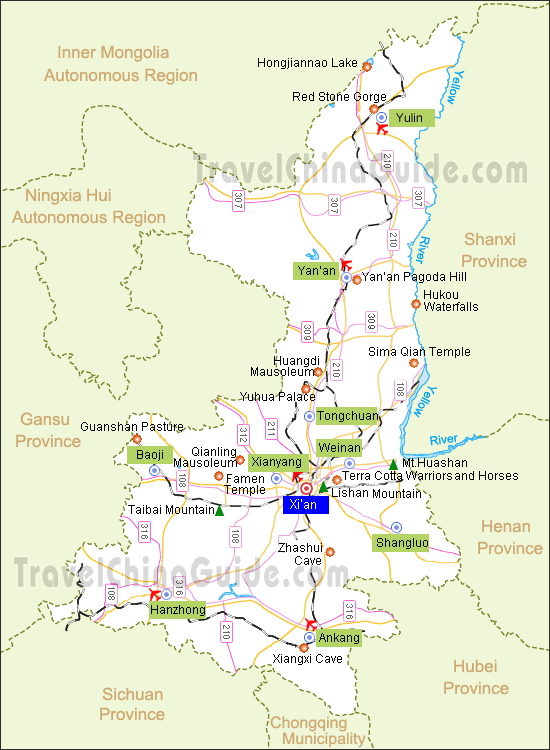
Location: in the west of Shaanxi Province, northwest China
Administrative Division: 3 districts (Weibin, Jintai, Chencang); 9 counties (Fengxiang, Qishan, Fufeng, Meixian, Longxian, Qianyang, Linyou, Fengxian, Taibai)
Area Code: 0917
Zip Code: 721000
GDP (2018): CNY 226.516 billion (USD 34.232 billion)
The Hometown of Bronze Ware & Strategic City since Ancient Times
Baoji, the second largest city in western Shaanxi, is the joint point of Xi'an, Lanzhou, Yinchuan and Chengdu. Xianyang is to its east and Hanzhong is to its south. It was a strategic city where many famous battles happened and now it functions as the railway transport hub in Shannxi. Baoji is a famous hometown of bronze ware where many high-value bronze wares were unearthed. Visitors can appreciate antique and beautifully shaped bronze wares and learn about the history and culture of the Zhou and Qin Dynasties (1046 BC - 207 BC) in Baoji Bronze Ware Museum.
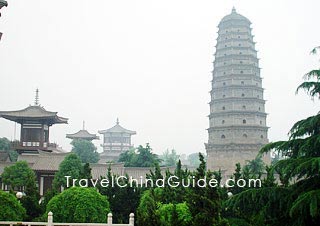
Famen Temple is also a must-visit scenic spot in Baoji, known as a Buddhist holy land for the placement of the Sakyamuni Buddha finger bone sarira. It also preserves old buildings in the Tang Dynasty (618 - 907) style and many Tang Dynasty cultural relics. Besides, Baoji offers many forest parks for leisure and relaxation. Many folk arts and crafts including woodblock New Year pictures, paper cuttings, clay sculptures and straw weaving also can be found here.
Baoji Attractions - Things to Do
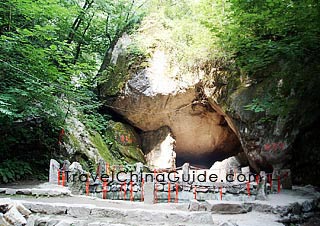
Taibai Mountain National Forest Park, Mt. Tiantai, Honghe Valley, Fengxiang East Lake, Jialing River Headwaters, Guanshan Grassland Historical and Cultural Sites:
Tomb 1 of Qin's Duke, Yongcheng (Capital of the Qin State) Site, Zhougong Temple, Famen Temple, Fishing Platform, Zhouyuan Site
Tourism Itinerary: East Route: Fishing Platform - Wuzhangyuan Site - Taibai Mountain
|
|
 Around City Route:
Railway Station - Yandi Mausoleum - Dasanguan Pass - Yindong Valley - Jialing River Headwaters
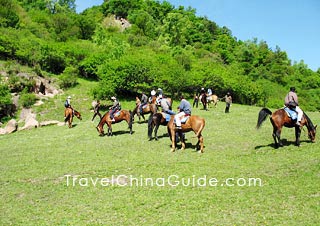
Ecological and Recreational Route:Longmen Cave - Guanshan Grassland - Guanshan Forest Park
Ancestor Worship Route:Yandi Mausoleum - Mt. Tiantai - Jialing River Headwaters - Tongtianhe Forest Park - Mt. Zibai
Historical and Cultural Route:Fengxiang East Lake - Tomb 1 of Qin's Duke - Zhougong Temple - Famen Temple - Zhouyuan Site
Tour Planning
3 Best Side Trips from Baoji
How to Get to Baoji
The city is the connection point linking northwest and northeast of China together. Many railways and national highways pass through it, extending to Xi'an, Beijing, Hangzhou, Hankou and other cities in Sichuan and Hunan provinces. The city has no airport, but quite convenient way to Xi'an Xianyang International Airport (XIY).
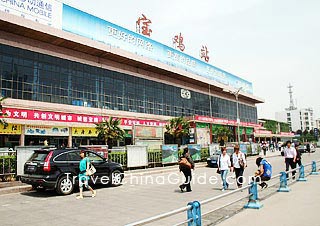
Visitors can take a bus in West Bus Station near the railway station. The city's East Bus Station operates buses to the nearby counties such as Qishan, Fengxiang, Fufeng and Meixian. There are also special tourist buses starting from the railway station directly to many famous tourist spots. More than 20 city bus lines and hundreds of taxies make it quite easy to travel around the urban city.
|
|
Weather
The region belongs to the warm and subhumid climate zone. The winter of Baoji weather is dry and cold while summer is hot and rainy. In autumn, rains always last for several days. The city has the most rainfall among all the cities in middle Shaanxi. Spring and autumn are the best seasons to visit Baoji, when it is neither too cold nor too hot. Every year in April, many tourism festivals and temple fairs are held, providing a good opportunity to know about the local culture. However, due to the continuous rains, please remember to take an umbrella if you go there in autumn.
Baoji Travel Tips
 History: This place is the birth place of Chinese ancestor Yandi and the cradle of Zhou (11th century BC-221BC) and Qin (221BC-206) dynasties. It was once called 'Chencang' in ancient times. It is said that in 757 of the Tang Dynasty (618-907), a stone cock on a mountain crowed, hence the name of 'Baoji' (meaning precious cock). In 2003, it turned into a city from a county and formed the present administrative division.
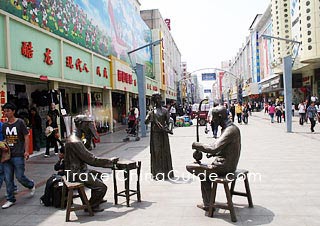 |
| Downtown area |
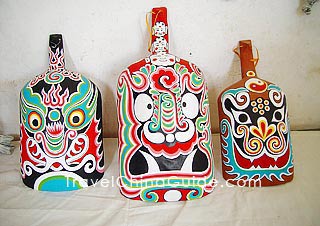
Physical Features: It has complex geographic features. Mountains are in the south, west and north direction and Wei River is in the middle. Mountains and hills occupy about 83 % of the whole area while the left are plains. Local Highlights: As one of the cradles of Chinese civilization, the city has so many cultural and historical sites and relics that it is called 'Town of Bronze Wares' ( Video of Baoji Bronze Ware Museum) and 'Town of Folk Handicrafts'. Zhou and Qin cultures are well presented by such ancient sites such as Yongcheng Site, Zhouyuan Site, Zhougong Temple and Fishing Platform. It is also where Taoism and Buddhism mix. Famen Temple is famous for the discovery of the Buddha Sakyamuni's relics. Taibai Mountain is the peak of Qinling Mountain, which is the dividing line of China's north and south areas. Special Local Products: Handicrafts: colorful mud sculpture, shadow play, puppet, paper-cutting, embroidery, wooden painted face, straw knit, copied bronze wares
|
|
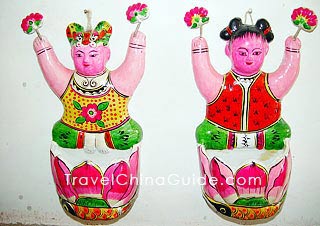 Foods: Fengxian ginseng, edible fungus, red capsicum; Fengxiang Xifeng Liquor and preserved donkey meat; Qishan Saozi Noodle
 Reply
Reply 0
0 0Reply00ReplyReply
if I take taxi how much it cost?
I would like to spent all day in the city where is I don't miss?
10ReplyThere is not much to see in downtown area. Anyway, I recommend the Jingyi Road Pedestrian Street to you. Go dining and shopping, and you will have fun. From the hotel, walk to Gaoxin People's Hospital bus stop and take bus no. 51 or 71 to get off Main Railway Station within 30-40min. Then walk to the street within 5min.
10ReplyApart from that, you can also visit the Shi-ku Garden which is within 4km away from your hotel. Take a taxi to reach there with the fare of CNY7. At the foot of Shi-ku Mountain, you will also find many snacks. Near the garden, the Bronze Museum is also worthwhile.
Reply10ReplyReply00ReplyReply11ReplyJust in the airport, there are direct buses going to there, you can take one. It is the easiest mode. The bus schedule is 09:00, 10:00, 11:00, 12:00, 13:30, 14:30, 15:30, 16:30, 17:30, 19:00, 20:00 and 21:00. The bus fare is CNY61.5, and the bus ride is about 2.5 hours.
10Reply