Yulin Facts
 Chinese Name: 榆林 (yú lín)
Population: 3,838,400
Area: 43,578 square kilometers (16,826 square miles)
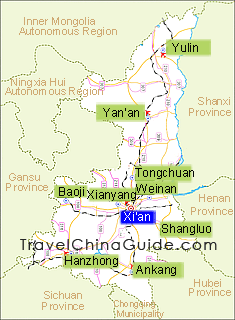
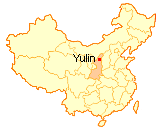
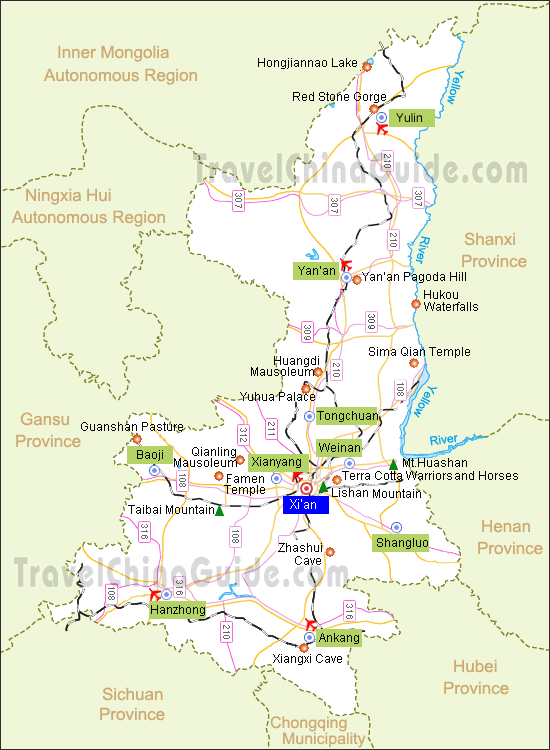
Location: in the north of Shaanxi Province, northwest China
Administrative Division: 2 districts (Yuyang, Hengshan); 1 county-level city (Shenmu); 9 counties (Fugu, Jingbian, Suide, Mizhi, Jiaxian, Wubu, Qingjian, Zizhou)
Area Code: 0912
Zip Code: 719000
GDP (2019): CNY 413.628 billion (USD 59.955 billion)
Once Famous Garrison Town to a Modern Coal City
Located in the north end of Shaanxi Province, Yulin joints up the Loess Plateau and the Mu Us Desert. It is neighbor to four provinces of Shanxi, Ningxia, Gansu, Inner Mongolia and Yan'an City in Shaanxi Province. Yulin is abundant in coal, gas, oil and salt resources. In particular, its coal reserves are estimated to be 280 billion tons, of which Shenfu Coal Field is one of the seven largest coal fields in the world.
With a long history, Yulin had important military significance as a national border city. Zhen Bei Tai, the largest military watchtower built in the Ming Dynasty (1368 - 1644) to monitor the trade activities of locals and Mongolians, has become a must-see attraction. There are other cultural landscapes in the city, such as Taoist Temples, Li Zicheng's Temporary Palace and ancient capital sites. In addition, the Wave Valley with a changeable and beautiful Danxia landform also attracts the attention of many photographers.
 Pictures
Yulin Attractions - Things to Do
Natural Sites
 Hongjiannao Lake: Located in the north of Yulin, it is the largest inner land fresh lake of Shaanxi and honored as 'Shining Pearl in Sand Sea'.
Hongshixia (Red Stone Gorge): Located also in the north, it is famous for many ancient Chinese calligraphic works carving on the cliffs.
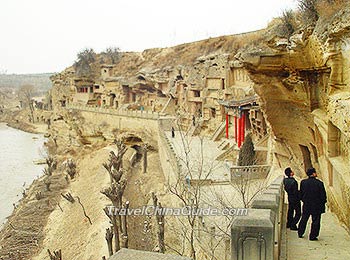 | | Red Stone Gorge | | 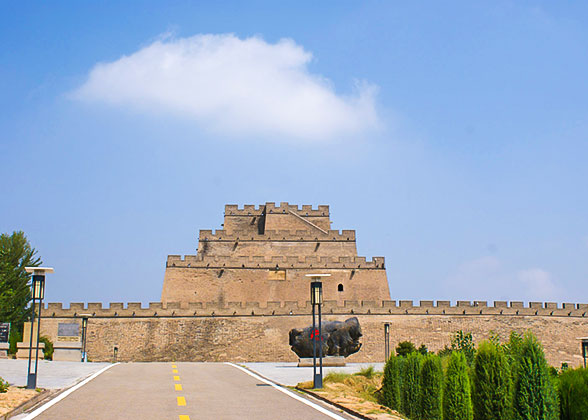 | | Zhen Bei Tai, Great Wall | |
Historical and Cultural Sites
Zhen Bei Tai (Pacify-the-north Tower) : Honored as 'the Top Terrace under the Heavy', it is one of the most spectacular architectural works on the Ming Dynasty Great Wall.
Li Zicheng's Temporary Palace: Clinging to a high hill, it was established under the order of Li Zicheng. He was a farmer rebellion leader who set up a kingdom in the Ming Dynasty (1368-1644).
Tongwan City Site: Tongwan City was the capital city of Daxia Kingdom, which was established by a leader of the Huns in the Eastern Jin Dynasty.
Revolutionary Sites
Yangjiagou Site in Mizhi County, Shenquanbu Revolutionary Memorial Hall in Jiaxian County
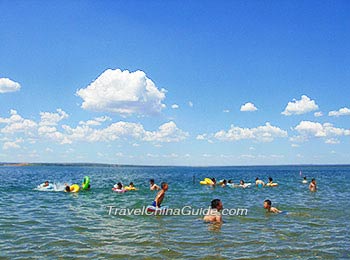 | | Hongjiannao Lake | | 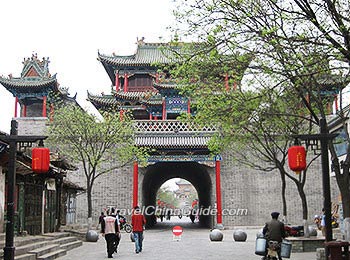 | | Ancient City Tower | |
 Other Spots
: Great Wall, Jiang's Garden in Mizhi, Xianglu Temple in Jiaxian, Mt. Erlang in Shenmu
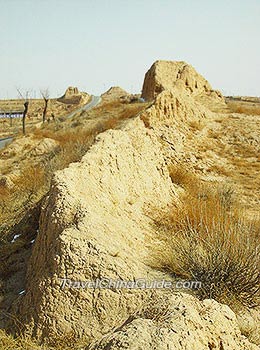 | | Great Wall Relics | | 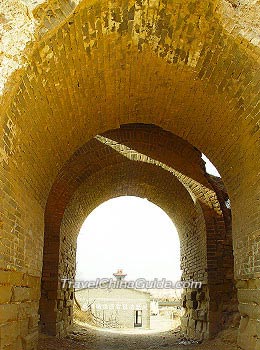 | | Great Wall Relics | | 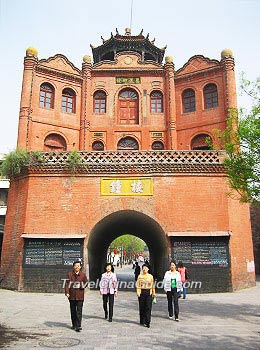 | | Bell Tower | |
How to Get to Yulin
Yulin Yuyang Airport (UYN) is located about 15.5 kilometers (about 9.7 miles) southeast of the downtown Yulin. Direct flights are operated there to Beijing, Xi'an and Baotou. Xibao (Xi'an - Baotou) railway and two national highways go across the city. Every day, there are long distance buses to Xi'an, Yinchuan, Baotou, Taiyuan and the counties in Yulin.
Weather
-
This area belongs to the warm and semiarid continental monsoon climate zone. The average temperature of Yulin weather is about 10 C (50F). The temperature difference between morning and night is high. Sand storm is frequent in spring and rain is a little more in summer. Summer and autumn are the best time to visit the area. Please remember to take a coat and an umbrella because of high temperature difference and frequent rainfalls.
Yulin Travel Tips
History: As early as the Paleolithic and Neolithic Ages, human beings already lived in this area. Named as Shangjun, it once belonged to Qin State in the Warring States Period, and then one of the 36 shires of the Qin Dynasty (221BC-206BC). In the Eastern Jin Dynasty (317-420), a king of the Huns established Daxia Kingdom and set capital in Tongwan City (today's Jingbian County). In the Tang Dynasty (618-907), Yulin area was divided into three states, which were then combined into two new ones Yulin and Suide. In 1949, the city was liberated under the lead of China's Communist Party. In 2000, it turned into a prefecture-level city from a county-level one.
Physical Features: the area can be divided by the ancient
Yulin Great Wall. To its north, it is sand and grass flat. To its south, it is loess hills and ravines. The southwest is low mountains and hills, from where many rivers in the city start.
Local Highlights: Yulin is not only a historical city with long histories, but also the energy supply base of both Shaanxi and the whole China. 48 kinds of natural resources have been discovered there, among which coal, oil and natural gas are the richest. Shenfu Coal Field has been ranked among the eight largest coal fields in the world. The city also has the largest natural gas field of present China. In addition, it has colorful and profound local art culture. Various folk songs (Daoqing, duet sing and dance), local talk and sing, Yangge (a dance performance) are famous and popular throughout China.
Special Local Products: Handicrafts: paper-cutting, stone sculpture, hand-knitted carpet, willow knitting
Foods: red Chinese dates, millet
- Last updated on Feb. 27, 2024 by Brenda Lian -
 Chinese Name: 榆林 (yú lín)
 Reply
Reply 0
0 0
0