Tibetan Religious Symbols
| ||
|
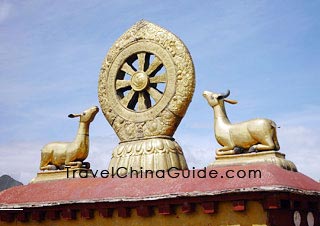
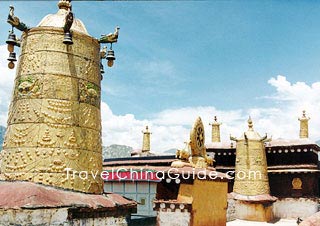
The Eight Auspicious Signs, or eight motifs, generally symbolize how to progress along the Buddhist path.
White Umbrella: an emblem of loyalty and faith and Dharma protection from all evil.
Golden Fish: an emblem of happiness, soul emancipation, and salvation from the sea of suffering
Vase: stores the nectar of immortality and symbolizes hidden treasure
Lotus: an emblem of purity and spiritual enfoldment
Conch Shell: proclaims the teachings of the enlightened ones and symbolizes the spoken word.
Knot of Eternity: an emblem of the unity of all things and the illusory character of time.
Victory Standard: the cylinder symbolizes the victory of Buddhism over ignorance and death.
Dharma Wheel: symbolizes the unity of all things, spiritual law and Sakyamuni himself. The wheel is usually flanked by two deer, the first to listen to Sakyamuni's teachings. The male deer symbolizes the realization of great bliss while the female deer symbolizes the realization of emptiness.
Other common symbols:
Swastika: commonly seen on home walls or on monastery floors. Meaning good fortune, it is an emblem of infinity, universe and sometimes sun and moon. Buddhists draw it clockwise while bon followers draw it anticlockwise.
Kalacakra Seal: an adorning motif in murals or on monastery walls. It symbolizes the highest initiations into occult knowledge which can only be possessed by a few high lamas.
|
|
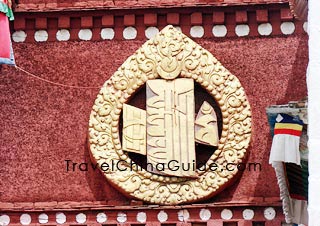
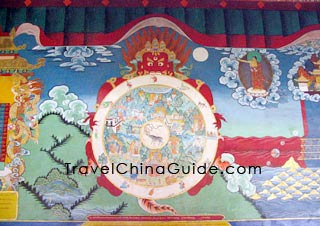
Sun and Moon: usually seen on village houses and top of stupas. The adorning motif symbolizes the source of light and union of opposites.
 Tibetan Buddhism
 - Tibetan Religious Symbols
- Reincarnation System
- Monastery Life
- Mandala
- Buddhist Statues
- Butter Sculpture
- Prayer Flag
- Prayer Wheel
- Mani Stone
- Stupa
- Tsa-Tsa
- Om Mani Pedme Hum
- Last updated on Apr. 08, 2021 -