Chinese Massage
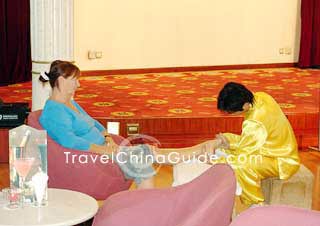
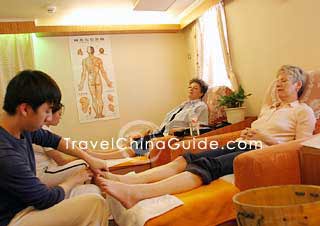
Massage, in Chinese called 'an mo' or 'tui na', it is another great contribution of the Chinese people made to the world medical field. It is a kind of outer physiotherapy and has been approved to be one of great practical use. As doctors hold that, a network - 'jing luo' in human body serves as a passage for vital energy and blood, organs and joints all to be the entity of body, they regulate it through outside force of hands directly acting on the injured part, and turn the scale of pathological changes or improve the organ function to maintain health.
|
|
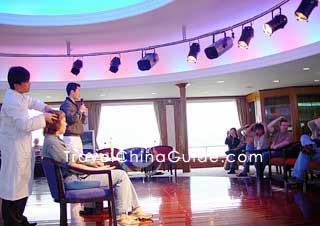
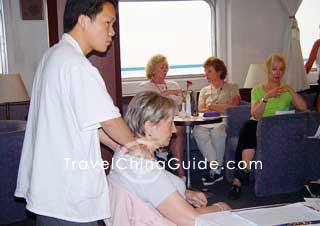
Depending on the strength and direction of hand, the power sinking into the body differs. Consequently some reach only the skin, some to the pulses, muscle and even marrow. The effects of massage have been affirmed by people who have experienced, that is, relieving the bones and muscles, detumescence, acesodyne, adjusting dislocation of the joints, removal of muscle spasm and so on. Today the massage by the blind in China has been a fashion because of the effect and the provision of work chance.
|
|
- Last updated on Apr. 21, 2021 -
Questions & Answers on Massage
Asked by Mrs.maaike from NETHERLANDS | Oct. 24, 2010 01:40 Reply
Reply
Replyhi,
can you recommend any good place for original chinese foot massage nearby jade garden hotel?
xiexie
maik
can you recommend any good place for original chinese foot massage nearby jade garden hotel?
xiexie
maik
Answers (2)
Answered by Mr.Jerry | Oct. 24, 2010 22:08 3
3 0Reply
30ReplyYou can ask the hotel if they provide such services.
Answered by Mr.maik from GERMANY | Oct. 25, 2010 06:4311Reply
11Replyyes, they probably do, but i think more expensive than in shops outside. is there a massage by the blind shop somewhere nearbye?
thanks