Gaoshan Nationality
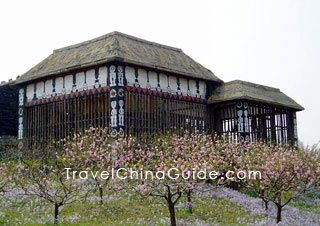 |
| Residential House of Gaoshan Nationality |
 Language and Character:
They have no written language. Their spoken language is related to the Indonesian/Malaysian family. As they have lived with Han people for a long time, many of them can speak southern Min language. They like to sing folk songs and tell tales.
Religion:They believe in strength of spirit, ancestors and totem. They think that after a person's death, his soul stays to protect his descendants. They have rituals for activities like harvesting, sowing, fishing and hunting. Wizardry is widespread among them.
Crafts:Ingenious Gaoshan people create many exquisite artworks with bamboo weaving, woodcarving, pottery, embroidery, etc. They use these to make and decorate pots, pipes, barrels, eaves, fishing boats and clothing, making them more colorful.
Clothes:Gaoshan people like colorful, bright clothes and decorations. They wear flower crowns, earrings, bracelets, and turbans. The most representative clothing is made with strands of pearl beads. In the past, this was a sign of wealth.
Food and Food Culture:The People of Gaoshan ethnic minority eat two to three meals a day. Their staples are rice, millet, and taro. They do not like to drink boiled water or tea, but enjoy adding ginger or pepper into cold water as beverages. They brew a yellow wine. Some of them also have a habit of chewing betel nuts.
Festivals:Gaoshan people regard the yearly Harvest Festival as the grandest day. They hold dinners and have various entertainments. Gaoshan ethnic minority likes music and dancing. When they get together for festivals, they play flutes and perform the hair dance or the hand-in-hand dance.
Taboos:There are several taboos of Gaoshan ethnic minority. During harvest season, they are forbidden to communicate with outsiders or step in the fields of others. When hunting, men should not touch things of hemp, or they may be lost or hurt. Women cannot use guns and other weapons, while men cannot use women's loom.
- Last updated on Apr. 10, 2019 -