Dunhuang Pictures
Dunhuang was made a prefecture in 117B.C. by Emperor Han Wudi. During the Han and Tang dynasties, it was a major point of interchange between China and the outside world. The city is well known for the Dunhuang Mogao Grottoes, a treasure house of Buddhist art and culture. The city also boasts marvelous natural beauty owing to Crescent Spring and its surrounding Echoing-Sand Mountain.
Detailed information about Dunhuang Travel Guide
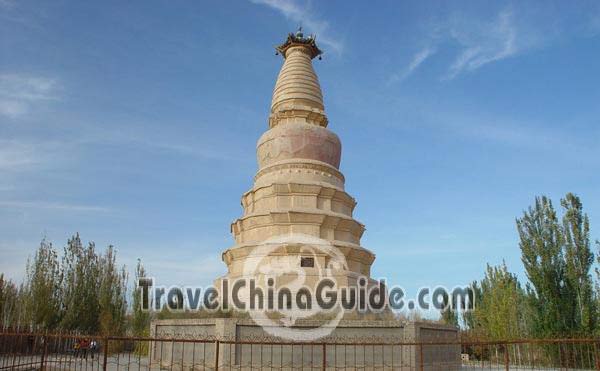
City Overview (6)
Located in the west of Hexi Corridor of Gansu Province, Dunhuang is renowned for the Mogao Grottoes, a treasure house of Buddhist art and culture. The city also boasts marvelous natural beauty owing to Crescent Spring and its surrounding Echoing-Sand Mountain.
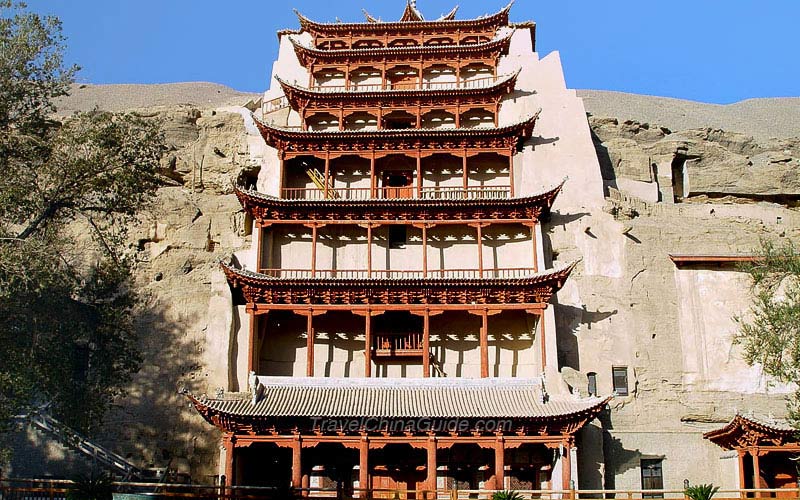
Mogao Caves (40)
Mogao Caves was constructed over a millennium, from the 4th to the 14th centuries, and represents the height of Buddhist art and the world's richest treasure house of Buddhist sutras, murals and sculptures.
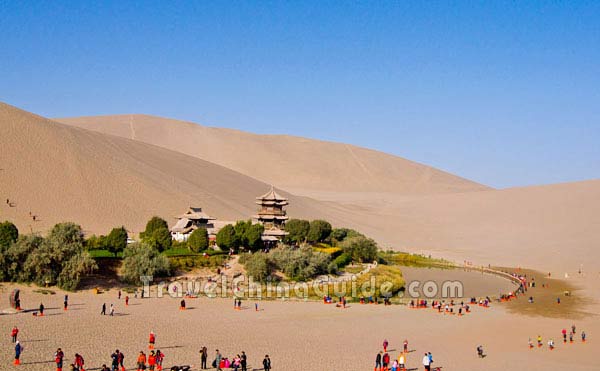
Crescent Lake (8)
Crescent Lake gets its name because its resemblance to a crescent that has fallen down into this desert. Despite being buffeted by frequent sandstorms, Crescent Spring still gurgles clearly and remains worthy as the foremost spring in the desert.
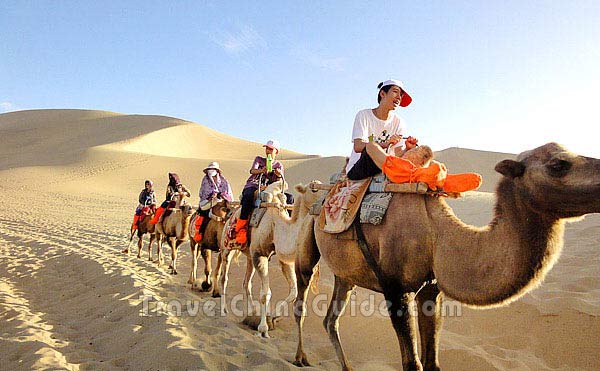
Echoing-Sand Mountain in Dunhuang offers superb desert scenery. The dune reaches a relative height of 250 meters (820 feet).
- Last updated on Jul. 13, 2017 -