Is China cheap for tourists?
Yes indeed! For international travelers, especially those from Europe and North America, China offers remarkable value for money. It retains a distinct price advantage in service-oriented sectors, such as transportation and dining, where labor costs remain relatively low. Lower than most countries worldwide, the travel expenses in China are comparable to popular budget destinations such as Thailand, Vietnam, and Egypt. For people planning a cheap travel itinerary to China, it’s entirely feasible to explore most parts of the country on a daily budget of around US$100 by opting for economical lodging and making use of its efficient public transport system.
How much should I budget for a trip to China?
The cost per person per day generally ranges from US$100 to 300, depending heavily on your travel style, and the total cost also depends on your travel duration and the cities you visit. Excluding the international flights, for 6 to 10 days to Beijing, Xi’an, and Shanghai, our standard group tours generally cost between US$1,000 and 1,700, while for group tours over two weeks, the average cost per person would be over US$2,500. Opting for a private tour means a price increase of 30% or more. Self-guided travelers often spend more due to the lack of proper planning. For travelers seeking cheap tour itineraries to China, our budget packages are worth considering, starting at only US$500-600, and including comfortable economy hotels, high-speed rail connections between cities, and well-curated mini-group day tours.
What is the cheapest month to travel to China?
The most economical period for cheap China tours is typically from November to March, when colder temperatures lead to remarkably decreased travel demand, so airlines and hotels offer their most competitive rates of the year. The notable exception is the Chinese New Year travel rush from late January to early February, when domestic passenger traffic and prices surge as countless people return home for family reunions and visits.
Popular seasons (March-June and September-November) offer excellent value, allowing you to avoid peak crowds while enjoying pleasant weather and moderate prices.
We strongly recommend that you avoid major holidays such as the ‘Golden Week’ of National Day (the first week of October) and the Labor Day in early May, when millions of families travel simultaneously, causing significant increases in airfare and hotel rates, and making popular attractions extremely crowded, thereby diminishing your overall experience. If possible, also consider avoiding the summer vacation from July to August due to the slight price hikes from student travel rush, and the sweltering weather.
How to plan a budget-friendly trip to China? How to save money?
For travelers seeking guided budget China tours, our well-organized group tours of 6 to 15 days and flexible mini-group day tours combos covering Beijing, Xi’an, and Zhangjiajie offer excellent value. By leveraging group purchasing power, we secure favorable rates for hotels, attractions, transportation, and guides, which are far lower than individual bookings. Highly self-reliant, experienced travelers may consider selecting from our day tours, or let us handle your bookings for hotels, flights, train tickets, or transfers. Flexibly combine these services according to your own needs for a more independent yet still seamless journey.
For independent explorers, China’s affordable metro and bus systems make getting around cities easy and economical, while the extensive high-speed rail network connects cities efficiently. To keep costs down, choose budget accommodations such as economy hostels, and enjoy authentic, reasonably priced meals at local eateries and food markets.
How are the prices in China?
Regarding accommodation, 3-star and 4-star hotels average approximately US$50 to 80 per night, about 40% more affordable than comparable hotels in the United States. The 5-star hotels in major cities are generally priced at US$120 to 180 per night.
Dining is incredibly affordable. A McDonald’s Big Mac Meal costs around US$5-6. A 20-ounce Coca-Cola sold in convenience stores or supermarkets averages just US$0.5. At budget-friendly local restaurants, a regular meal generally costs USD$4-5 per person, roughly the price of a coffee in the U.S., with no tipping expected. Of course, in some fine-dining restaurants in major cities, a satisfying meal can be a little expensive, costing US$15-40 per person or more. This is just a reference, and you can always rest assured that you’ll find a wide range of delicious, low-cost dining options around every corner.
When it comes to transportation, most city bus rides cost only US$0.2-0.3. The subway fares typically range from US$0.3 to 2, and only longer routes, such as airport express lines, are slightly more expensive. Taxis and ride-hailing services are also more affordable than those in Europe and the US. For intercity travel, China’s advanced high-speed rail network offers impressive value: a 1,000-kilometer (621-mile) journey, which is comparable to San Francisco to Portland, takes just 4 to 5 hours and costs approximately US$70.
Is it cheaper to fly or train in China?
It depends on your travel distance during your budget China tours. Thanks to China’s extensive high-speed rail network, trains are often more economical and convenient for journeys under 5 hours. With stations usually located near city centers, they reduce urban transit time and simplify travel without lengthy security checks. For trips exceeding 5 hours, flights might be the better option - discounted airfares booked in advance can sometimes match or even undercut second-class rail tickets while saving considerable time.
Overnight trains offer another smart alternative for long distances. They are generally cheaper than high-speed rail and allow you to save on one night’s accommodation.
Are taxis expensive in China?
Not at all. Compared to Europe and North America, taxi fares in China are quite affordable, with a typical 5-km (3-mi) ride costing around US$4. Its base rate and per-kilometer fare are even competitive with Southeast Asian countries like Vietnam. To make transportation more budget-friendly, you are recommended to use the DiDi car-hailing app or its WeChat mini-program. It offers convenient booking and frequently provides discounts and coupons to further reduce your travel costs for a budget China tour. Note that, as in many cities worldwide, taxis in China apply nighttime surcharges (usually after 11:00 PM), so fares may be slightly higher during those hours.
Is it cheaper to go to China or Japan?
For budget-conscious travelers, China offers significantly better value than Japan. When comparing equivalent standards, expenses for accommodation, transport, dining, and shows are consistently lower in China, primarily due to the higher labor and service costs in Japan. A comfortable 3-star hotel room costs US$50-65 per night in China, while often exceeding US$120 in Japan. Although both countries have advanced high-speed rail networks, ticket prices in China are generally half those of Japan’s bullet trains. A typical bowl of noodles costs US$3-5 in China, compared to US$10-15 in Japan. Moreover, fresh produce like fruits and vegetables is significantly cheaper across China. The only aspect where China might be more expensive than Japan is the entrance fees for attractions. However, this difference is marginal and will not impact your overall budget.

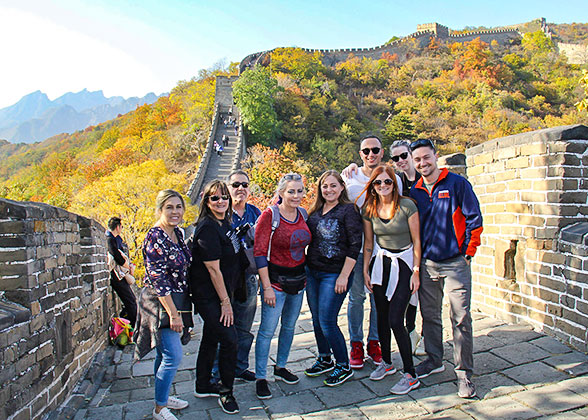 1 Day Beijing Mini Group to Mutianyu Great Wall, Forbidden City, Tiananmen Square, and Hutong Alleys with Entry Tickets from USD95USD79
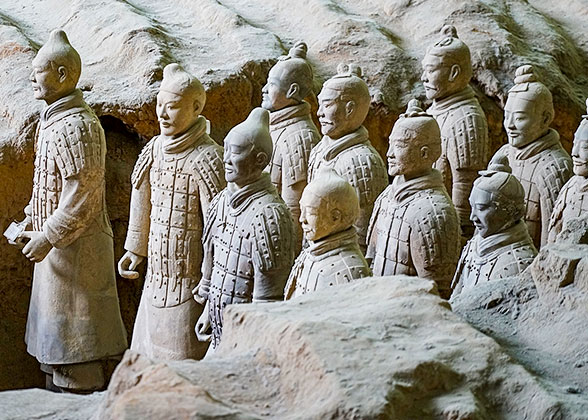
 1 Day Xi’an Mini Group to City Wall, Giant Wild Goose Pagoda, Terracotta Army Museum, and Muslim Quarter with Entry Tickets from USD89USD75
 2 Days Mini Group to Zhangjiajie Forest Park, Hallelujah Mountain, Tianmen Mountain, and Glass Bridge from USD139USD109
 Best Value Mini Group Combo9 Days Beijing - Xian - Zhangjiajie USD559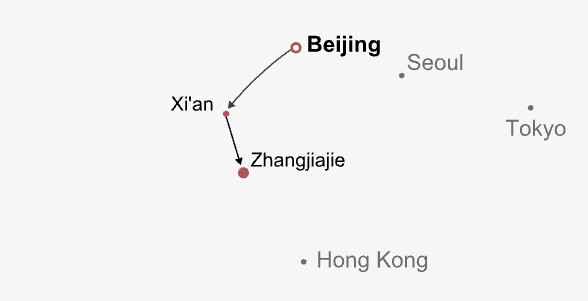
 Budget Beijing Xi’an Mini Group Discovery6 Days Beijing - Xi'an from USD329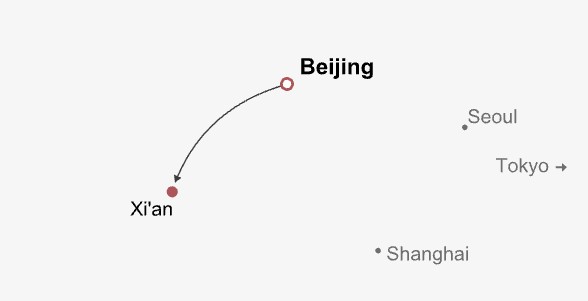
 Oriental Elites Appreciation13 Days Beijing - Xi'an - Zhangjiajie - Guilin - Hong Kong from USD819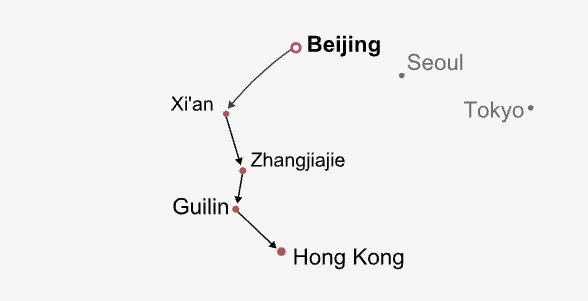
 China Golden Triangle & Yangtze Cruise12 Days Shanghai - Yichang - Yangtze River Cruise - Chongqing - Xi'an - Beijing from USD1989
s.jpg)
 China & Holy Tibet17 Days Beijing - Xi'an - Lhasa - Chengdu - Chongqing - Zhangjiajie - Shanghai from USD2089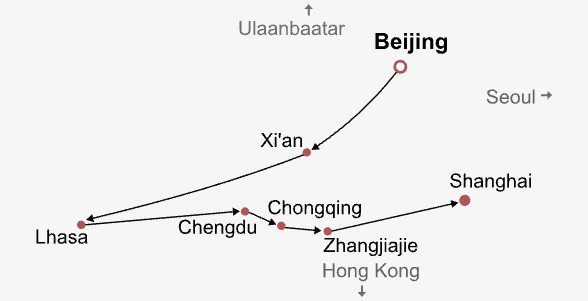
 China Essence with Tibet & Yangtze15 Days Beijing - Xi’an - Lhasa - Chongqing - Yangtze River - Yichang - Shanghai from USD2289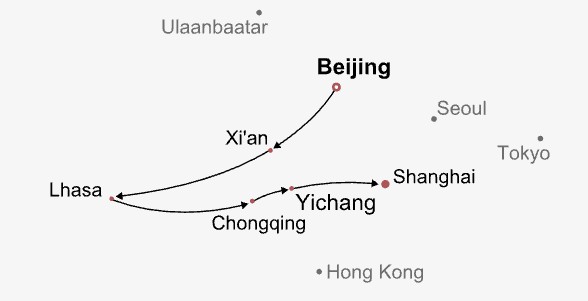
 Ancient Echoes & Natural Wonders16 Days Shanghai - Guilin - Zhangjiajie - Chengdu - Xi'an - Beijing from USD1009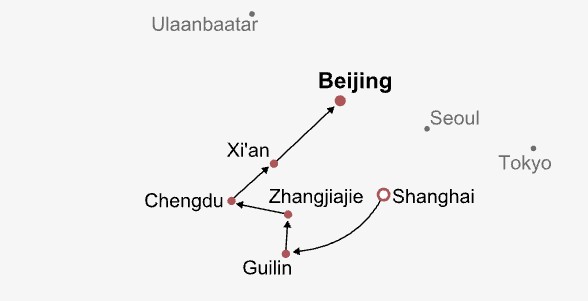
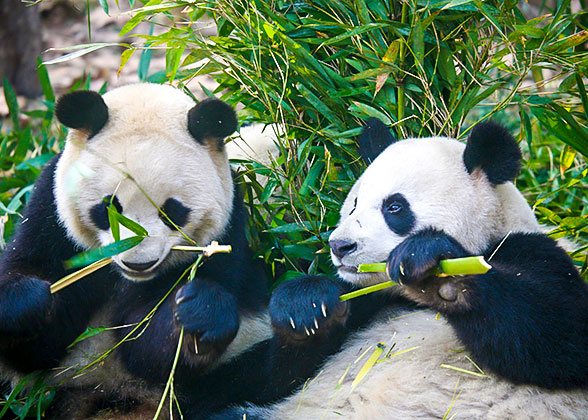 Grand Panorama on a Budget16 Days Beijing - Xi’an - Chengdu - Chongqing - Zhangjiajie - Guilin - Hong Kong from USD769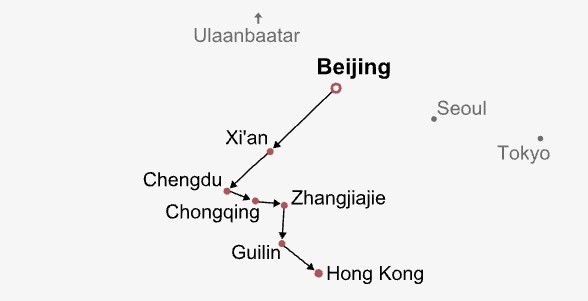
 Budget Travel to Highlight Cities11 Days Beijing - Xi’an - Chengdu - Guilin from USD689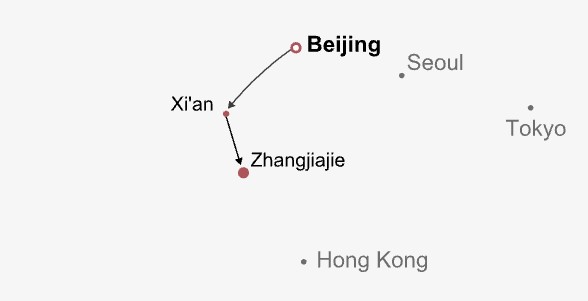
 Ethnic Culture Discovery14 Days Guiyang - Kaili - Zhaoxing - Congjiang - Sanjiang - Longsheng - Guilin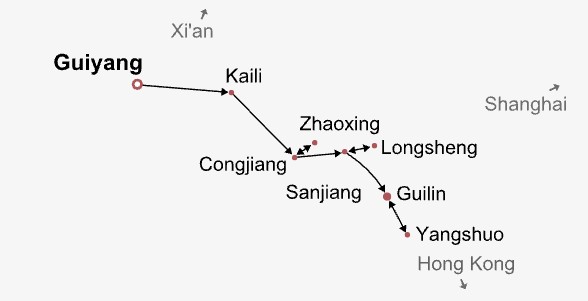
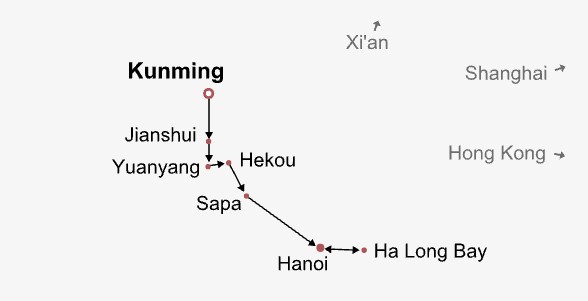
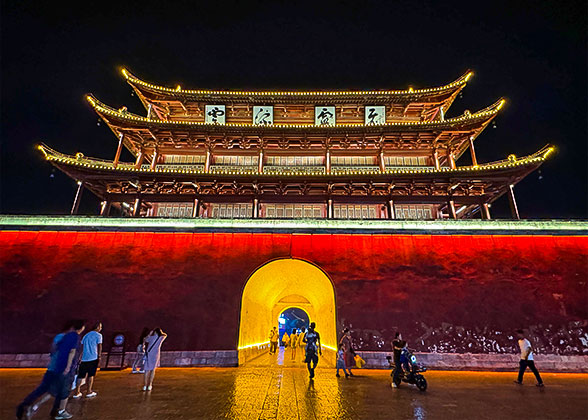 Kunming Vietnam Overland Trip13 Days Kunming - Jianshui - Yuanyang - Hekou - Sapa - Hanoi