Daming Lake Park
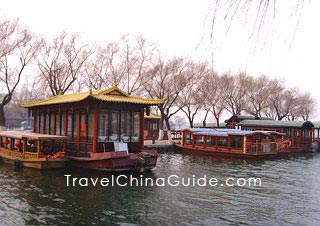 |
Daming Lake
Tie Xuan Temple
|
|
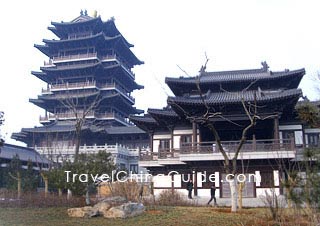
Beiji Temple
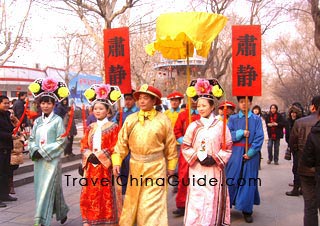
Activities in Daming Lake Park
How to get to Daming Lake Park
By Bus
To the North Gate: Take bus 6, K6, 41, K41, 118, K118, BRT5, K30, K33, K45, K53, K83, or K122 to Daminghu Beimen.
To the Southwest Gate: Take bus 11, K11, 41, K41, 507, K54, K66, K91, K95, K98, K109, K170, You 777 or You 777 line 3 to Daminghu Xinanmen.
To the East Gate: Take bus 14, K14, 30, 31, K31, 41, K41, K30, K36, K46, or K83 to Daminghu Dongmen.
Jinan Bus Search
By Cruise Boat
| Entrance Fee | Free Chaoran Tower: CNY 40 Sightseeing car: CNY 30 per person Sightseeing boat: CNY 10 per person |
|---|---|
| Opening Hours | 5:00 - 22:00 Chaoran Tower: 8:00 - 17:00 Sightseeing boat: 7:00 - 17:00 |
| Recommended Time for a Visit | 4-5h |
 You may like: Top 10 Things to Do in Jinan
- Last updated on Feb. 19, 2024 -
Questions & Answers on Daming Lake Park
Asked by love from MALAYSIA | Feb. 19, 2024 18:30 Reply
Reply
ReplyBoat Available in Daming Lake end of February 2024?
others attraction in park open during winter?
Answers (1)
Answered by Keith | Feb. 19, 2024 19:59 0
0 0Reply
00ReplySightseeing boat service in Daming Lake is available in February 2024 but it may be stopped temporarily because of bad weather. Usually attractions in the park like Baotu Spring and Chaoran Tower open in the winter. But if coming across the snow and ice, the park and the attractions may be closed.
Asked by Ms.Nancy from VIETNAM | Mar. 16, 2011 05:53Reply
ReplyI will travel alone so can I share the boat with other tourists to cut down the cost? What will be include in the boat trip? How long it will take?
Answers (2)
Answered by Mr.Zach | Mar. 17, 2011 21:5601Reply
01ReplyYou can only enjoy the landscapes in the boat, and there is no limit for the boat trip, since it is charged by duration now.
Answered by Linda Hall | Feb. 05, 2012 06:1901Reply
01ReplyDamming Lake is nice.
The boat ride is also nice, it is not long it just goes around. As I love Boats and water, I would recommend to take the boat ride. But it is not like wow, it is just nice. I am living in Jinan and the nice thing is that their parks like Damming lake park and others are free and a get away from the noise of the street.
The boat ride is also nice, it is not long it just goes around. As I love Boats and water, I would recommend to take the boat ride. But it is not like wow, it is just nice. I am living in Jinan and the nice thing is that their parks like Damming lake park and others are free and a get away from the noise of the street.