Tibet to Nepal Overland Trip
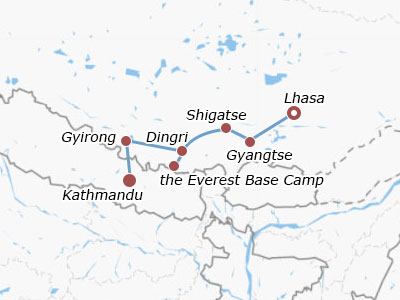
11 Days Private Tour of Lhasa - Gyantse - Shigatse - Dingri - Everest Base Camp - Dingri - Gyirong - Kathmandu
Tour Type: Private tour with an English-speaking guide, flexible and customizable
Transportation: Air-conditioned private car with an experienced driver
Hotels: 3 or 4-star comfortable hotels, open to your choice
Meals: 10 western buffet breakfasts, 9 lunches
Code: 506
Transportation: Air-conditioned private car with an experienced driver
Hotels: 3 or 4-star comfortable hotels, open to your choice
Meals: 10 western buffet breakfasts, 9 lunches
Code: 506

- Itinerary
- Prices
- Reviews
Trip Highlights
- Explore the ancient fortress-style Potala Palace perched on the hilltop, overlooking Lhasa City.
- Watch locals’ devout pilgrimage around the spiritual center, Jokhang Temple.
- Challenge yourself to Mt. Everest Base Camp, at an altitude of 5,200 meters.
- Embark on an epic overland trip from Tibet to Kathmandu of Nepal, accompanied by snow peaks, monasteries, and lush valleys.
- Explore UNESCO-listed medieval Hindu temples and Buddhist stupas standing on the ancient squares of Kathmandu.
Expand All
Collapse All
Day 1 Arrival in Lhasa, Airport Pick-up
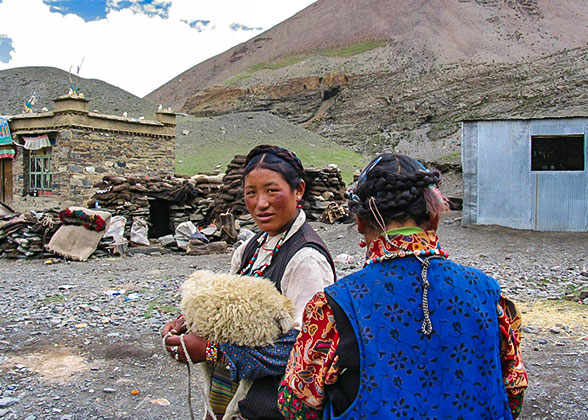
Tibetan Local Pilgrims
► Pro Tip: This tour can also be operated in reverse, starting from Kathmandu and ending in Lhasa. You can choose the popular overland route to experience Nepal and Tibet’s incomparable, enchanting scenery, or take a direct flight from Kathmandu to Lhasa. Please contact our travel consultants for more details and custom arrangements.
► High Altitude Guide:
1. Our well-selected hotel downtown is equipped with an in-room oxygen supply system. Rest well in the hotel for the journey ahead. As Lhasa's altitude averages around 3,560 meters (11,680 ft.), altitude sickness is common and should not be taken lightly.
2. Move slowly and carefully when you first arrive in Lhasa. Pay close attention to your blood oxygen and heart rate, and consult your doctor to prepare some altitude sickness medication in advance, such as Rhodiola rosea and acetazolamide.
3. For the first three days, avoid eating rich, fatty foods; 70% full is sufficient, and gradually increase the intake.
4. Avoid washing your hair and showering for the first few days at high altitude, as this can easily worsen altitude sickness. Avoid coffee and alcohol, and strenuous exercise. Maintain a positive attitude and avoid excessive anxiety or tension.
Accommodation: Tangka Hotel (4 stars)
Day 2 Lhasa
Visit Drepung Monastery and Sera Monastery, and watch debates among Buddhist monks. (B+L)
After breakfast, your guide will meet you at your hotel lobby, and this morning is dedicated to Drepung Monastery, the world's largest and most prestigious Tibetan Buddhist monastery. Once serving as one of the political and religious centers of Tibet, it is the mother monastery of successive Dalai Lamas. Perched atop the rugged granite mountain of Gambo Utse, it overlooks the new city of western Lhasa. Its snow-white buildings cascade down the hillside, resembling a pristine, rice-heap-like city, echoing its name "Drepung" meaning the "heap of rice." Admire the grand halls, statues and murals, and go to the back mountain where a massive 500-square-meter Buddha image unveiling ceremony is held every August, kicking off the year's grandest celebration – the Shoton Festival. The Buddha unveiling platform also offers the best panoramic view of Lhasa. When visiting, please wear comfortable shoes and climb the stairs slowly to avoid altitude sickness.
In the afternoon, we’ll visit Sera Monastery, one of the three most famous monasteries in Lhasa. About its name, one saying is that a severe hailstorm struck during its foundation, as “Sera” means ‘hail’ in the Tibetan language. The other theory goes that it was built in a place where wild roses blossom, as “Sera” can also translate to "wild rose". The monastery has long been a place where high-ranking monks and living Buddhas preach and expound the Dharma, and monks are accustomed to debating Buddhist philosophy.
After the tour, your guide will escort you back to your hotel.
► Temple Visiting Tips:
1. Hats and sunglasses should be removed before entering the main hall. Shorts, flip-flops, or revealing clothing are not allowed. Avoid stepping on the threshold, as it symbolizes the Buddha's shoulders in Tibetan Buddhism.
2. Photography is generally prohibited inside the main hall.
3. Circumambulate prayer wheels, mani stones, and prayer flags clockwise; do not go counter-clockwise or step over them.
4. If you wish to make offerings, prepare small change in advance, as exchanging money at the temple entrance is expensive.
Meals: Western buffet breakfast, Lunch
Accommodation: Tangka Hotel (4 stars)
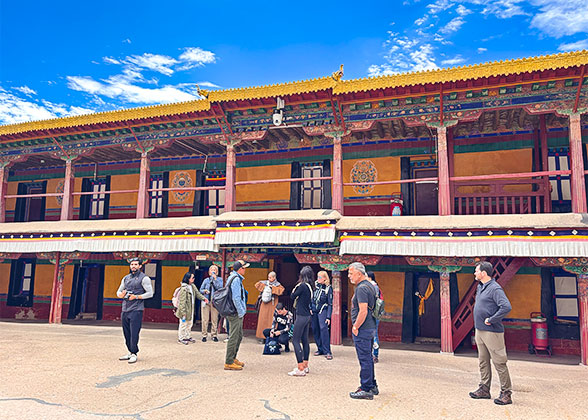
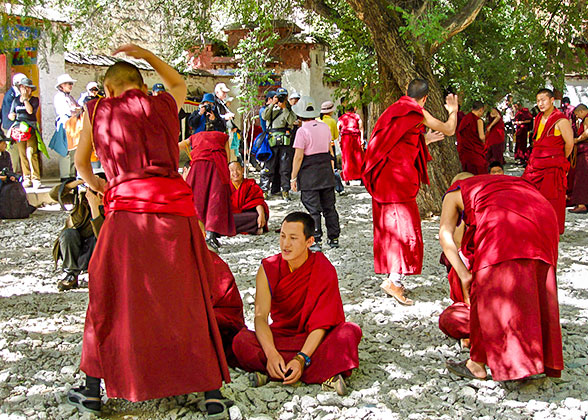
In the afternoon, we’ll visit Sera Monastery, one of the three most famous monasteries in Lhasa. About its name, one saying is that a severe hailstorm struck during its foundation, as “Sera” means ‘hail’ in the Tibetan language. The other theory goes that it was built in a place where wild roses blossom, as “Sera” can also translate to "wild rose". The monastery has long been a place where high-ranking monks and living Buddhas preach and expound the Dharma, and monks are accustomed to debating Buddhist philosophy.
★ Special Activity: Watch Buddhist Monks Debate
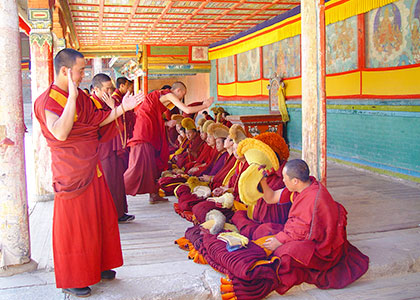
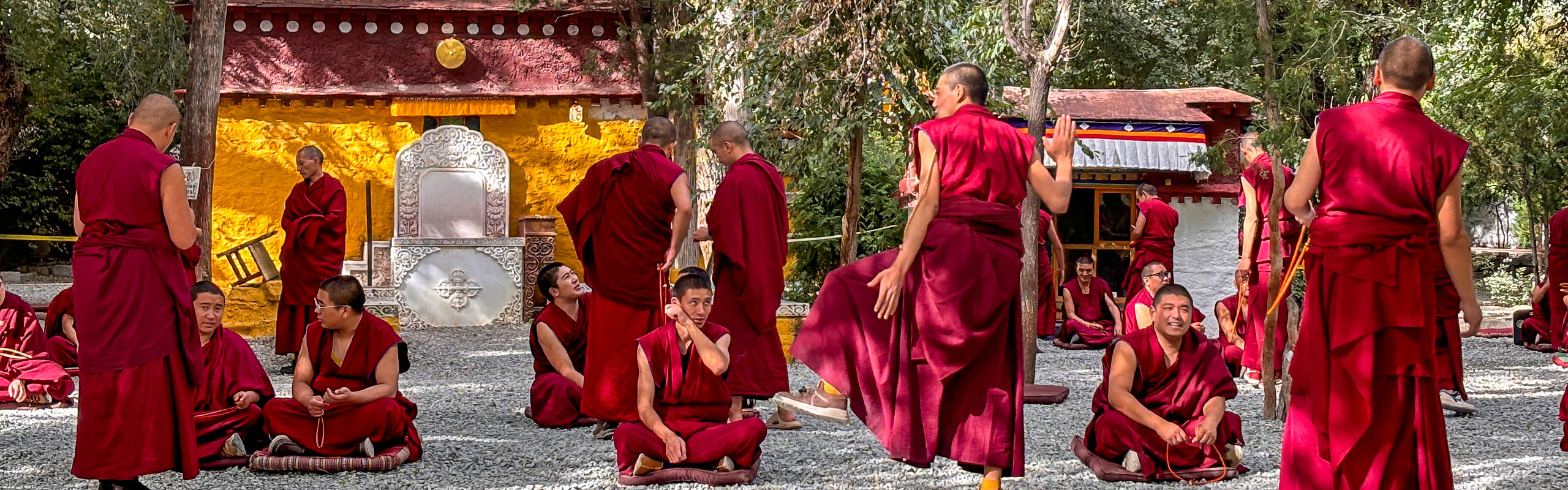
Your guide will accompany you to the debating ground ahead of time. The small, independent courtyard, with the ground covered in gravel, and many towering century-old trees, has likely witnessed centuries of debates by the monks. At 3:00 PM, monks in red robes file in. After a brief opening ceremony, dozens of monks start to debate either one-on-one or in groups. Those standing ask questions, while those sitting answer, accompanied by exaggerated and enthusiastic gestures, shouting, clapping, and stomping. Please note that photography is allowed at Sera Monastery, but avoid disruptive shutter sounds.After the tour, your guide will escort you back to your hotel.
► Temple Visiting Tips:
1. Hats and sunglasses should be removed before entering the main hall. Shorts, flip-flops, or revealing clothing are not allowed. Avoid stepping on the threshold, as it symbolizes the Buddha's shoulders in Tibetan Buddhism.
2. Photography is generally prohibited inside the main hall.
3. Circumambulate prayer wheels, mani stones, and prayer flags clockwise; do not go counter-clockwise or step over them.
4. If you wish to make offerings, prepare small change in advance, as exchanging money at the temple entrance is expensive.
Meals: Western buffet breakfast, Lunch
Accommodation: Tangka Hotel (4 stars)
Our Guests Visit Drepung Monastery
Monks Debating at Sera Temple
Day 3 Lhasa
Visit Potala Palace, Jokhang Temple, and Barkhor Street, and experience locals’ daily lives at an old Tibetan Sweet Teahouse. (B+L)
★ Climb up the World’s Highest Palace
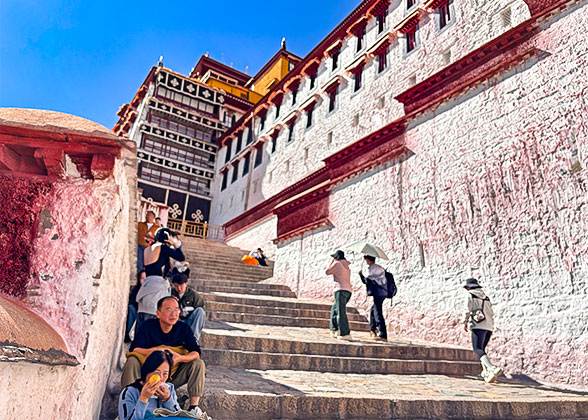
This morning, your guide will accompany you to explore the Potala Palace, perched atop Red Mountain at an altitude of 3,700 meters (12,140 ft.). The magnificent castle-style structure was constructed in the 7th century during the reign of King Songtsen Gampo to welcome his two brides, Princess Bhrikuti of Nepal and Princess Wencheng of China’s Tang Dynasty, and thus it blends the Tibetan, Chinese, and Indian architectural styles. From the 17th century, it became the residence of the Dalai Lamas and the political center. Explore the White Palace first, which once accommodated more than 25,000 monks, and you’ll see that the living quarters of the Dalai Lamas are exquisitely decorated with Buddhist paintings and ornately furnished. Then, proceed to the Red Palace atop the White Palace. It houses thousands of Buddha statues, as well as the stupas of past Dalai Lamas, including that of the Fifth Dalai Lama, covered in 3,721 kilograms of gold. You can also learn about the history of Tibetan Buddhism, the life stories of the Fifth Dalai Lama, and Princess Wencheng's journey to Tibet through the exquisite murals in the hall.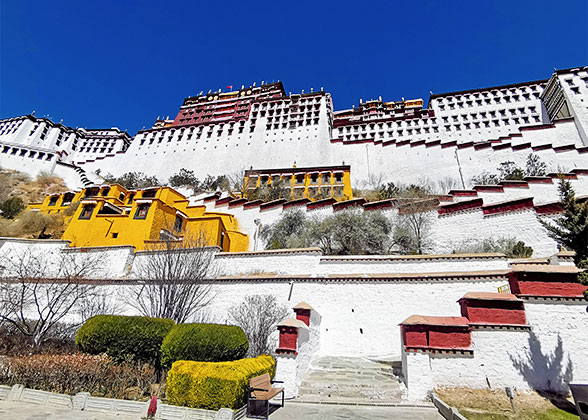
World’s Highest Palace, Potala Palace
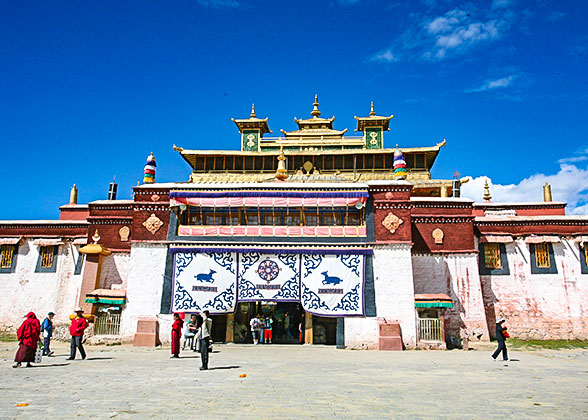
Local Tibetan Pilgrims
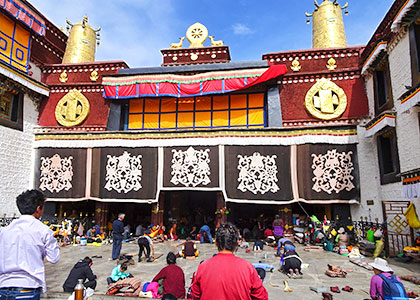
The afternoon is scheduled to explore the old town of Lhasa, where the religious and geographical center, Jokhang Temple, stands. The 1,300-year-old monastery is the oldest timber-framed structure in Tibet. The legend has it that the construction of Jokhang Temple was frequently destroyed by floods, and the Princess Wencheng calculated that only goats carrying earth could fill the lake. Thousands of goats made a significant contribution, so the temple was originally called ‘Ra-Sa-Vphrul-Snang’, meaning ‘goat carrying earth’. You can also find a small goat statue hidden in the hall. The temple is also famous for housing a life-size statue of the twelve-year-old Buddha Shakyamuni, attracting pilgrims from all over Tibet.
Outside the temple, on Barkhor Street, with a circumference of over 1,000 meters (0.6 mi), you'll see pilgrims who have traveled from afar, prostrating themselves along the way. The devout chanting of sutras mingles with the hawking of vendors, showcasing the clash and fusion of traditional culture and modern commerce.
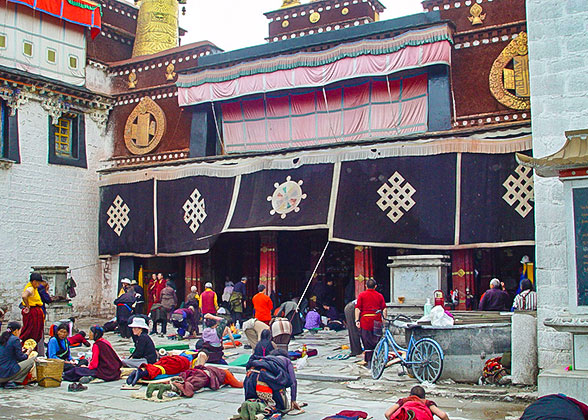
Jokhang Temple, Lhasa
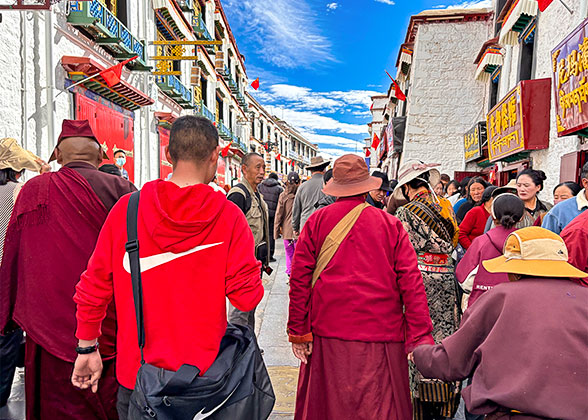
Stroll around Barkhor Street
★ Special Treat: Experience Tibetan Socializing in an Old Tea House
Step into a century-old Tibetan tea house to savor the sweet tea! Tibetan tea houses play a vital role in the daily lives of Tibetans, providing warm and sweet comforts to plateau residents during the cold season. You can also taste a bowl of Tibetan noodles, whose essence lies in the fragrant and delicious yak meat broth. Enjoy the delicious food while listening to locals talk about work or pilgrimage routes, or just basking in the sun and watching people come and go.After that, your guide and the driver will escort you back to your hotel.
Meals: Western buffet breakfast, Lunch
Accommodation: Tangka Hotel (4 stars)
Day 4 Lhasa - Gyantse - Shigatse
Enjoy a road trip to Shigatse via Gyantse, stopping by Yamdrok Yumtso Lake, Karola Glacier, a local Tibetan family, and Gyantse Old Street & Palcho Monastery en route. (B+L)
Today, we’ll leave Lhasa and drive to Shigatse, the second largest city in Tibet, about 270 kilometers (168 mi) away. It takes approximately 5 hours of driving, offering breathtaking scenery along the way. First, we’ll stop by the ethereal Yamdrok Yumtso Lake at an altitude of over 4,400 meters (11,436 ft.), a verdant gem set in the plateau, surrounded by snow-capped mountains. Its crystal-clear blue waters display a variety of colors under different lighting. From the viewing platform, you can also enjoy panoramic views of the Yarlung Tsangpo River Valley. Bring a hat, scarf, and windproof jacket to protect yourself from the strong wind, and you can also feed the brown-headed gulls by the lake with bread and biscuits.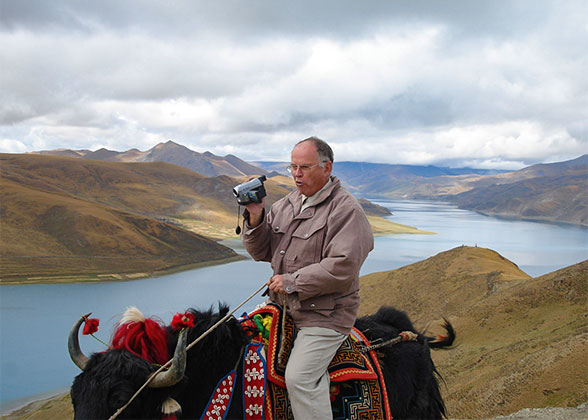
 After having lunch at Nakartse County, continue the trip and enjoy a super close-up view of the Karola Glacier at an altitude of 5,040 meters (16,535 ft.), whose hanging ice tongues are only 300 meters (980 ft.) from the highway. Under the sunlight, the pure white and crystal-clear upper part presents a dramatic contrast with the grey lower part.
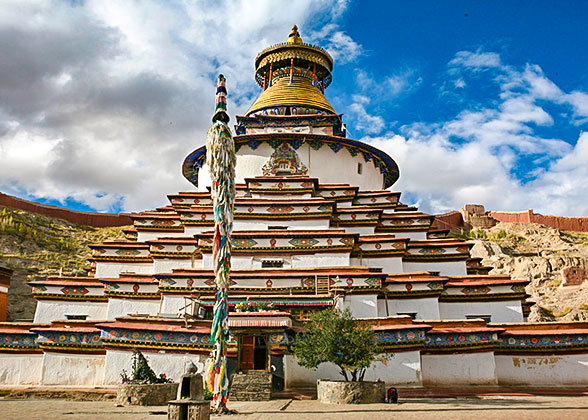
The next stop is Gyantse County. Stroll along the time-worn Gyantse Old Street paved with stone slabs, and view the traditional whitewashed architecture with square windows outlined in red and black colors. Then we’ll explore the most famous landmark of Gyantse, Palcho Monastery, which accommodates three sects of Tibetan Buddhism, namely Sakyapa, Kadampa, and Gelugpa. You’ll also marvel at the 9-story Kumbum Stupa, dubbed the King Tower in Tibet, as it represents the pinnacle of 15th-century Tibetan Buddhist art. Over one hundred thousand Buddha statues and murals are exhibited in 76 halls, layer by layer. Finish the visit, and we’ll continue to Shigatse for hotel check-in.
Meals: Western buffet breakfast, Lunch
Accommodation: Gesar Hotel (4 stars) - VIP Building
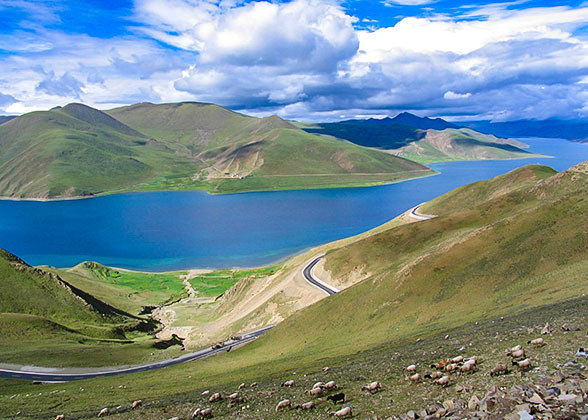
Our Guest at Yamdrok Yumtso Lake
Local Family Visit
★ Special Arrangement: Local Family Visit in a Tibetan Village
Afterward, step into a local Tibetan family, and you’ll be treated to a cup of hot butter tea, along with local cheese and snacks like tsampa cake. The hospitable host will enthusiastically introduce you to their lives and demonstrate how to make tsampa using flour, ghee, and sugar. The sweetness can be adjusted to taste, and the handmade tsampa was surprisingly delicious, with a subtle, refreshing aroma.The next stop is Gyantse County. Stroll along the time-worn Gyantse Old Street paved with stone slabs, and view the traditional whitewashed architecture with square windows outlined in red and black colors. Then we’ll explore the most famous landmark of Gyantse, Palcho Monastery, which accommodates three sects of Tibetan Buddhism, namely Sakyapa, Kadampa, and Gelugpa. You’ll also marvel at the 9-story Kumbum Stupa, dubbed the King Tower in Tibet, as it represents the pinnacle of 15th-century Tibetan Buddhist art. Over one hundred thousand Buddha statues and murals are exhibited in 76 halls, layer by layer. Finish the visit, and we’ll continue to Shigatse for hotel check-in.
Meals: Western buffet breakfast, Lunch
Accommodation: Gesar Hotel (4 stars) - VIP Building
Palcho Monastery, Gyangtse
Visit Palcho Monastery, Gyantse
Day 5 Shigatse - Dingri
Visit Tashilhunpo Monastery, drive to Dingri, and stop by Sakya Monastery and Gyatso La Pass en route. (B+L)
Tashilhunpo Monastery
After the visit, kick off your scenic road trip to Dingri County, the closest city to Mount Everest. We’ll drive through the valley of a tributary of the Yarlung Tsangpo River. In May-June, the late spring and early summer, you can see rapeseed fields and barley fields dotting the wilderness. Along the way, you’ll also catch the original Tibetan life – neat square cow dungs are pasted on the walls and ceilings of every household, like slices of sun-kissed bread, and that’s the oldest heating method of locals.
Next, we’ll detour to Sakya Monastery, the namesake of the Sakyapa sect of Tibetan Buddhism. It has a long history and a vast collection of murals, religious artifacts, documents, Thangkas, and relics bestowed by royals throughout history. You can also glimpse the world’s heaviest Buddhist scripture here, weighing around 500 kg!
Continue the trip, and we’ll then make a short photo stop at Gyatso La Pass, the highest pass along the way, at an altitude of 5,248 meters (17,218 ft.). You can see prayer flags flutter in the wind, and on a clear day, it’s possible to overlook the western slope of Shishapangma, the 14th-highest peak in the world, as well as the continuous snow-capped peaks of the Himalayan range in the distance. However, wear a down jacket, gloves, and a scarf to protect yourself from the freezing cold wind. After crossing the pass, we just enter the Qomolangma National Nature Reserve officially. Tonight, stay overnight in Dingri County and get a good rest to prepare for tomorrow’s early departure.
Meals: Western buffet breakfast, Lunch
Accommodation: Qomolangma International Hotel (4 stars)
Day 6 Dingri - Everest Base Camp - Dingri
Pass by Gawula Pass, visit Everest Base Camp and Rongbuk Monastery, and drive back to Dingri. (B+L)
This morning, your guide will accompany you to embark on the journey to Everest Base Camp. Take some motion sickness pills in advance, as we’ll soon drive through the breathtaking winding mountain roads, known as the ‘108 Turns,’ and there are actually over 108 hairpin bends along the way. Driving spirals upward, finally we'll reach the Gawula Pass, the last mountain pass to Mt. Everest and also one of the most magnificent snow-capped mountain viewpoints in the world. At an altitude of 5,200 meters (17,060 ft.), it offers a sweeping panoramic view of five snow-capped mountains of over 8,000 meters: Makalu, Lhotse, Mount Everest, Cho Oyu, and Shishapangma. If you depart early and the weather permits, you may capture these peaks bathed in golden sunshine. The sunlight first illuminates the summit of Mount Everest from the southeast, lasting for about 10-30 minutes.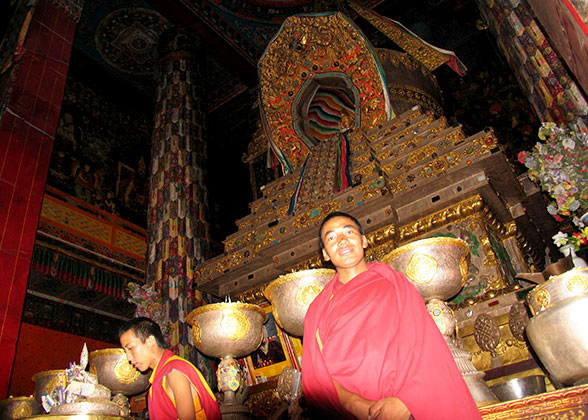
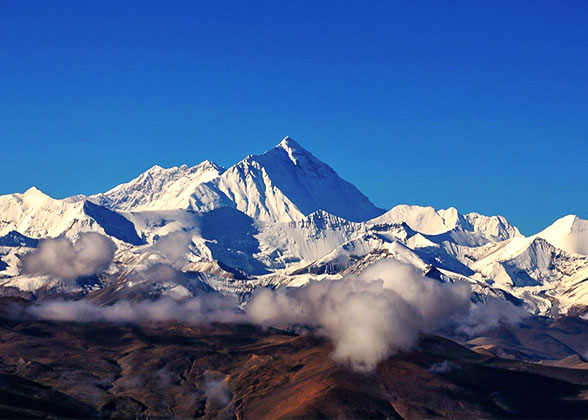 Later, let’s go downhill and transfer to the official eco-shuttle bus at the town of Tashi Zong. Along the 20-kilometer (12-mi) trip, you can see traditional villages, green barley and yellow rapeseed flowers stretching on both sides. After about 30 minutes, we’ll arrive at the Rongbuk Monastery. The monastery and its surrounding area have been referred to as the latest Mount Everest Base Camp since 2019, retreating 8 km from the original one, which is now not open to ordinary tourists.
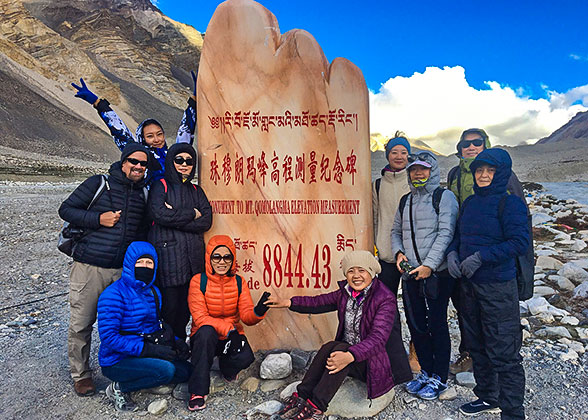
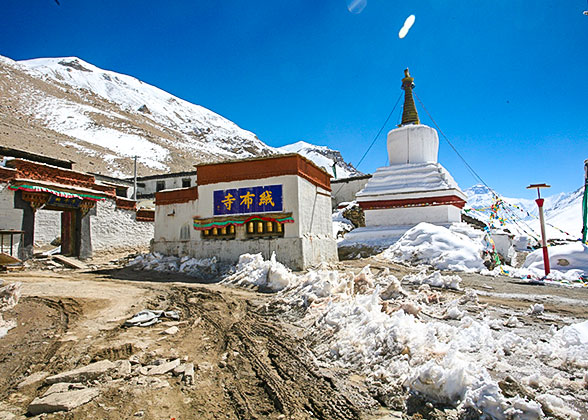
Upon arrival, have a simple lunch and follow your guide to explore the world’s highest monastery, Rongbuk Monastery. Built against the hillside, Rongbuk Monastery stands out with its white stupas, towering mani stones, golden prayer wheels, and fluttering prayer flags. Here, the monks find solace in solitude and sustenance in their faith, light butter lamps and silently pray for every brave soul who challenges the world’s highest peak. It also offers the most stunning close-up view of the north face of Mount Everest. In addition, to memorize your once-in-a-lifetime experience, capture a photo with the striking monument that records the elevation.
After the visit, considering the super high altitude, we’ll head back to Dingri Country for a good rest! However, if you would like to stay overnight at Everest Base Camp for the amazing sunset and sunrise views, and gaze at the clear Milky Way at night, please tell us in advance and we can tailor your itinerary accordingly.
Meals: Western buffet breakfast, Lunch
Accommodation: Qomolangma International Hotel (4 stars)
Tashilhunpo Monastery, Shigatse
View Mount Everst from a Distance
Upon arrival, have a simple lunch and follow your guide to explore the world’s highest monastery, Rongbuk Monastery. Built against the hillside, Rongbuk Monastery stands out with its white stupas, towering mani stones, golden prayer wheels, and fluttering prayer flags. Here, the monks find solace in solitude and sustenance in their faith, light butter lamps and silently pray for every brave soul who challenges the world’s highest peak. It also offers the most stunning close-up view of the north face of Mount Everest. In addition, to memorize your once-in-a-lifetime experience, capture a photo with the striking monument that records the elevation.
After the visit, considering the super high altitude, we’ll head back to Dingri Country for a good rest! However, if you would like to stay overnight at Everest Base Camp for the amazing sunset and sunrise views, and gaze at the clear Milky Way at night, please tell us in advance and we can tailor your itinerary accordingly.
Meals: Western buffet breakfast, Lunch
Accommodation: Qomolangma International Hotel (4 stars)
Our Guests at Mt. Everest Base Camp
Rongbuk Monastery, Dingri
Day 7 Dingri - Gyirong
Drive 6-7 hours from Dingri to Gyirong. (B+L)
This morning, your guide and the driver will meet you in your hotel lobby and embark on a 6 to 7 hours’ scenic snow mountain journey to Gyirong, a small frontier town on the border with Nepal. Today, we’ll pass by Gawula Pass again, offering you another chance to marvel at those world-class snow mountains. Continue driving; the Shishapangma Mountain, with an altitude of 8,012 meters (26,26 ft.), will dominate your horizon along the way. Also, pass by the beautiful alpine lake Peiku-tso, where the sapphire water provides a stunning reflection of Mt. Shishapangma on clear days. If lucky, you may also spot wild animals such as Tibetan wild asses, black-necked cranes, and Tibetan gazelles roaming the shore. They are usually not afraid of people, making it a good place for wildlife encounters and photography. As there are almost no shops along the way, it is suggested that you prepare some snacks or chocolates before departure. Your guide will also accompany you to check into a hotel in Gyirong Town. Have a good dream tonight!
Meals: Western buffet breakfast, Lunch
Accommodation: Kangyang Hotel, Minshan, Gyirong (3 stars)
Meals: Western buffet breakfast, Lunch
Accommodation: Kangyang Hotel, Minshan, Gyirong (3 stars)
Day 8 Gyirong - Kathmandu, Nepal
Go through Gyirong and Rasuwagadhi Ports between China and Nepal, and transfer to Kathmandu. (B+L)
Today, it’s time to wave goodbye to Tibet! After breakfast, your guide and driver will pick you up from your hotel and escort you to the Gyirong Port on the Chinese side. Pass through it and clear immigration at the Rasuwagadhi Port on the Nepali side. After going through the border, you’ll see your Nepal guide waiting for you.
Next, be ready for a 6 to 8-hour private car transfer to Kathmandu. The 160-kilometer (99-mi) overland trip to Kathmandu traverses the southern slopes of the Himalayas. The scenery is magnificent, with high mountains and deep valleys, primeval forests, steep cliffs, streams and waterfalls, and Nepalese mountain villages. Driving along cliffs without guardrails, you’ll be spellbound by hazy and desolate scenery. However, the road conditions are extremely poor, and the bumpy and winding journey at altitudes of 2,000-4,000 meters (6,560-13,120 ft.) often makes passengers prone to motion sickness. Along the way, there would be checkpoints for vehicle inspections and document checks.
When we approach Kathmandu, the terrain gradually flattens, and typical Nepalese villages, prayer flags, and small temples unfold before your eyes. Turning onto dusty and congested rural roads, we just arrive in Kathmandu. Check into your hotel for a good rest.
Meals: Western buffet breakfast, Lunch
Accommodation: Ramada Encore by Wyndham Kathmandu Thamel (4 stars)
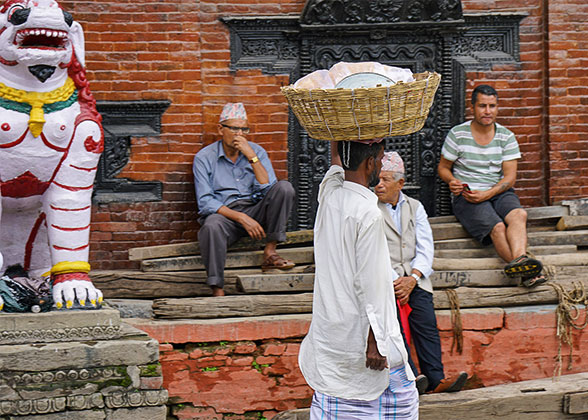
Next, be ready for a 6 to 8-hour private car transfer to Kathmandu. The 160-kilometer (99-mi) overland trip to Kathmandu traverses the southern slopes of the Himalayas. The scenery is magnificent, with high mountains and deep valleys, primeval forests, steep cliffs, streams and waterfalls, and Nepalese mountain villages. Driving along cliffs without guardrails, you’ll be spellbound by hazy and desolate scenery. However, the road conditions are extremely poor, and the bumpy and winding journey at altitudes of 2,000-4,000 meters (6,560-13,120 ft.) often makes passengers prone to motion sickness. Along the way, there would be checkpoints for vehicle inspections and document checks.
When we approach Kathmandu, the terrain gradually flattens, and typical Nepalese villages, prayer flags, and small temples unfold before your eyes. Turning onto dusty and congested rural roads, we just arrive in Kathmandu. Check into your hotel for a good rest.
Meals: Western buffet breakfast, Lunch
Accommodation: Ramada Encore by Wyndham Kathmandu Thamel (4 stars)
Nepalese Local Life in Kathmandu
Kathmandu Durbar Square
Day 9 Kathmandu
Visit Swayambhunath Stupa, Kathmandu Durbar Square (Kumari Temple, Taleju Temple, Kal Bhairav), Pashupatinath Temple, and Boudhanath Stupa. (B+L)
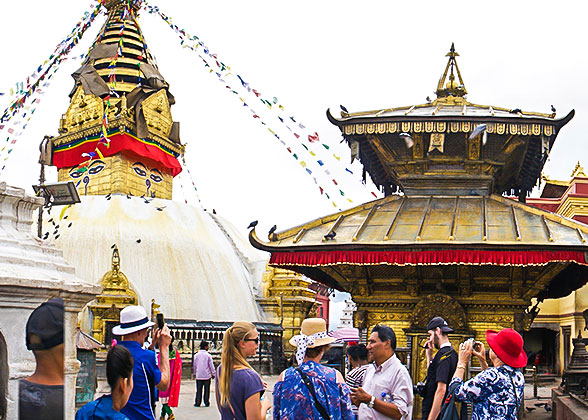
After breakfast, your guide will accompany you to enjoy iconic attractions in Kathmandu. Visit the 2,500-year-old Swayambhunath Stupa first, one of the most famous stupas in Nepal, where Buddhism and Hinduism coexist, rarely seen in other places. Constructed on a large white hemisphere base, the square body is covered with gold, with each side a pair of eyes, symbolizing the Buddha's omniscience. While the eyebrows are the number ‘1’ in Nepali, which represents the religious harmony. Surrounding the stupa are numerous Hindu temples and shrines. It is also known as the Monkey Temple, and you’ll encounter a lot of wild monkeys roaming around. Don’t feed them. Just enjoy the beautiful panoramic view of Kathmandu from the hilltop.
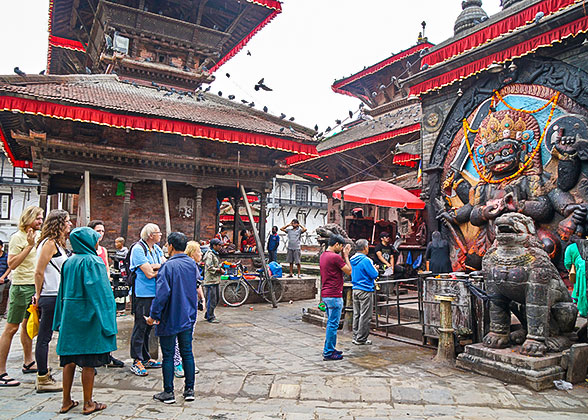
Next, slow your pace at Kathmandu Durbar Square, a living open-air museum, housing a large number of red-brick medieval temples and palace complexes. The most striking architecture is Kumari Temple, dedicated to the Living Goddess, and characterized by elaborate and exquisite wood-carved doors and windows. In the northeast corner of Durbar Square stands the 16th-century Taleju Temple, which enshrines the goddess Taleju Bhavani from South India. This goddess became the exclusive deity of the Malla royal family in the 14th century. Admire its outer exteriors as the temple is generally not open to the public. Your guide will also lead you to appreciate Kal Bhairav, a large, fierce relief of the Hindu Lord, Shiva, wearing a crown embedded with skulls, with white eyes and protruding canine teeth. It is said that locals believe that lying in front of the statue will bring divine retribution, so this was formerly a place to swear oaths.
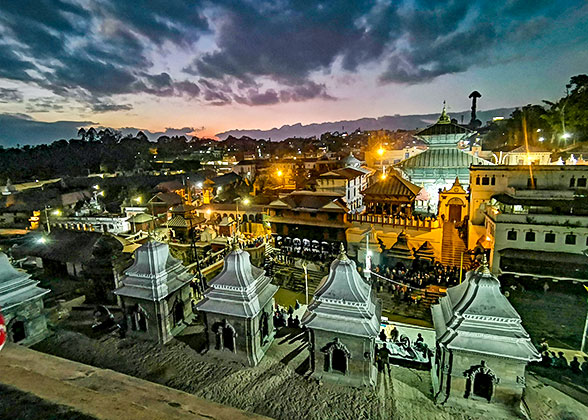
Afterward, we’ll head to the UNESCO-listed Pashupatinath Temple, dedicated to Shiva, Kathmandu's most famous and sacred Hindu Temple, commonly known as the "Cremation Temple". It is the central site for Hindu open-air cremations. After the cremation, the ashes will be scattered into the river, and Hindus believe the soul can attain liberation and merge into the Ganges.
Today’s last stop is Boudhanath Stupa, a large spherical stupa with iconic eyes, and flocks of pigeons rest at its base. If interested, join the locals in walking around it clockwise; legend has it that your wish will come true if you complete 113 circles in a day. Finish the visit, and your guide will escort you back to your hotel.
Meals: Western buffet breakfast, Lunch
Accommodation: Ramada Encore by Wyndham Kathmandu Thamel (4 stars)
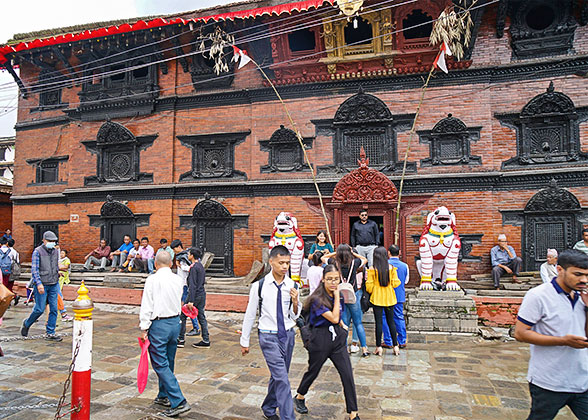
Next, slow your pace at Kathmandu Durbar Square, a living open-air museum, housing a large number of red-brick medieval temples and palace complexes. The most striking architecture is Kumari Temple, dedicated to the Living Goddess, and characterized by elaborate and exquisite wood-carved doors and windows. In the northeast corner of Durbar Square stands the 16th-century Taleju Temple, which enshrines the goddess Taleju Bhavani from South India. This goddess became the exclusive deity of the Malla royal family in the 14th century. Admire its outer exteriors as the temple is generally not open to the public. Your guide will also lead you to appreciate Kal Bhairav, a large, fierce relief of the Hindu Lord, Shiva, wearing a crown embedded with skulls, with white eyes and protruding canine teeth. It is said that locals believe that lying in front of the statue will bring divine retribution, so this was formerly a place to swear oaths.
Afterward, we’ll head to the UNESCO-listed Pashupatinath Temple, dedicated to Shiva, Kathmandu's most famous and sacred Hindu Temple, commonly known as the "Cremation Temple". It is the central site for Hindu open-air cremations. After the cremation, the ashes will be scattered into the river, and Hindus believe the soul can attain liberation and merge into the Ganges.
Today’s last stop is Boudhanath Stupa, a large spherical stupa with iconic eyes, and flocks of pigeons rest at its base. If interested, join the locals in walking around it clockwise; legend has it that your wish will come true if you complete 113 circles in a day. Finish the visit, and your guide will escort you back to your hotel.
Meals: Western buffet breakfast, Lunch
Accommodation: Ramada Encore by Wyndham Kathmandu Thamel (4 stars)
Kumari Temple at Kathmandu Durbar Square
Pashupatinath Temple
Day 10 Kathmandu
Explore Changu Narayan Temple, Bhaktapur Durbar Square, Nyatapola Temple, Dattatreya Temple, Patan Durbar Square, and Golden Temple. (B+L)
Today, continue your Kathmandu exploration with your guide. The first stop is Changu Narayan Temple, the city’s oldest Hindu temple perched on the hilltop of the suburban area. First built in 323 AD, it features a double-layered Newari architectural style and a beautiful gilded bronze roof. Get amazed at its ancient craftsmanship, such as the 5th-century-old half-man, half-bird creatures called Garuda, who are waiting for their master, Lord Vishnu. Besides, its eaves cantilever up to 2.3 meters (7.6 ft.), and Tantric deities and mythological figures painted on the pillars and beams have not yet faded over the centuries. Surrounding the temple are several small shrines for Hindu Gods, including Shiva, Kali, and Ganesha.
Next, head for the Bhaktapur Durbar Square, the largest and the oldest of the three Durbar Squares in the city, which can date back to the 13th century. A cluster of red-brick palaces and temples occupies the core area, which blends the symmetrical aesthetics of Hindu with the decorative tradition of Persian miniature. Get lost in the exquisite wood carvings and Hindu legends. Your guide will accompany you to the most unmissable sights, followed by the 5-story Nyatapola Temple, the tallest Hindu temple in Nepal, which enshrines the goddess Siddhi Lakshmi, the guardian deity of the Malla dynasty (1201-1779 AD), regarded as an incarnation of Shiva. Climb up to the top for a mesmerizing view of the whole square. Then, go to visit Dattatreya Temple, which was built by a single tree. It’s also the only temple in Nepal dedicated to the god "Datatraya", the deity combining three gods: Brahma, Vishnu and Shiva.
Wrap up today’s sightseeing at the Patan Durbar Square, the last and smallest Durbar Square in Kathmandu. You may find it familiar if you’ve seen the famous Marvel film “Doctor Strange”, and the hero, Dr. Stephen Strange, just roams through the vibrant, densely packed medieval architecture to seek the master to heal his hands. Walk north of the bustling square to discover an ancient Buddhist monastery amidst rows of statue shops, the Golden Temple. Founded in the 12th century, it is the fundamental sacred site of the Shakya clan, who were primarily engaged in the creation of statues. It boasts gilded Buddhist statues and brass guardian elephants, adorned with beautiful reliefs and brick carvings, possessing a rich aesthetic appeal. After the visit, your guide will escort you back to your hotel.
Meals: Western buffet breakfast, Lunch
Accommodation: Ramada Encore by Wyndham Kathmandu Thamel (4 stars)
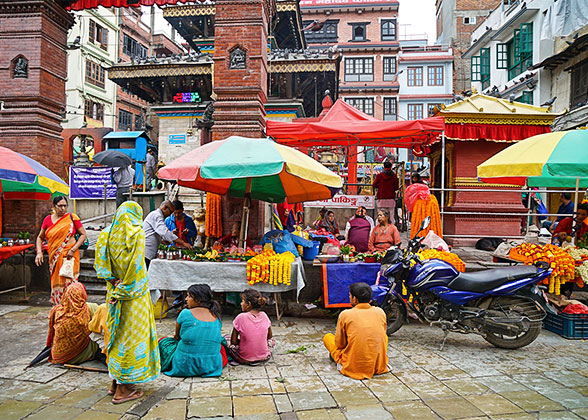
Next, head for the Bhaktapur Durbar Square, the largest and the oldest of the three Durbar Squares in the city, which can date back to the 13th century. A cluster of red-brick palaces and temples occupies the core area, which blends the symmetrical aesthetics of Hindu with the decorative tradition of Persian miniature. Get lost in the exquisite wood carvings and Hindu legends. Your guide will accompany you to the most unmissable sights, followed by the 5-story Nyatapola Temple, the tallest Hindu temple in Nepal, which enshrines the goddess Siddhi Lakshmi, the guardian deity of the Malla dynasty (1201-1779 AD), regarded as an incarnation of Shiva. Climb up to the top for a mesmerizing view of the whole square. Then, go to visit Dattatreya Temple, which was built by a single tree. It’s also the only temple in Nepal dedicated to the god "Datatraya", the deity combining three gods: Brahma, Vishnu and Shiva.
Wrap up today’s sightseeing at the Patan Durbar Square, the last and smallest Durbar Square in Kathmandu. You may find it familiar if you’ve seen the famous Marvel film “Doctor Strange”, and the hero, Dr. Stephen Strange, just roams through the vibrant, densely packed medieval architecture to seek the master to heal his hands. Walk north of the bustling square to discover an ancient Buddhist monastery amidst rows of statue shops, the Golden Temple. Founded in the 12th century, it is the fundamental sacred site of the Shakya clan, who were primarily engaged in the creation of statues. It boasts gilded Buddhist statues and brass guardian elephants, adorned with beautiful reliefs and brick carvings, possessing a rich aesthetic appeal. After the visit, your guide will escort you back to your hotel.
Meals: Western buffet breakfast, Lunch
Accommodation: Ramada Encore by Wyndham Kathmandu Thamel (4 stars)
Swayambhunath Stupa
A Bustling Market in Kathmandu
Day 11 Departure from Kathmandu, Airport See-off
Private car transfer from your hotel to the airport. Wish you a nice journey! (B)
On the last day, your guide and the driver will escort you to the airport at an appointed time. They’ll help you to find the right check-in counter and see you off. Wish you a smooth journey home!
► Tip: If you happen to leave on Saturday and the flight is booked in late hours, catch up the Farmers Market at Le Sherpa on your own. The local market opens only on Saturday morning, where all sorts of things are gathered, such as fresh fruits and vegetables, mountain honey, freshly made local delicacies, Western-style baked goods, and Himalayan handmade chocolates. A 1 to 2-hour exploration will leave you with a wonderful experience.
Meals: Western buffet breakfast
► Tip: If you happen to leave on Saturday and the flight is booked in late hours, catch up the Farmers Market at Le Sherpa on your own. The local market opens only on Saturday morning, where all sorts of things are gathered, such as fresh fruits and vegetables, mountain honey, freshly made local delicacies, Western-style baked goods, and Himalayan handmade chocolates. A 1 to 2-hour exploration will leave you with a wonderful experience.
Meals: Western buffet breakfast
Expand All
Collapse All
This trip can be customized to meet your individual needs!
Tour Prices 2026 & 2027
| 2-3 travelers | 4-5 travelers |
|---|---|
USD3389 | USD2549 |
- Prices are per person on twin sharing.
- If you are a group of 6 people or more, we will offer a more favorable price by your group size. Free Customized Trip Inquiry
Similar Tour Options
6 Days Lhasa - Gyangtse - Shigatse - Lhasa
View Details
From
USD1199
8 Days Lhasa - Gyantse - Shigatse - Mt. Everest - Shigatse - Lhasa
View Details
From
USD969
11 Days Beijing - Xi'an - Lhasa - Shanghai
View Details
From
USD2949
USD2654
Price Includes
- Hotel accommodation with breakfasts
- Lunches as itinerary specifies
- Private English-speaking guides
- Private drivers & air-conditioned vehicles
- Entrance fees to tourist sites
- Tibet Travel Permit
Price Excludes
- Airfares of arrival and departure
- Entry visa fees
Itineraries you may also like: