Yellow Crane Tower

Yellow Crane Tower Facts
Location: on Snake Hill in Wuhan, Hubei Province
Built in: 223 during the Three Kingdoms Period (220 - 280)
Layout: five floors
Enjoying the fame of 'The First Scenery under Heaven', Yellow Crane Tower is one of the most renowned towers south of the Yangtze River. Its cultural significance led to its being made the symbol of Wuhan City.
Yellow Crane Tower Legend
History of Yellow Crane Tower
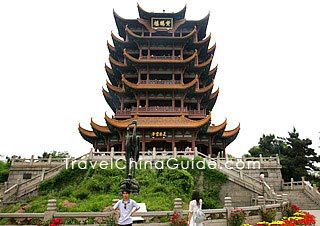 | 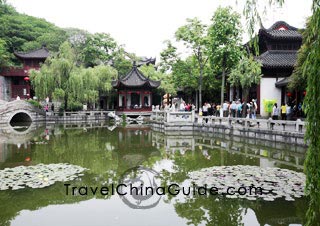 |
During the Tang Dynasty (618 - 907), many popular poems were written in praise of the Yellow Crane Tower. It was the Yellow Crane Tower poem that made the Tower so renowned and induced for people to visit. During the following centuries, it was destroyed and rebuilt several times. During the Ming (1368 - 1644) and Qing (1644 - 1911) Dynasties alone the tower was destroyed seven times and rebuilt seven times. In 1884, it was completely destroyed in a fire and was not rebuilt until 1981.
Yellow Crane Tower Architecture
The Yellow Crane Tower had different architectural features in different dynasties. However the tower which stands today is based on the one designed during the Qing Dynasty. How tall is the Yellow Crane Tower? It stands 51.4 meters (about 168 feet) high. The appearance of the Yellow Crane Tower is the same regardless of the direction it is viewed from. The roof is covered by 100,000 yellow glazed tiles. With yellow upturned eaves, each floor seems to have been designed to resemble a yellow crane spreading its wings to fly.
What to See in Yellow Crane Tower
How to get to Yellow Crane Tower
Wuhan Bus / Metro Search
| Entrance Fee | CNY 70; CNY 35 for children between 1.2 and 1.4m (3.9 - 4.6 feet); Free for children under 1.2m. |
|---|---|
| Ticket Hours | Apr. - Oct.: 8:00 - 18:00 Nov. - Mar.: 8:00 - 17:00 |
 You May Like Top 10 Things to Do in Wuhan
 Reply
Reply 0
0 0ReplyReply00ReplyReply00ReplyReply00ReplyReply00Reply