Qufu Attractions - Things to Do
Qufu is a place, where Confucius lived, studied and was buried. So, most visitors go there in order to have a look at the historical attractions relating to him. Since some of the city buses take visitors directly to those attractions, you may take one of them to visit the site. Hereunder are the suggestions for the tour of Qufu.

By Bus No.1
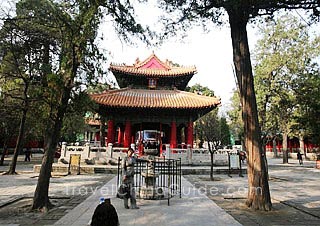 |
| Apricot Altar |
By Bus No.3
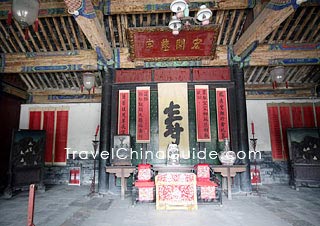 |
| Confucius Family Mansion |
The Yan Temple is the place in which people worship Confucius' student Yan Hui, was built on the foundations of the old site of Yan Hui's residence. It covers an area of 36 mu (5.93 acres) and there are 25 buildings in the styles of the Ming (1368-1644) and Qing (1644-1911) dynasties.
By Bus No.5
The Tablets Park of Analects of Confucius is 300 meters (328 yards) due south of the Temple of Confucius. There you can observe and appreciate many calligraphers' writings of the "Analects of Confucius". Also the Confucius' Six Classical Arts Hall, located at No.15 Chunqiu Road, Qufu, shows visitors the six traditional branches of learning that Confucius advocated: rites, music, archery, riding, writing and arithmetic through the use of high technology.
By Bus No.6

The Nishan Mountain
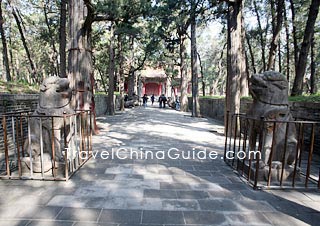 |
| Cemetery of Confucius |
The Nishan Mountain is 30 kilometers (18.64 miles) southeast of Qufu. It's said that Confucius was born in the Fuzi Cave on this mountain. With its peaks rising one after another, the Nishan Mountain mainly includes eight scenic spots: the Nishan Confucius Temple, Wulao Peak, Zhiyuan Stream, Kunling Cave, Guanchuan Pavilion, Zhonghe Ravine and Baiyun Cave.
Additionally, there are many other historical attractions in Qufu which can't be clearly described in one or two pages because there is so much to talk about regarding these attractions. If you have a chance to visit this city, you will take away with you a good understanding of Confucianism and the Chinese feudal dynasties.