Tibetan Medicine
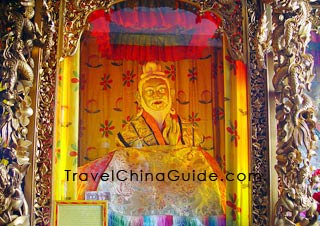 |
| Statue of Youthck Yontan Gongbo |
As one of the oldest medical traditions in the world, Tibetan medicine is gradually being brought into the limelight as Tibetan culture draws much public attention both at home and abroad. Dating back 2500 years, the Tibetan medical tradition has developed its own unique healing practices. In the 8th century, the renowned physician, Yutok Yonten Gonpo, produced the Four Medical Tantras, known as Goo-Shee, after combining the medical knowledge of Tibet with that of China, India, Nepal and Persia. His descendant, the younger Yuthok, wrote eighteen supplemental medical works. At that time the traditional principles of Tibetan medicine had been established. Mentsekhang (the Tibet Traditional Hospital), founded in 1916 by the 13th Dalai Lama, was and still is the local physicians' training center.
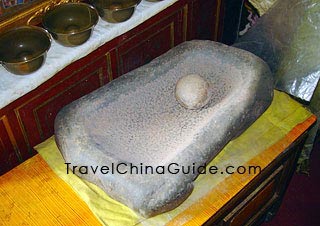 |
| Appliance used to grind medicine |
Diagnostic techniques used in Tibetan medical tradition basically involve interviewing of the patient, urinalysis, and pulse reading. A doctor first speaks to the patient and finds out his medical record. Urinalysis helps the doctor to confirm the nature of illness by the color and odor of the urine specimen and the size, color, amount and persistence of bubbles after vigorous stirring of the specimen. Reading the pulse is a crucial factor for diagnosis as the doctor checks it to further define the illness. Herbal and mineral medicines are the main treatments while other physical therapies, like acupuncture and phlebotomy (Phlebotomy - the act or practice of opening a vein by incision or puncture to remove blood as a therapeutic treatment. Also called venesection.) may also be used after the illness is clearly diagnosed.