Dali Dining
Dali is perhaps most well-known for dishes historically cooked by the Bai, one of its ethnic minority groups, and should certainly not be missed by those stopping in the area. However, the city is a melting-pot for many different cultures, and offers visitors the chance to sample numerous foods from around Yunnan Province and other Chinese delicacies.
Further information about the food and drink of Dali can be found below:
 Dali Dishes
Stewed Carp Casserole
This dish is commonly served as a main course in this area. It combines 28 different ingredients and numerous seasonings to create a dish that is both a treat for the taste-buds and nutritious.
Steamed Chicken
This typical Yunnan food is steamed in a pot using tender chicken and a variety of traditional Chinese herbs. This delectable dish is also said to have medicinal qualities. Dali Snacks
 |
| Dali Snacks |
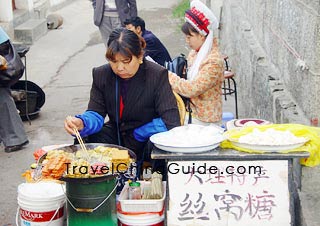
It is a type of food made from both milk and yoghurt which is then shaped into a fan form. Both ingredients are mixed together and then spread into a pan. They are cooked similarly to pancakes, although can also be steamed or boiled. Dairy Fans are a common local food and can be found served on many of the city's roadsides and lanes.
Er Kuai
Er Kuai is one of the most conventional local foods, a rice-based dish. The rice is first washed, soaked, stewed and then mashed into a paste, before being molded into various lumps, slices and shreds. It is usually grilled over burning charcoals with a sugar, walnut, or sesame filling.
Xizhou Town Ba Ba
Ba Ba is in fact a kind of savoury snack made from wheat flour. The dough is first rolled into a cake shape and is then sprinkled with a combination of chopped onions, salt and diced ham before being baked in oil. This local fast-food is favored by both locals and travelers alike.
Dali Beverages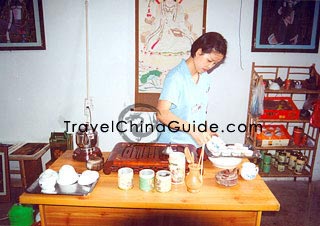 |
| Infusion of tea |
Tea is the most popular drink among the Bai. It is commonly drunk as part of a ceremony involving three servings. The first cup of tea tastes bitter, the second is sweeter, while the third cup has added seasoning for a more fragrant, lingering aftertaste. This way of tea drinking can be traced back to the Tang Dynasty (618-907). The three servings of bitterness, followed by sweetness and finally an aromatic aftertaste are supposed to act as metaphors as part of a philosophy on life.
One of the best places for visitors to sample the tea ceremony for themselves is Yan's Compound in Xizhou Village. Yan's is served by minibuses departing from both Xiaguan and Dali Ancient City. This type of ceremony can also be enjoyed on a number of the cruise ships on the Erhai Lake, and is often accompanied by performances of traditional Bai songs and dances.
Butter Tea
This is a tea traditionally made among the Tibetan communities. It is made from a combination of boiled yak butter mixed with salty tea.
Where to eat
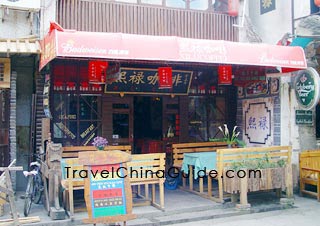 |
| A cafe in the old city |
Local Food
A Da Yin Restaurant
Location: South Erhai Road, Xiaguan
Recommended delicacies: Erhai Fish, Green Plum wine
Xinghua Village Restaurant
Location: No.165, Yu'er Road
Recommended delicacies: Stewed Carp, Dairy fans, Three Delicacy Noodles
Western Food
Siji (Four Seasons) Hostel
Location: No.55, Boai Road
Recommended delicacies: Western food, Taiwanese dishes, Local dishes
Stella's Pizzeria
Location: No.21, Huoguo Road
Recommended delicacies: Pizza, Italian food
Fast Food
KFC
Location: F1-2, Aosen Mansion, West Jianshe Road, Xiaguan
Dicos
Location: F1, Xiaguan Hotel, No1, Renmin Road, Xiaguan Further Reading
10 Special Yunnan Foods You Need to Try
Yunnan Cuisine / Dian Cuisine – Cooking Style of Southwest China
 Reply
Reply 0
0 0Reply01Reply