Wuwei Attractions - Things to Do
Wuwei, located on the historical Silk Road, is the first stop on the way from Lanzhou City to the Hexi Corridor (the corridor west of the Yellow River). Human beings have inhabited on this land since 7,000 years ago. With abundant historical recourses, the city is considered to be one of the most famous historical and cultural cities of China. For those Chinese history lovers, they can have a lot of things to do there, for Wuwei houses many must-see attractions. Going sightseeing in the city, you can visit the following areas:
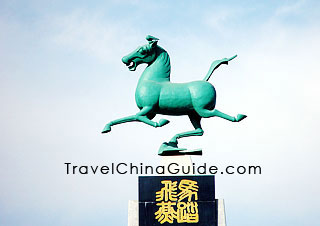
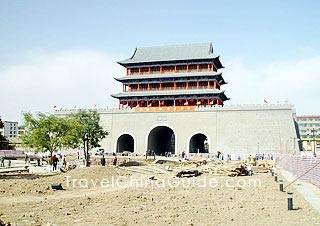
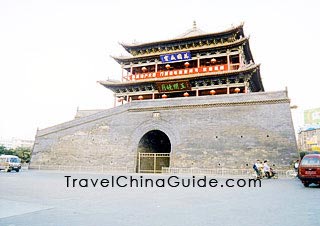
The downtown area has a history of more than 2,000 years. In the Han (206BC-220AD) and the Tang (618 - 907) dynasties, the military operations happened very frequently in western China. At that time, Dunhuang, Zhangye, Wuwei and Jiuquan were very important military bases, where the emperors often resorted to arms. In history, they four were called Hexi Si Jun (Hexi Four Counties).Due to the profound past, today you can find numerous historical and cultural relics in the city. The most famous ones include Confucian Temple and Leitai Tombs of Han Dynasty.
|
|
Downtown Area
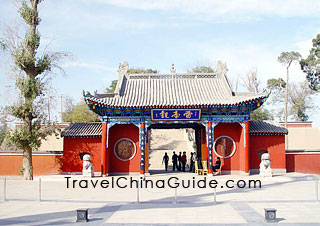
 Confucian Temple
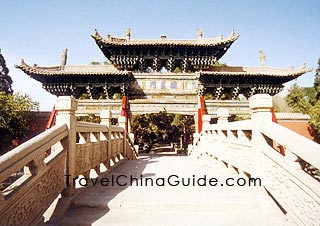
The Confucian Temple, also called Wenmiao Temple, is the largest and best-preserved temple in Gansu Province dedicated to the great ancient educator Confucius.
Near to the Confucian Temple is the Xixia Museum. The museum mainly exhibits the cultural relics of the Xixia Kingdom (1038-1277), set up by the ancient ethnic minority Dangxiang in Gansu, Ningxia and other regions in the northwest of China. In the museum, the most attractive exhibition is the Xixia Tablet. It's a stone tablet engraved with Xixia language and Chinese.
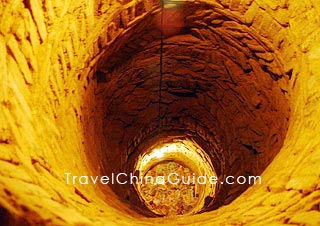
Leitai Tombs of Han DynastyWuwei City in central Gansu once occupied a strategic position on the famous Silk Road. In 1969 a farmer discovered a tomb dating from the Han Dynasty and which has become a main tourist attraction in the city.
The tomb is situated in Leitai Park so called, as there was a Temple built to honor the Chinese god Leishen on the ten-meter high earth platform that was erected during the middle Ming Dynasty. The inscription on the tomb shows that it was constructed circa 186-219BC for an officer from Zhangye, another major town on the Silk Road. The tomb comprises three main chambers of brick construction placed one behind the other. Each room has a smaller annex on each of its sides. This has proved to be a very important find as the tomb contained some two hundred and thirty outstanding relics of gold, silver, copper and jade as well as pottery. The funerary artifacts included ninety-nine copper chariots complete with horses and soldiers.
|
|
| Admission Fee: | CNY 50 |
| Opening Hours: | 08:00 to 17:30 |
East of Wuwei
|
|
Tianzhu Tibetan Autonomous County
Tianzhu Tibetan Autonomous County is administered by Wuwei City. There are many natural scenic spots well worth visiting, such as Tianzhu Small Three Gorges and Shimengou Grassland Park. The Tianzhu Small Three Gorges are famed for unique gorge landscape. It includes Zhuchaxia Gorge, Jinshaxia Gorge and Xianmingxia Gorge. Among them, the Zhuchaxia Gorge is the longest. The peaks there seem extraordinarily steep. Limpid stream flows through the gorge. And the pinetrees cover the gorge very densely. The Shimengou Grassland Park, as the name implies, is a park built on the basis of natural grassland. There, the sky is bluer and the grass is greener. Cattles enjoy the soft sunshine and eat grass with great relish. Everything there seems relaxed and comfortable.
Additionally, if time is not pressing, you can go to Tiantishan Grotto (also called Big Buddha Temple, Dafosi in Chinese) located 50 kilometers (31 miles) south of the city, or Ruianbao (Ruian Manor) situated in Minqin County, Wuwei City. The grotto, made in Dongjin Period, lies on the lofty snow-caped Mt. Tiantishan. A big Buddha sits in the grotto against the mountain. It's the witness of Buddhism introduced through Wuwei to the inner land of ancient China. And Ruianbao, built in 1938, actually is a landlord's manor. It's one of the most unique and best-preserved manors of China.
- Last updated on Apr. 15, 2021 -
Questions & Answers on Wuwei Attractions
Asked by logeay from FRANCE | Feb. 17, 2016 08:44 Reply
Reply
ReplyI would like to take a taxi to go from Wuwei to Tiantishan Grotto.
I have not much time. So how much i will have to pay?
Answers (1)
Answered by Ava from UNITED KINGDOM | Feb. 17, 2016 22:00 1
1 0Reply
10ReplyThe grottoes are around 50km away from the south of the town. To rent a taxi or private car, the fare is around CNY200 for a round trip.
Asked by ronnie chin from MALAYSIA | Nov. 25, 2015 21:49Reply
ReplyWhat is the cost and number of passengers in a van to Tianzhu Three Gorges Forest Park?
Thank you for reply.
Answers (1)
Answered by Jackson from SINGAPORE | Nov. 26, 2015 02:1030Reply
30ReplyDo you start from WW downtown area? If yes, generally speaking, the van can accept 6 to 8 passengers. The fare is CNY 750 to 850 for the round-trip.
Asked by Deirstar from AUSTRALIA | Jul. 31, 2015 20:18Reply
ReplyAre there public buses from Wuwei railway station to the city centre and to the different sites?
Answers (1)
Answered by Hayley from ITALY | Aug. 01, 2015 22:1710Reply
10ReplyYes, there are. But I have no idea of your destination in town. Generally, city bus no. 2 leads to the downtown. In addition, bus no. 1, 2, 17 and 102 are available nearby. Hope one of them takes you to your destination anyway.