Gansu Travel Guide
Gansu Facts
Chinese Name: 甘肃 (gān sù)
Abbreviation: Gan/Long
Population: 26,372,600
Area: 425,900 square kilometers (164,441 square miles)
Location: in the northwestern China
Administrative Division: 12 cities (Lanzhou, Jiayuguan, Jinchang, Baiyin, Tianshui, Wuwei, Zhangye, Pingliang, Jiuquan, Qingyang, Dingxi, Longnan); 2 autonomous prefectures (Linxia, Gannan); 17 districts; 5 county-level cities; 57 counties; 7 autonomous counties
GDP (2018): CNY 824.61 billion (USD 124.62 billion)
Nationalities: Han, Kazak, Mongolian, Tibetan, Hui, Dongxiang, Tu, Manchu
 |
| Echoing-sand Mountain, Dunhuang |
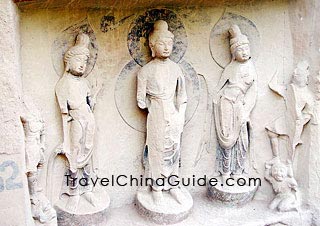
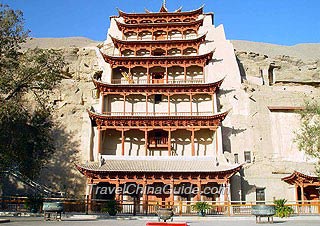
Located in the upper reaches of the Yellow River, northwest China, Gansu is one of the cradles of Chinese cultures. Neighboring provinces are Shaanxi to the east, Sichuan to the south, Qinghai and Xinjiang to the west and Inner Mongolia and Ningxia Hui Autonomous Region to the north. Surrounded by mountains, Gansu is mostly in the 1,000 meters (3,281 feet) above sea level and has varied and complicated topography ranging from snow mountains to the vast stretches of grasslands, broad and desolate deserts, lush forests and mysterious lakes. As a multiple ethnic settlement, Gansu has cultivated unique customs and culture. Known as the key place and golden section of the Silk Road, Gansu is full of cultural and historical relics including the Mogao Caves, Jiayuguan Pass, Labrang Monastery and Bingling Temple.
Cities in Gansu
What to See
With a long history and brilliant cultures, Gansu is abundantly endowed with cultural relics and natural scenery. Vast and graceful natural scenery like endless desert and pure glacial landscape presents an impressive and breath-taking picture before your eyes. Take for example the world-famous Mogao Caves. It is the largest and most well-preserved Buddhist art palace and also a post along the ancient Silk Road; the grand Jiayuguan Pass, an important outpost in ancient China, is the western end of the Great Wall; the Labrang Monastery in Xiahe is one of the largest Tibetan Buddhist resorts in China while the Bingling Temple in Lanzhou is a treasure trove of Han Buddhism. All of these are commendatory points of interest for your tour.
|
|

When to Go
It is important for tourists to be familiar with the local weather. The annual average temperature is about 0 C to 15C. The lowest temperature occurs in January and is approximately -14C to 3C and the highest temperature is in July between 22C and 25C. Average annual rainfall is between 30 to 860 millimeters (1.18 to 33.86 inches). With plenty of rain, you would be well-advised to take an umbrella along with you for the tour. However, despite the changeful weather, your sightseeing visit from May to October would be uninterrupted.
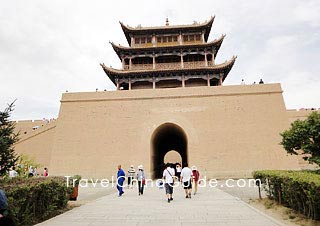 |
| Jiayuguan Pass in Gansu |
The local traditional handicrafts are archaized carpets (using patterns from ancient carpets), luminous cups and the duplicates of sculptures and murals of the Mogao Grottoes in Dunhuang.
 |
| Overhanging Great Wall, Jiayuguan |
 Recommended Gansu Tours:
Silk Road Dunhuang Trip
Lanzhou to Xiahe Labrang Monastery
A Complete Guide to 4-Day Visit to Linxia and Xiahe