Inner Mongolia Travel Guide
Inner Mongolia Facts
Chinese Name: 内蒙古自治区 (nèi méng gǔ zì zhì qū)
Abbreviation: Meng
Population: 25,396,000
Area: 1,183,000 square kilometers (456,759 square miles)
Location: in the north of China
Administrative Division: 9 cities (Hohhot, Baotou, Wuhai, Chifeng, Tongliao, Erdos, Hulunbuir, Bayannur, Ulanqab); 3 leagues (Alxa, Xilingol, Hinggan)
GDP (2019): CNY 1,721.25 billion (USD 249.49 billion)
Nationalities: Mongol, Daur, Oroqen, Ewenki, Hui, Han, Chaoxian, Man
China’s Third Largest Province Featuring Prairie Scenery
The Inner Mongolia Autonomous Region, bordering to the north with both the Republic of Mongolia and Russia, is the widest province in China (by its latitude). It is near to Heilongjiang, Jilin, Liaoning, Hebei, Shanxi, Shaanxi, Ningxia and Gansu within China. Hohhot is the capital of Inner Mongolia.
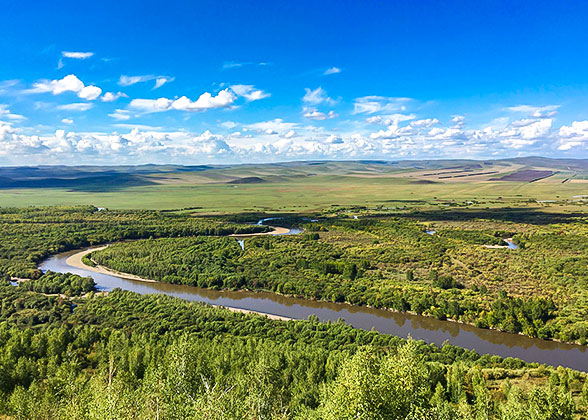
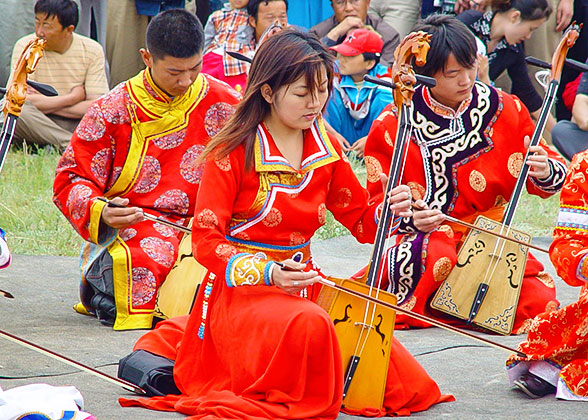
Most parts of Inner Mongolia are more than 1,000 meters (1,094 yards) above sea level and it presents various landforms, including plateau, mountains, hills, plains, deserts, rivers and lakes. Magnificent and changeable natural scenery, characteristic Mongolian yurts and ubiquitous herds of cattle and sheep will definitely give you a wonderful and unforgettable travel experience. Nadam Fair, White Festival, Oboo Sacrifice, Mare's Milk are major Inner Mongolia festivals which offer unique Mongolian customs. The best time to visit Inner Mongolia is in summer when the temperature is not particularly hot and the grassland scenery is very beautiful due to green and lush grasses. Nadam Fair is held from July to August and Oboo Sacrifice is on the 13th of May in the lunar calendar.
Climate in Inner Mongolia is very different during the year. Winter is cold and can be very long, with frequent blizzards. Usually summer is short and warm. Generally speaking, pleasant summer is the best time to appreciate the vibrant grasslands, but a number of visitors also travel there during winter for its captivating snow views. With regiona variations, the climate changes from arid to semi-humid from west to east, and to humid in the northeast. The annual rainfall is 80 - 450 millimeters, also increasing from west to east. The main feature of the climate here is that the different in temperature between days and nights is very big, so tourists should wear layer of clothes when traveling here. Inner Mongolia Weather by Month
Cities in Inner Mongolia
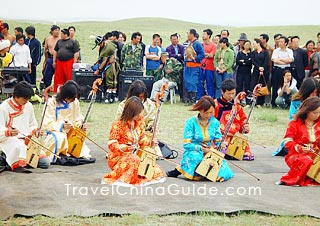 |
| Nadam Fair on Gegentala Grassland |
What to See
Inner Mongolia has a peculiar natural scenery, long history and brilliant culture. There are many attraction sites in this area. Some of the key attraction sites are:
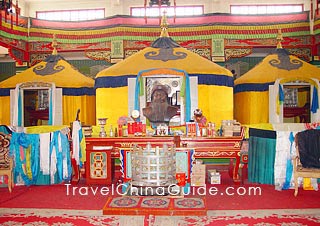
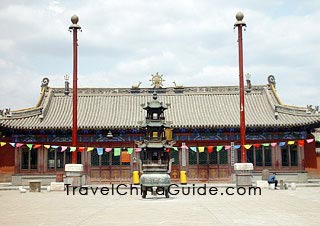
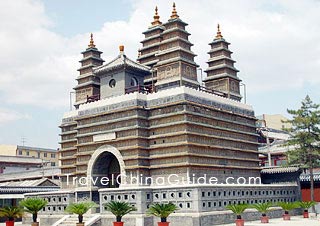
Wudangzhao Monastery in Baotou is a vast complex and used to be the residence of the highest ranking lama in Inner Mongolia and now it is the only intact Tibetan Buddhist monastery there.
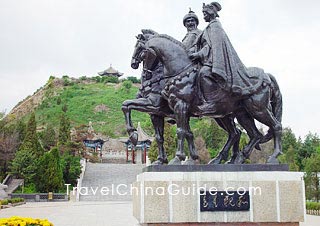
Inner Mongolia is the hometown of Genghis Khan (1162-1227), the great leader of Mongolians. Genghis Khan's Mausoleum, located 185 kilometers (about 71 miles) south of Baotou, holds his clothing buried in his memory.
Dazhao Temple is one of the biggest and best-preserved temples in Hohhot. Xilituzhao Palace is the largest surviving Lama temple in Hohhot.
|
|
Wanbu Huayanjing Pagoda, also called White Pagoda, used to be a place where nearly ten thousand volumes of Huayan Scripture were preserved. It is an exquisite and magnificent brick-wood structure about one hundred and fifty feet tall.
|
|
Populus Euphratica Forest in Ejina, located in the northwest of Ejina, Alxa of Inner Mongolia, is known as one of only three surviving populous euphraticas forests in the world and has over 20 scenic spots, such as Taolai woods - young populus Eeuphratica, paddle populus euphratica - best spot for photography, welcoming populus euphratica, hero woods - over 1,000-Year-Old Euphrates Poplars, etc.
But what is most attractive about Inner Mongolia is its vast grasslands, including the Hulunbuir Prairie, Xilamuren Grassland, Gegentala Grassland, Xilingol Grassland and Huitengxile Grassland are all good places for a grassland experience. The mushroom-like yurts, bright sky, fresh air, rolling grass and the flocks and herds moving like white clouds on the remote grassland, all contribute to make the scenery a very relaxing one. While visiting the place you may try different activities such as Mongolian wrestling, horse & camel riding, rodeo competitions, archery, visiting traditional families and enjoying the graceful Mongolian singing and dancing. The best time to visit the grassland is definitely during the traditional Mongolian Nadam Festival period when there is a better chance to both participate and feel the lively atmosphere of the grassland life.
You can also visit deserts in Inner Mongolia. The deserts are located in the western part of the province: the most famous and visited ones are Badain Jaran Desert, Tengger Desert and Kubuqi Desert. Early autumn (from the middle of August to the end of September) is the best time to explore the desert as the temperatures are very temperate.
See more attractions in Inner Mongolia: Hulun Lake