Always known for historical attractions, Kaifeng City was established more than 2700 years ago and today is considered one of the seven ancient capitals of China. During the Northern Song Dynasty (960-1127), it was the political, economic and cultural center for all of China, and this elevated the city to the stature of an international metropolis. Influences of later dynasties still remain in the various cultural relics and historical sites and visitors to Kaifeng will have much to see and do. The downtown tourist area is divided into two parts (North and South) by Daliang Road, which runs east to west.
Top Things to Do
 Dragon Pavilion Iron Pagoda Memorial Temple of Lord Bao Millennium City Park Xiangguo Temple
North route: Iron Pagoda – Dragon Pavilion – Qingming Riverside Landscape Garden – Imperial Street of Song Dynasty
Iron Pagoda is located in Iron Pagoda Park, which is in the northeastern part of the city. The pagoda still presents an imposing figure even after hundreds of years. The Iron Pagoda is appropriately named. Covered with glazed tiles in the color of iron, it looks like an iron pillar from a distance.
Situated in Dragon Pavilion Park in the northwest part of the city, Dragon Pavilion is actually a palace and not a traditional pavilion. The 'must see' sights in Dragon Pavilion Park include examples of Qing Dynasty (1644-1911) and Northern Song Dynasty (960-1127) architectures, the Pan and Yang lakes and the renowned landscaped gardens.
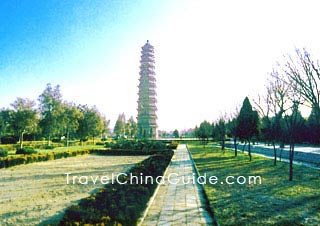 | | Iron Pagoda | | 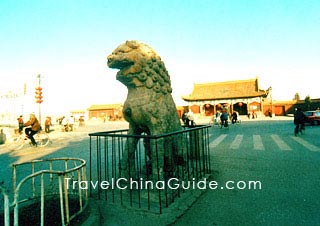 | | Stone Statue in Dragon Pavilion Park | |
The painting Chinese Symphonic Picture Riverside Scene at Qingming Festival, by Zhang Zeduan of the Northern Song Dynasty (960-1127), captures the prosperity of ancient Kaifeng City. Millennium City Park is a large-scaled scenic amusement park which offers tourists an opportunity to step back in history and explore both the flourishing sights of the ancient city and to experience the daily routines of the ancient inhabitants.
With the length of more than 400 meters (about 437.4 yards), Imperial Street of Song Dynasty is a recreation of the original Imperial Street which flourished with merchants during the Song Dynasty. Rows of antique stores line the street and browsing through their treasures conjures memories of old Kaifeng.
South route: Lord Bao Temple - Kaifeng Yamun - Xiangguo Temple - Kaifeng Museum
Located on the west bank of Baogong Lake, the Memorial Temple of Lord Bao is an excellent example of a complex built in the architectural style of the Song Dynasty. Lord Bao was an exemplary official and his name became a household word in China. Tourists will learn about the incorruptibility of Lord Bao through the historical materials, inscriptions and waxwork exhibits on display in the temple.
Kaifeng Yamun (administration office) is a theme-based scenic spot which recreates the stateliness and honest politics of Lord Bao and the Kaifeng Yamun. This is an excellent place to experience the Chinese culture of Yamun.
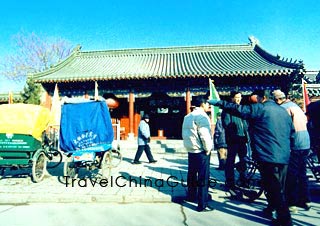 | | Memorial Temple of Lord Bao | | 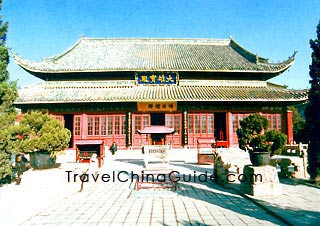 | | Xiangguo Temple | |
Built in AD 555 in the city center, Xiangguo Temple flourished with the support of the imperial family of the Northern Song Dynasty (960-1127). With the large-scaled area and various Buddhist activities, the temple is one of the ten famous ancient Buddhist temples in China.
Completed and opened to public in 1988, Kaifeng Museum (which was the former Henan Provincial Museum) exhibits the revolutionary achievements of the city in Modern China. Also on display are exhibits highlighting the most representative period of the history of the city - Song Dynasty, which is considered the glory days of Kaifeng.
- Last updated on Aug. 08, 2025 by Demi Li -