Yin Xu (Yin Ruins)
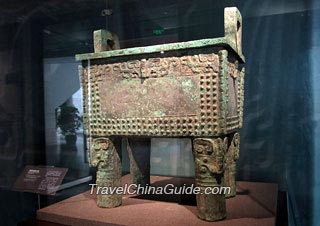 |
| Simuwu Ding |
About 3,300 years ago, one emperor of the Shang Dynasty moved his capital city to Yin, which is today's Anyang city, and since then Yin has been the capital city for more than 250 years. Today Yin Xu has proved to be the earliest remains of an ancient capital city in written record.
Covering a grand area of 24 square kilometers (more than 9 square miles), Yin Xu had a palaces district, civil residences district, tombs district and workshops district,
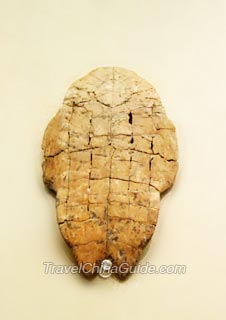 |
| Oracle Bone |
The large-scale excavation in Yin Xu has been continued since the last century. Besides the 150,000 pieces of oracles, abundant bronze ware has been excavated, and among them, Simuwu Ding, a 4-legged bronze cooking vessel is the biggest and heaviest bronze ware ever found worldwide. Apart from oracles and bronze ware, people have also excavated much pottery ware and jade. The excavation is still in progress and great discoveries come forth from time to time. Like a famous archeologist has said, in Yin Xu there are more treasures to be found.
Because of its great value in not only the historical relics of Chinese culture but also the human civilization of the whole world, Yin Xu topped the 100 Greatest Archeological Discoveries of China in the last century and it was listed in the World Cultural and Natural Heritage List of United Nations Educational, Scientific and Cultural Organization (UNESCO). Yin Xu is revealing its beauty to the world.
How to get to Yin Xu
2. Take Bus 15, 18 or 59 to Yin Du Qiao and then walk northwest for 15 minutes to get there.
| Entrance Fee | CNY 70; Free for children under 1.2m (3.9 feet). |
|---|---|
| Opening Hours | Apr. - Sep.: 8:00 - 18:30 Oct. - Mar.: 8:00 - 17:30 |
 You May Like:
9 Historical Places in China You Should Never Miss
- Last updated on Jul. 24, 2026 by Sherry Xia -