Baotou Attractions - Things to Do
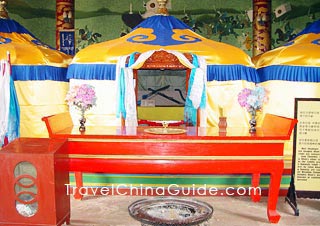 Genghis Khan's Mausoleum |
Top Things to Do
 Genghis Khan' Mausoleum Wudangzhao Lamasery Singing Sand Ravine Xilamuren Grassland
Baotou is a grassy and fertile land inhabited by flocks of deer. In the city center, a sculpture of a running deer serves as a symbol of this 'Deer City'.
Baotou has a rich historical and cultural heritage. Settlers had moved here six thousand years ago. Some two thousand years ago, Zhao and Qin states established the Great Wall here. Relics of the Zhao Great Wall and the Qin Great Wall in the suburbs of the city show the importance of Baotou in ancient times. By now, attractions in Baotou are in diversity, and you may choose the way you prefer for relaxation.
Visiting Lamasery
Baotouzhao Lamasery (also Fuhui Temple), in Guizi Jie of Chengdong District, is the only Mongolian style lamasery in the city. It was first built in the Qianlong Period of the Qing Dynasty (1644-1911). Another important structure, the Baotou Great Mosque, was the first mosque built when Islamism entered Baotou. Muslim visitors from home and broad come to worship here. This grand mosque is located in the Qingzhensi Xiang of Hedong District.
Relaxing in Desert, Grassland and Mountains
The spectacular Singing Sand Ravine is located in Ordos City, 50 kilometers (31 miles) south of Baotou. Undulating dunes, singing sands, oasis and Mongolian landscape are the highlights of this scenic spot. Sand surfing or exploring the desert on camelback, seeing far-reaching yellow sand dunes under the bright sky and snow-white clouds evoke poetical feelings. When in Ordos, the Genghis Khan' Mausoleum is a must see. The tomb of the famous king remains a sacred place for Mongolians to worship and remember.
There is no lack of green resorts in Baotou. Xilamuren Grassland is a famous summer resort on the bank of the Xilamuren River. The annual Nadam Fair attracts numerous visitors.
Jiufeng Mountain, in the middle section of Yinshan Mountains, consists of nine peaks with its main peak reputed to be the 'lesser Mt. Taishan'. The mountain features jagged rocks of various shapes and tumbling waterfalls. It is a natural scenic area that is rarely seen in the northwest plateaus of China. Located 10km north of the Salaqi Town of Tumote You Qi, Jiufeng Mountain is home to a variety of plant and animal life. Flowers and herbs flourish all over the mountain between summer and autumn.