Taishan Mountain
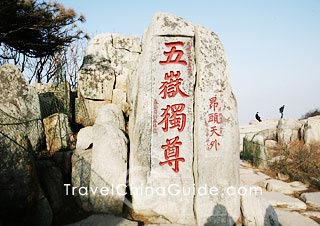 |
 Taishan Mountain Pictures Taishan Mountain Pictures |
The mountain was once called Mt. Daishan, Mt. Daizong or Mt. Taiyue and was renamed Mt. Taishan in the Spring and Autumn Period (770BC-476BC). It epitomizes splendid Chinese culture and was listed in the World Natural and Cultural Heritage List of UNESCO in 1987.
In ancient times, the first thing for an emperor to do on ascending to the throne was to climb Taishan and pray to heaven and earth or their ancestors. It was said that 72 emperors of different dynasties made pilgrimages here. These special ceremonies and sacrifices earned the mountain widespread fame. In addition, many poets and literary scholars also visited the mountain to gain inspiration. The grandiose temples, the numerous stone inscriptions and stone tablets are the best testaments to these visits. Mount Tai also played an important role in the development of Buddhism and Taoism.Taishan Mountain is a natural
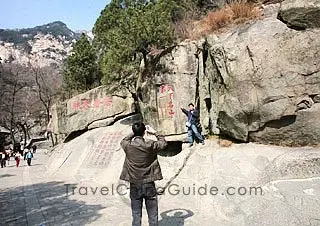 museum abounding with cultural relics and artworks. Heavenly Queen Pool, Red Gate Palace, Mid-Heaven Gate, Azure Cloud Temple are powerful examples. Stone carvings include the Buddhist Diamond Sutra in Jing Shi Valley, the Scripture of Taishan Mountain and the Mo Ya Tablet.
Besides historic relics, this mountain boasts unique natural scenery too. The lofty peaks, deep valleys, spectacular waterfalls, enchanting rocks and the centuries-old pines and cypresses will undoubtedly encourage you linger with no thought of leaving. The four wonders here are Sunrises from the East, the Sunset Glow, the Sea of Clouds and the Golden Belt along the Yellow River. It would be a great pity to miss the four wonders.
There are four ascents here.
East Route
This route is considered to be the Imperial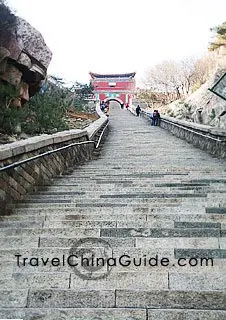 Route because the emperors all took this way to make sacrifices. With elegant natural scenery, palaces, stone inscriptions are also scattered along the winding path. You set off from Dai Temple, and then you will see Dai Zong Archway, Red Gate Palace, Jing Shi Valley, Hu Tian Pavilion and Eighteen Bends, etc. Dai Temple is the place where emperors stayed and offered their sacrifices. The temple was built in the Han Dynasty and expanded in the Tang and Song Dynasties. After several renovations, it has become the biggest and most complete temple on the Mount Tai.
There are 6000-plus steps along this route and it takes about four hours at an average to reach the peak. This classical route is an ideal choice for most people.
West Route
The west route is made up of two parts. The first part is the highroad from the Heaven and Earth Square to Mid-heaven Gate. The other part is the cable way from Mid-heaven Gate to the top of the mountain. This route is well equipped with modern facilities and is the most fashionable way to reach Jade Emperor Summit. Attractions concentrated on this route are Heaven and Earth Square, Black Dragon Pool, Tomb of General Feng Yuxiang and Longevity Bridge, etc.
Peach Blossom Ravine Route
This route is the most conven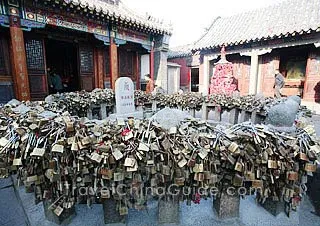 ient way to climb the mountain, especially for tourists who drive or take a bus from northern places. Peach Blossom Ravine can be accessed by taking the No.104 national highway, then setting off from the big parking lot by bus to the cable-car stop. From there you reach the top in a few minutes. The ropeway is designed for sightseeing from the air giving a clear view.
The best time to take this route is in spring and summer. The flourishing peach blossom, falling petals and limpid steams will make you feel like you are in heaven.
Tianzhu Peak Route
Just as its name implies, Tianzhu Peak was named because it is shaped like a candle, with a pine tree standing on top like a flame. This route is the most rugged one and is suitable for the adventurous. You will enjoy General Peak, Eight Immortals Cave, Big Tianzhu Peak and Small Tianzhu Peak, etc. It is also a better way to appreciate the pine trees in Hou Shi Wu (a spot where most of the old pine trees are growing).
Taishan Mountain is a perfect combination of natural scenery and cultural relics and is well worth visiting.
How to Travel from Taishan Railway Station to Taishan Mountain
How to Travel From Tai'an Railway Station to Mount Tai
1. If you arrive at Tai’an Railway Station, then you need to transfer to Tourist Bus Line 1, 2, or 3 to Tianwai Village.
How to Travel from Tai'an City to Taishan Mountain
Take bus 2, 3 (West Ring Line), 11, 14, 19, 37, 39 (North Ring Line), 39 (East Ring Line), 45, 49, 67, Tourist Line 1, 3 or 5.How to Travel from Jinan to Mount Tai
Taishan Mountain Entrance Fee & Opening Hours
| Through Ticket | Enter from Tianwai Village | CNY115 |
| Enter from Hongmen | ||
| Enter from Peach Blossom Ravine | ||
| Independent Dai Temple Ticket | CNY 20 | |
| Opening Hours | From Tianwai Village by bus | 06:00 - 21:00 |
| From Hongmen by foot | 05:00 - 24:00 | |
| From Peach Blossom Ravine by bus | 08:00 - 17:00 | |
| From Peach Blossom Ravine by foot | 08:00 - 16:00 | |
 Notes:
1. The through ticket contains entrance tickets for Dai Temple, Mount Taishan, Dai Temple, Red Gate Palace, Heavenly Queen Pool, Jade Spring Temple and Puzhao Temple. And it is valid for three consecutive days.
2. Free for children under 1.4 meters (4.2 feet) or 6 years old; Children between 6 and 18 years old can buy half price ticket.
3. Seniors elder than 60 years old can enjoy free entrance tickets with a valid ID or passport.
Taishan Cable Car Fee
| Cable Cars | Fee | Operation Hours |
|---|---|---|
| Mid Heaven Gate (Zhongtianmen) Cable Car | CNY 100 for a one-way trip Children taller than 3.9ft (1.2m) should buy a full ticket. | April 1 to October 31: 07:00 to 17:30; November 1 to March 31: 07:30 to 17:00. |
| Taohuayuan Cable Car | CNY 100 for a one-way trip Children taller than 3.9ft (1.2m) should buy a full ticket. | April 1 to October 31: 08:00 to 17:00; November 1 to March 31: 08:00 to 16:30. |
| Houshiwu Cable Car | CNY 20 for a one-way trip Children taller than 3.9ft (1.2m) should buy a full ticket. | pril 1 to October 31: 08:30 to 16:00; and closed from November 1 to March 31. |
Sightseeing Buses
| Lines | Fee | Operation Hours |
|---|---|---|
| Tianwai Village - Mid Heaven Gate | CNY 35 for a one-way trip | 05:30 - 21:00 |
| Peach Blossom Ravine - Taohuayuan | 08:00 - 21:00 |
| January- June | ||||||
| Month Day | Jan. | Feb. | Mar. | Apr. | May | Jun. |
| 1st | 07:15 | 07:05 | 06:34 | 05:49 | 05:09 | 04:45 |
| 11th | 07:15 | 06:55 | 06:20 | 05:35 | 04:59 | 04:43 |
| 21st | 07:11 | 06:44 | 06:05 | 05:21 | 04:51 | 04:43 |
| July-December | ||||||
| Month Day | July | Aug. | Sep. | Oct. | Nov. | Dec. |
| 1st | 04:47 | 05:07 | 05:33 | 05:57 | 06:25 | 06:55 |
| 11th | 04:52 | 05:16 | 05:41 | 06:05 | 06:35 | 07:04 |
| 21dt | 04:59 | 05:24 | 05:49 | 06:15 | 06:46 | 07:11 |
 China Sightseeing Tours to Top 6 Attractions on CNY Banknotes
 Recommended Mt. Taishan Tour:
Jinan - Qufu - Mt. Tai: 3 days Shandong tour from Jinan to the hometown of Confucius and Mt. Tai