Han Nationality
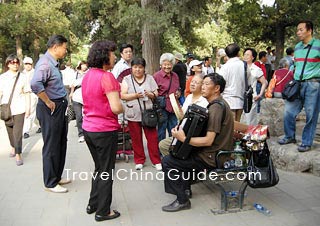
As the largest ethnic group in both China and world wide, Han nationality has a population of about 1.16 billion accounting for 19% of the world's total population. Over 99% of them live in China while others live abroad in other countries like Singapore, Australia, Malaysia, Thailand, North America and many countries in Europe such as the United Kingdom of Great Britain. Han Chinese has become one of the main ethnic groups in those countries.
For years, they together with other ethnic minorities lived mainly on agriculture, and made outstanding achievements in the spheres of politics, philosophy, art, literature and natural science.
 Language and Character:
Chinese belongs to the Sino-Tibetan family of languages and is their language. The language is divided into seven dialects namely Mandarin, Wu Dialect, Xiang Dialect, Gan Dialect, Min Dialect, Cantonese and Hakka. In different regions, the standard of Chinese varies. The Mandarin is the standard designated language on the Chinese mainland and Taiwan; while Cantonese is the prime dialect of Hong Kong.
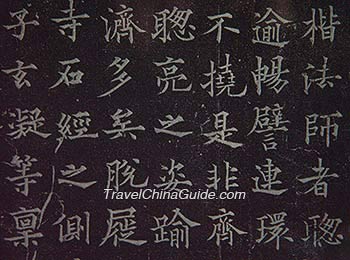
Chinese is written in two forms by the Han people – the traditional and simplified Chinese characters. The latter is derived from the former and is now widely and frequently used.
Religion:
Confucianism, Taoism and Buddhism, are the main religions. Many people also belong to various Christian denominations due to the influence of western culture.
Food and Food Culture:
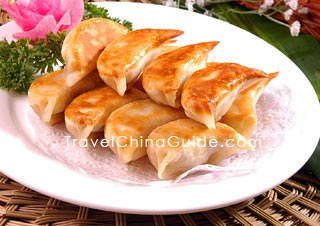
The staple food is rice and wheat. Rice is versatile and can be served in a variety of ways including porridge, rice cake, glutinous rice dumpling and rice noodles. Wheat is used in the production of steamed bread, noodles, steamed stuffed buns and wonton. Han people living in different regions of China have formed unique styles of cooking. The eight cuisines are the representative.
Tea and alcohol are the traditional drinks. They like to entertain their honored guests with tea and alcoholic drinks.
Housing:
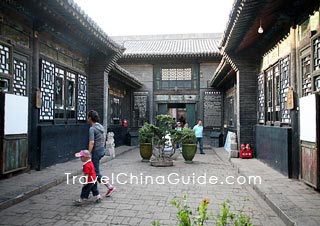
House styles and materials of the Han people vary in different regions of China. Those built in North China are mostly made of bricks in the courtyard style. The courtyard (Sihe Yuan) in Beijing is a representative. For houses in Northeast China, the style is almost the same as that in North China except for the walls. As Northeastern China is extremely cold, walls are built thicker and more solid than those of other places to retain warmth. However, in southern China, the Han people build their houses mainly of timber. The unique style of their buildings can be admired in the earthen buildings (tulou) in Fujian and pavilions in Suzhou.
All the houses of Han are suggested to be positioned in the north facing south to catch the maximum sunlight.
Festivals:
Festivals are rich and colorful. The most important of these are the Chinese New Year, Lantern Festival, Dragon Boat Festival, and Mid-Autumn Day. Please refer to the Traditional Chinese Festivals to see detailed information.
 Further Reading: 55 Chinese ethnic minorities
For years, they together with other ethnic minorities lived mainly on agriculture, and made outstanding achievements in the spheres of politics, philosophy, art, literature and natural science.
|
|
 Language and Character:
 Chinese belongs to the Sino-Tibetan family of languages and is their language. The language is divided into seven dialects namely Mandarin, Wu Dialect, Xiang Dialect, Gan Dialect, Min Dialect, Cantonese and Hakka. In different regions, the standard of Chinese varies. The Mandarin is the standard designated language on the Chinese mainland and Taiwan; while Cantonese is the prime dialect of Hong Kong.
Chinese is written in two forms by the Han people – the traditional and simplified Chinese characters. The latter is derived from the former and is now widely and frequently used.
Religion: Confucianism, Taoism and Buddhism, are the main religions. Many people also belong to various Christian denominations due to the influence of western culture.
Food and Food Culture: The staple food is rice and wheat. Rice is versatile and can be served in a variety of ways including porridge, rice cake, glutinous rice dumpling and rice noodles. Wheat is used in the production of steamed bread, noodles, steamed stuffed buns and wonton. Han people living in different regions of China have formed unique styles of cooking. The eight cuisines are the representative.
Tea and alcohol are the traditional drinks. They like to entertain their honored guests with tea and alcoholic drinks.
|
|
 Housing:
House styles and materials of the Han people vary in different regions of China. Those built in North China are mostly made of bricks in the courtyard style. The courtyard (Sihe Yuan) in Beijing is a representative. For houses in Northeast China, the style is almost the same as that in North China except for the walls. As Northeastern China is extremely cold, walls are built thicker and more solid than those of other places to retain warmth. However, in southern China, the Han people build their houses mainly of timber. The unique style of their buildings can be admired in the earthen buildings (tulou) in Fujian and pavilions in Suzhou.
All the houses of Han are suggested to be positioned in the north facing south to catch the maximum sunlight.
Festivals:Festivals are rich and colorful. The most important of these are the Chinese New Year, Lantern Festival, Dragon Boat Festival, and Mid-Autumn Day. Please refer to the Traditional Chinese Festivals to see detailed information.
Further Reading: 55 Chinese ethnic minorities- Last updated on Aug. 07, 2025 by Gabby Li -