LJ02: 5 Days Private Lijiang & Shangri-La Tour
Tour Type: Private Tour, any part of the itinerary can be customized
Guide & Driver: English-speaking guide & experienced driver with air-conditioned vehicle
Meals: 4 breakfasts, 4 lunches
Highlights:
Guide & Driver: English-speaking guide & experienced driver with air-conditioned vehicle
Meals: 4 breakfasts, 4 lunches
Highlights:
- Explore Lijiang Old Town and overlook the most sacred Jade Dragon Snow Mountain
- Trek in the Tiger Leaping Gorge & enjoy the breathtaking sceneries
- Admire the sheer natural beauty in the Lost Horizon of Shangri-La
- Make a pilgrimage to Songzanlin Monastery, aka "the little Potala Palace"

From USD679 per person Free Inquiry
- Itinerary
- Tour Prices
- Price Includes
Day 1 Arrival in Lijiang
Lijiang Old Town
Upon arrival, you will meet your professional guide at the Customs of Lijiang Airport, and then a comfortable private drive will take you to the well-selected hotel. After a short rest, your guide and driver will take you to have lunch at an authentic local restaurant.
This 5-day private Lijiang to Shangri-La tour with start officially with a visit to the Lijiang Old Town, which has been guarded by the Jade Dragon Snow Mountain for over 800 years. Strolling along the crisscrossing streets, you will catch sight of the wooden folk houses, flagstone bridges and lucid rivers. Besides, you will also view the eminent Jade Dragon Snow Mountain from a distance. After getting the first impression of Lijiang, you will be escorted back to the hotel.
Meals: Lunch
This 5-day private Lijiang to Shangri-La tour with start officially with a visit to the Lijiang Old Town, which has been guarded by the Jade Dragon Snow Mountain for over 800 years. Strolling along the crisscrossing streets, you will catch sight of the wooden folk houses, flagstone bridges and lucid rivers. Besides, you will also view the eminent Jade Dragon Snow Mountain from a distance. After getting the first impression of Lijiang, you will be escorted back to the hotel.
Meals: Lunch
Day 2 Lijiang
Black Dragon Pool Park
In the morning, you will be accompanied to sightsee the Baisha Village, the birthplace of Dongba Culture where antiquated architecture are everywhere. There, you will also have a chance to visit a Naxi family, which will help you get a better understanding of the local customs and life. Later, you will have a visual feast by viewing the lively Baisha Murals. Afterwards, you will be taken to the Former Residence of Joseph Rock to learn about the life story of this American explorer who introduced the Naxi minority and their unique Dongba culture to the world.
After lunch, you will be guided to the Black Dragon Pool Park. In the middle of the park lies a crystal clear spring pool, reflecting the Jade Dragon Snow Mountain. The last stop of today's private Lijiang tour package will be the folklore Dongba Culture Museum, which is a comprehensive museum displaying history, nature as well as art.
Meals: Western buffet breakfast, Lunch
After lunch, you will be guided to the Black Dragon Pool Park. In the middle of the park lies a crystal clear spring pool, reflecting the Jade Dragon Snow Mountain. The last stop of today's private Lijiang tour package will be the folklore Dongba Culture Museum, which is a comprehensive museum displaying history, nature as well as art.
Meals: Western buffet breakfast, Lunch
Day 3 Lijiang - Shangri-La
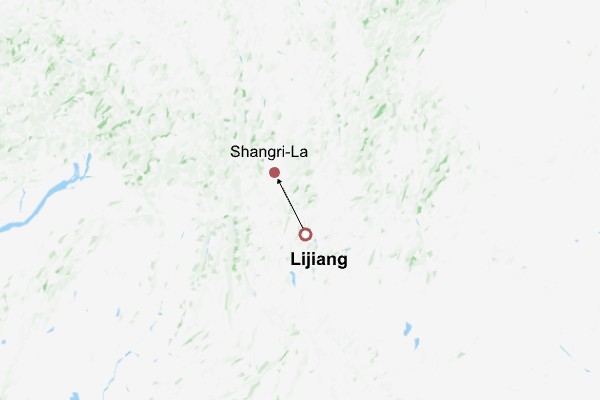
After breakfast, we will take a comfortable ride to Shangri-La. On the way, we will first stop at the First Bend of the Yangtze River to see the v-shaped course and the Shigu Town, a rural village surrounded by mountains with idyllic scenery. Then we will come to the Tiger Leaping Gorge to watch the turbulent river and the roaring waves. In the end, you will arrive in Shangri-La and your guide will help you check into the hotel.
Meals: Western buffet breakfast, Lunch
Meals: Western buffet breakfast, Lunch
Day 4 Shangri-La
Songzanlin Monastery, Shangri-La
Today's private Shangri-La tour will start with a visit to the Songzanlin Monastery, the largest Tibetan Buddhist temple in Yunnan. Because of the grand scale and palatial layout, the temple gains the reputation of "the Little Potala Palace". Later, you will have a chance to pay a visit to a Tibetan family to taste the hot buttered tea and interact with the host.
After lunch, your guide will lead you to the Potatso National Park to appreciate the picturesque landscape of the snow peaks, luxuriant trees and clear sky. There you could also appreciate the amazing scenery of Shudu Lake, which is one of the largest plateau lake in Shangri-La.
Meals: Western buffet breakfast, Lunch
After lunch, your guide will lead you to the Potatso National Park to appreciate the picturesque landscape of the snow peaks, luxuriant trees and clear sky. There you could also appreciate the amazing scenery of Shudu Lake, which is one of the largest plateau lake in Shangri-La.
Meals: Western buffet breakfast, Lunch
Day 5 Departure from Shangri-La
Your 5 days Lijiang to Shangri-La trip will come to an end today. We will escort you to the airport according to your flight schedule and see you off there.|
Meals: Western buffet breakfast Our Friendly Tip
There are few direct flights to and out of Shangri-La. You may consider transferring from Kunming, Guangzhou and Chengdu. Besides, if you want to extend your tour to those cities or any other destinations, please feel free to let us know and we will be very glad to further tailor your tour. Wish you a pleasant journey!
Meals: Western buffet breakfast
Our Friendly TipThere are few direct flights to and out of Shangri-La. You may consider transferring from Kunming, Guangzhou and Chengdu. Besides, if you want to extend your tour to those cities or any other destinations, please feel free to let us know and we will be very glad to further tailor your tour. Wish you a pleasant journey!
This trip can be customized to meet your individual needs!
| Destinations | Luxury Hotels | Standard Hotels |
|---|---|---|
| Lijiang | InterContinental Lijiang Ancient Town Resort  | Duofu Resort |
| Shangri-la | The 5th Meteorite·Light-year Hotel | Floral Hotel Le Fu Ge Dan Shangri-La |
Tour Prices
| With Luxury Hotels | |
|---|---|
| 2-3 travelers | 4-5 travelers |
USD819 | USD789 |
| With Standard Hotels | |
|---|---|
| 2-3 travelers | 4-5 travelers |
USD719 | USD679 |
- Prices are per person on twin sharing basis.
- Any part of the itinerary e.g. tour length, activities & hotels can be tailored to your individual interests.
Price Includes
- Hotel accommodation with breakfasts
- Lunches as itinerary specifies
- Private English-speaking guides
- Private drivers & air-conditioned vehicles
- Entrance fees to tourist sites
Price Excludes
- International airfares
- Entry visa fees
- Tips or gratuities for guides and drivers
- Peak season surcharge (public holiday, July & August, etc.)
Why Travel With Us
Itineraries you may also like:
3 Days Lijiang from USD349