Gulangyu Island
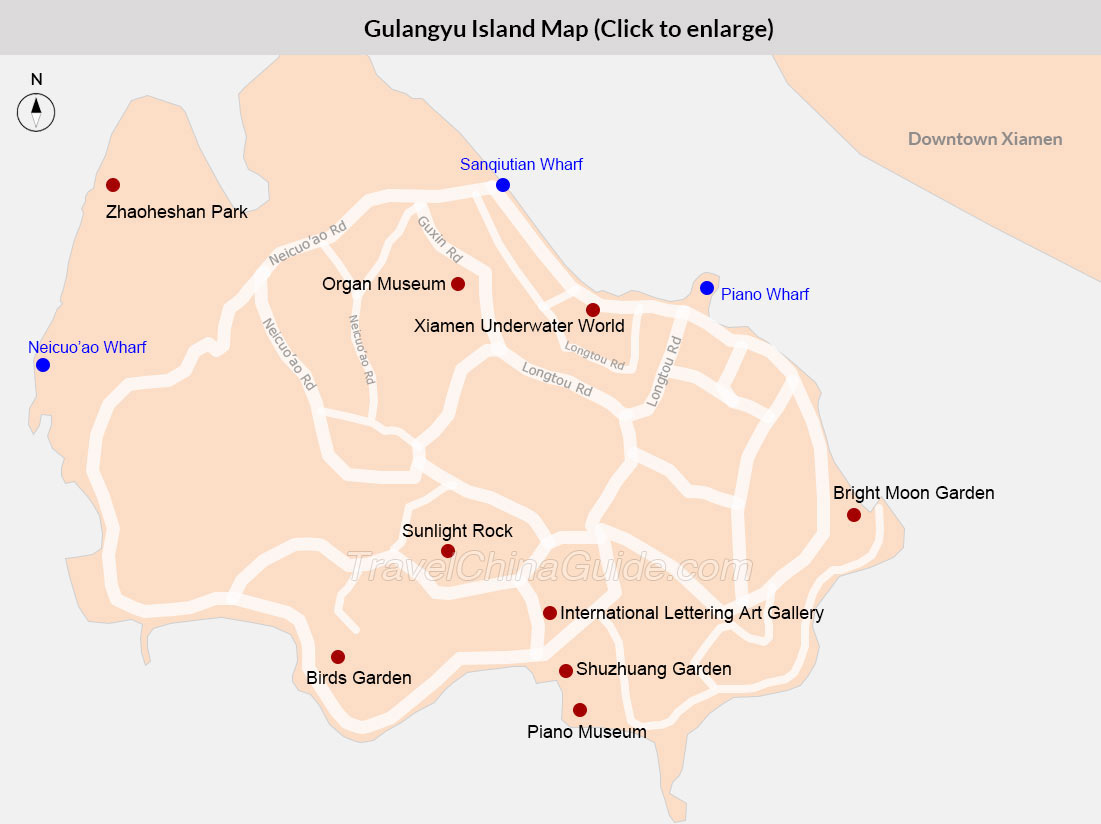 |
Gulangyu Island Map Gulangyu Island Pictures Gulangyu Island Pictures |
Gulangyu Island History
During the later Ming Dynasty, the troops of national hero Zheng Chenggong were stationed here. After the Opium War in 1842, 13 countries including Great Britain, France and Japan established consulates, churches, and hospitals, turning Gulangyu Island into a common concession. In 1942, Japan occupied the island until the end of the War of Resistance against Japan.
This area has about 20,000 permanent residents, all of whom enjoy a comfortable, relaxing life. Only electric-powered vehicles are permitted on Gulangyu Island, so the environment is free from the noise and pollution of combustion engines. You can have many things to do on Gulangyu Island. Breathing the clean air, appreciating the ever-present green trees and lovely flowers, anyone here can feel like they are in heaven. With classical and romantic European-style architecture, Gulangyu Island truly deserves to be called the 'Architecture Museum'. It is also known as the 'Cradle of Musicians' and 'Island of Music' because of its reputation for music appreciation. To comply with the music atmosphere of the island, a Piano Museum was built there in 2000.
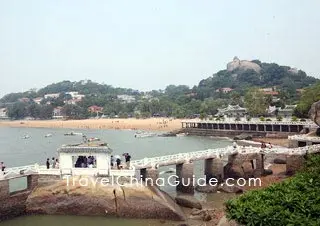 |
| Gulangyu Island, Xiamen |
The Island Ring Road, which circles Gulangyu Island, allows you to fully enjoy all the sights of this small, charming island.
Among the many scenic spots on the island, the most attractive are Sunlight Rock and the Shuzhuang Garden.
Sunlight Rock
At the foot of Sunlight Rock stands the Memorial Hall of Zheng Chenggong, built in honor of the hero's feats which include expelling the Dutch colonists and re-occupying Taiwan. Wandering up the steep rock path, visitors will see many profound inscriptions left by poets, the oldest of which dates back to over 400 years. This is the main cultural sight on the hill. Continuing on, you will see the preserved training grounds of Zheng Chenggong's troops. Near the field is a huge rock bridging two cliffs, forming a natural entrance to a cave. This is called 'Old Summer Cave' (Gu Bishu Dong) where you can feel a pleasantly cool breeze. It's the perfect viewing spot to appreciate the scenery of Gulangyu Island. A fantastic panorama of Xiamen City, including Nanputuo Temple, Xiamen University, and Hulishan Battery is within view.
|
|
Shuzhuang Garden
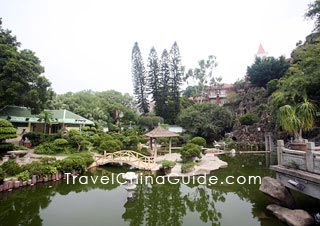
The principle of hiding elements is embodied in the way the ocean remains hidden from view even if you walk right up to the garden gate. However, once you emerge from the bamboo forest, the seascape leaps into view. Climb the Tower of Tide-Viewing to really get a terrific look at the sea.
Borrowing from one's surroundings refers to cleverly using naturally available scenery. Using the original slopes facing the sea, the reefs in the bay, and the shape of the shoreline, the former garden owner built bridges and pavilions at various levels. The panorama changes from a small bay to a vast ocean as you ascend. Here, visitors can taste the spray of the surging waves and get a bird's-eye view of other charming islands. Both Sunlight Rock and Hero Hill (Yingxiongshan) are also visible.
The garden also possesses another characteristic - the combining of movements. Its unique arrangement joins a rockwork that includes a maze of connected caves with fine pavilions on the side of the slope. Lovely children chasing and gamboling among the caves represent movement and activity, while people resting in the pavilions give a feeling of tranquility and harmonious contemplation.
As a complex of Chinese traditional gardens, Shuzhuang Gardens entices visitors so much that one cannot help but want to see inside.
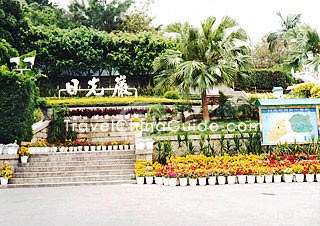
Gulangyu Island has other sights worth seeing including the Bright Moon Garden, the Seasight Watch Garden, Yu Park, and Xiamen Museum. The Bright Moon Garden is located in the southeast of the island with an area of over 20,000 square meters (23,921 square yards). It is a statuary garden of national hero Zheng Chenggong with enchanting views. The appealing Seasight Watch Garden boasts villas of various styles of both China and the West. It has become a noted resort for visitors.
|
|
How to go to the Gulangyu Island from Xiamen
Daytime
| Route | Operating Time | Ticket Fare (Round-trip) | Duration | |
|---|---|---|---|---|
| Jun. - Sep. | Oct. - May | |||
| Xiagu Wharf - Sanqiutian Wharf | 7:10 - 18:30 | 7:10 - 17:30 | CNY 35 | 20mins |
| Xiagu Wharf - Neicuo'ao Wharf | 7:10 - 18:30 | 7:10 - 17:30 | CNY 35 | 20mins |
| Songyu Wharf - Neicuo'ao Wharf | 7:30 - 19:00 | 7:10 - 17:50 | CNY 30 | 8mins |
At night (17:50 – 06:30 next day):
From Hall 2 of Xiamen Lundu Ferry Terminal near Zhongshan Road, take a ship to Sanqiutian Wharf. The roundtrip fare is CNY 35 and it takes about 7mins.
Note:
1. Passports are required when buying the tickets and embarking on the ship.
2. Passengers with roundtrip tickets should leave Gulangyu within 20 days using the returning ticket.
3. Children under 3.9ft (1.2m) can get a free ticket by showing passport at the ticket window. Children between 1.2m and 1.5m (4.5ft) can enjoy half price ticket.
Getting Around:
2. By electric tourist buggy.
| Entrance Fee | Free for the Gulangyu Island. Sunlight Rock: CNY 50 Bright Moon Garden: CNY 10 Organ Museum: CNY 15 International Lettering Art Gallery: CNY 5 Shuzhuang Garden: CNY 30 A combo ticket costs CNY 90 for entering the above scenic spots. |
|---|---|
| Opening Hours | Sunlight Rock & Shuzhuang Garden & Bright Moon Garden: Jun. - Sep.: 5:30 - 21:00 Oct. - May: 5:30 - 20:30 Organ Museum & International Lettering Art Gallery: Jun. - Sep.: 8:15 - 18:15 Oct. - May: 8:15 - 17:45 |
| Recommended Time for a Visit | 2 days |
 Top 10 Things to Do in Xiamen 10 Famous Places in China with Rising Popularity over the Web
- Last updated on Aug. 05, 2025 by Demi Li -