Museum of the Western Han Dynasty Mausoleum of the Nanyue King
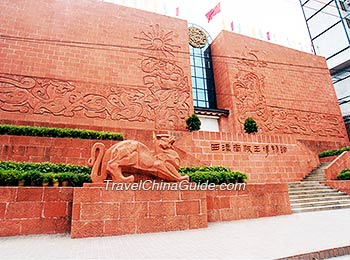
Located on Jiefang Bei Road, Guangzhou, the Museum of the Western Han Dynasty Mausoleum of the Nanyue King is the oldest and largest Han tomb with the most funerary objects in Lingnan (South of the Nanling Mountain) Area. As one of the 80 famous museums in the world, it covers 14,000 square meters (150, 699.6 square feet) with 10 exhibition halls.
 |
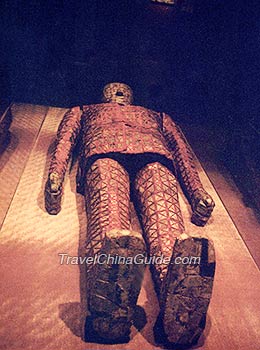
Highlighting the Museum of the Western Han Dynasty Mausoleum of the Nanyue King is a silk-jade garment made up of 2,291 pieces of jade. Though jade garments with pieces connected by gold, silver, or copper are not uncommon, this garment with jade pieces connected by silk is the only one of its kind in the world. Nor are historical records available to verify other jade garments connected by silk thread. In addition, the style of buttons down the front is unique among unearthed jade garments. This silk-sewn-jade garment shows the early development of jade garments as well as development of the Nanyue culture.
 |
| Jade Burial Suit |
 |
How to get to the Museum of the Western Han Dynasty Mausoleum of the Nanyue King
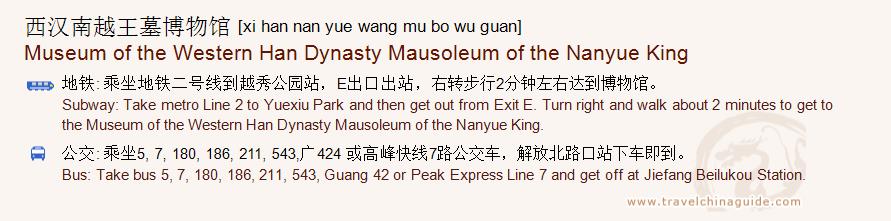
Take metro Line 2 to Yuexiu Park and then get out from Exit E. Turn right and walk about 2 minutes to get to the Museum of the Western Han Dynasty Mausoleum of the Nanyue King.
By Bus:
Take bus 5, 7, 284, 519, 528 or 555 and get off at Jiefang Beilukou Station, then you can see the museum.
| Entrance Fee | CNY 10 for adults; CNY 5 for seniors aged 60-64; free for minors and seniors over 65. |
|---|---|
| Opening Hours | 9:00 to 17:30 (Stop selling ticket at 17:00), close on mondays |
 Nearby Attractions:
 Sun Yat-sen Memorial Hall Yuexiu Park Beijing Road Guangzhou Museum Guangxiao Temple
 Further Reading: 12 Best Places to Visit in Guangzhou