Luoyang Attractions - Things to Do
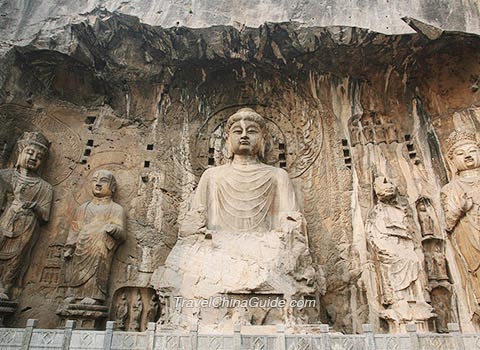 |
| Longmen Grottoes |
The city of Luoyang enjoys a pre-eminent reputation as a cradle of Chinese civilization. For over 4,000 years, it served as the capital city of thirteen different Chinese kingdoms including the first, the Xia Dynasty (21st-16th century B.C.). The city is thus endowed with countless historical sites and cultural treasures.
Top Things to Do in Luoyang
 Longmen Grottoes Shaolin Temple White Horse Temple
Longmen Grottoes is situated in the southern outskirts of the city. Having survived for about 1,400 years, the over 2,100 grottoes have tens of thousands of statues of Buddha and more than forty Buddhist pagodas as well as a large number of stone stables. These grottoes, together with the Yungang Grottoes in Datong and the Mogao Caves in Dunhuang, are the three major cave clusters in China. Bai Garden is nearby the grottes, separated by the Yi River in front of the grottoes.
White Horse Temple is a Buddhist temple in the eastern portion of the city. This temple, which is over 2,000 years old, is honored as the 'Founder's Home' and the 'Cradle of Buddhism'.
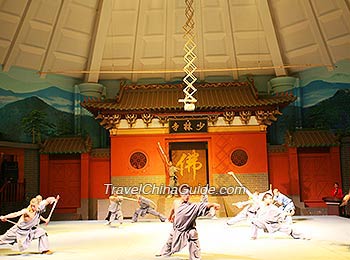
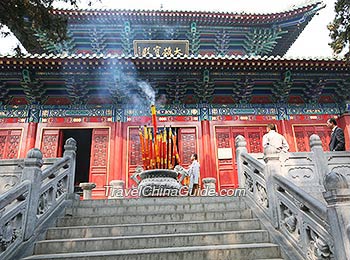
Shaolin Temple , on the slopes of Songshan Mountain between Luoyang and Zhengzhou, is renowned for its Shaolin martial arts that are so popular in China and the rest of the world. Built in the year 495, the temple preserves its original palaces, mural paintings and stone inscriptions. Not far from the temple, there is the Shaolin Zen Music Ritual performanced at night, known as the world's largest-scale outdoor performance in mountains and mainly showing the Zen Buddhism concepts.
Other Attractions
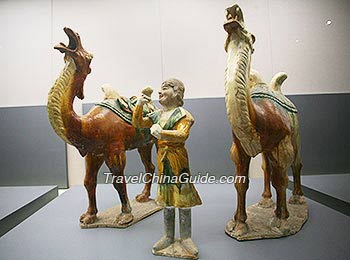
Luoyang Ancient Art Museum is located in a village in the northern part of the city. Here we find 25 restored ancient tombs of several dynasties ranging from the Western Han Dynasty (206 B.C.-24 A.D.) to the Northern Song Dynasty (960-1127). There are elaborate murals in the tombs reflecting the daily life of the nobility in ancient times. Luoyang Museum is the only comprehensive museum in the city. It is located in the prosperous district in the downtown, neighboring the Wangcheng Park in the west. This reputed museum well exhibits the rich history of the city.
Related Attraction: Luoyang Museum
|
|
The city's natural beauties are as equally attractive as its historical sites. White Cloud Mountain National Forest Park (Baiyunshan) spans the Yangtze, YellowRiver and Huai River. White Cloud Mountain National Forest Park built on the mountain is praised as the 'Natural Museum' because of the manyspecies of animals and plants in its primitive forests. Its seven peaks are wreathedby white clouds all year round giving the mountain an aura of mystery and charm.
China National Flower Garden, sizing 255 acres, is located at the southern bank of Luo River of Luoyang. This garden cultivates 500,000 peonies in 9 colors and other 2,000,000 plants of 1,000 kinds. It is advised to go there from April to early May to apprecite the scene of peony blossom.
Longyuwan National Forest is called 'Luoyang's Backyard Garden.' The rolling hills, narrow valleys andgrand waterfalls provide visitors ample contact with nature. Mt. Qingyao isfamous for the emerald green trees on its mountainsides. It is said to be the'Mysterious Capital' of Huangdi -the ancestor of Chinese civilization. Another 'must see' place is the Cockscomb Limestone Cave (Jiguan Cave) designated as the 'Top Cave in Northern China.'The limestone formations take on various appearances looking at different timeslike shields, flags, pillars or waterfalls. Well known as the home of Monkey King, the Flower and Fruit Mountain National Forest Park is also one of the seventy-two BlissfulLands in Taoism. Bai Garden is a famous resort in the city. It is based on the tomb of Bai Juyi, a reputedpoet of the Tang Dynasty.
The city is particularly famous for its numerous types of peony, a traditional Chinese flower that symbolizes magnificence, abundance and thriving. Its peonies rank as the best in the country due to their long growing period and wide varieties. Wangcheng Park, Xiyuan Park and Peony Park are the best places to see and appreciate these beautiful flowers.
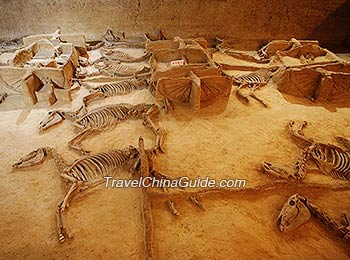
Museum of Luoyang Eastern Zhou Royal Horse and Chariot Pits is located under the Eastern Zhou Imperial City Square, right on the original site of the ancient capital of Eastern Zhou Dynasty. It has the only site of this kind of chariot drawn by six horses in the world. It also shows the profiles of the imperial city and cultural relics of Eastern Zhou Dynasty.
Situated in the northern suburbs of Luoyang, the Yellow River Xiaolangdi Scenic Area is home to the Xiaolangdi Water ConservancyProject. The project plays an essential role in irrigation, flood preventionand electricity generation for people in the lower reaches of the Yellow River.The reservoir divides the river into thousands of sections making the area looklike a 'Thousand Island Lake.
|
|
 Reply
Reply 0
0 0Reply
There are about 80 bullet trains running between Xi'an and Luoyang. From the hotel in Luoyang, walk to Peony Square to take metro line 1 to Jiefang Rd., the transfer to line 2 to Longmen Railway Station and catch a train there to Xi'an North. At Xi'an North Railway Station, take metro line 2 to Bell Tower, then walk to the hotel.
00ReplyReply00Reply00Reply00ReplyReply00ReplyReply00ReplyYou can take public bus no.94 to Longmen Avenue Bus Stop. Then walk south around 750 meters to find the scenic area.
The ticket fare is CNY2/person. The scenic area entrance ticket is CNY90/person.
You shouldn't miss Fengxian Temple, Wanfo Cave, Guyang Cave, Binyang Cave and Lotus Cave (Lianhua Cave).
You can spend 4-5 hours for sightseeing.
00Reply00ReplyReply00Reply