Yungang Grottoes
Yungang Grottoes, one of the three major cave clusters in China, punctuate the north cliff of Wuzhou Mountain, Datong. The area was excavated along the mountain, extending 1 km (0.62 miles) from east to west, revealing 53 caves and over 51,000 stone statues.
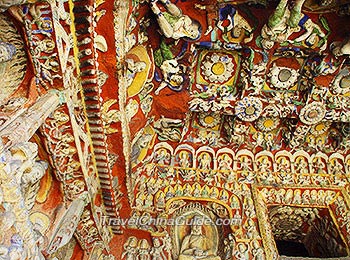
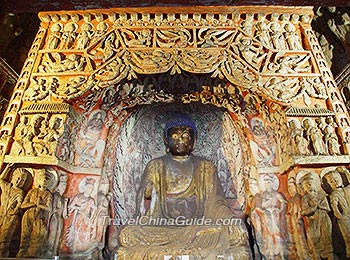
The grottoes are divided into east, middle, and west parts. Pagodas dominate the eastern parts; west caves are small and mid-sized with niches. Caves in the middle are made up of front and back chambers with Buddha statues in the center. Embossing covers walls and ceilings.
Started in 450, the grottoes is a relic of the Northern Wei Dynasty (386-534). Absorbing Indian Gandhara Buddhist art, the sculptures here developed traditional Chinese art melded with social features of the time.
During the reign of Emperor Xiao Wen a monk named Tanyao took charge of the construction of Yungang Grottoes. The largest cave is No.6, which is 20 meters (65.6 foot) high, standing a 15-meter (49.2-foot)-high pagoda-like column decorated with Buddha statues and designs. On the four sides of the tower pillar, and on the east, south and west walls of the cave, 33 embossed panels depict the story of Saykamuni.
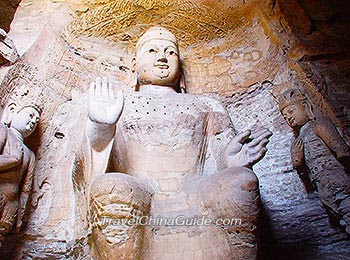
Caves worth special attention are No.16, 17, 18, 19, and 20. Upon Tan Yao's suggestion, five statues of Emperors Taizu, Taizong, Shizu, Gaozong, and Gaozu as Buddha express the religious theme that the Emperor is Buddha. Caves housing these statues are known as the Five Tan Yao Caves, similar in style but not identical. The statue in Cave 20 is martial and stately, No.19 handsome and elegant, while No.18 is dignified but lively. Their similarity lies in their thick lips, big noses, slanted eyes and broad shoulders depicting the ethnic culture of the time.
Yungang Grottoes graphically tell the story of past glory.
 Yungang Grottoes Ticket Booking
The grottoes are divided into east, middle, and west parts. Pagodas dominate the eastern parts; west caves are small and mid-sized with niches. Caves in the middle are made up of front and back chambers with Buddha statues in the center. Embossing covers walls and ceilings.
Started in 450, the grottoes is a relic of the Northern Wei Dynasty (386-534). Absorbing Indian Gandhara Buddhist art, the sculptures here developed traditional Chinese art melded with social features of the time.
 |
 Yungang Grottoes Pictures Yungang Grottoes Pictures |
During the reign of Emperor Xiao Wen a monk named Tanyao took charge of the construction of Yungang Grottoes. The largest cave is No.6, which is 20 meters (65.6 foot) high, standing a 15-meter (49.2-foot)-high pagoda-like column decorated with Buddha statues and designs. On the four sides of the tower pillar, and on the east, south and west walls of the cave, 33 embossed panels depict the story of Saykamuni.
|
|
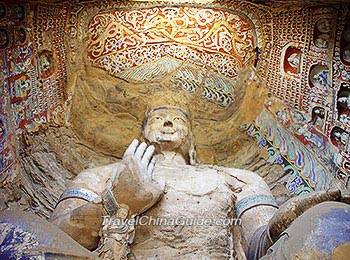
Caves worth special attention are No.16, 17, 18, 19, and 20. Upon Tan Yao's suggestion, five statues of Emperors Taizu, Taizong, Shizu, Gaozong, and Gaozu as Buddha express the religious theme that the Emperor is Buddha. Caves housing these statues are known as the Five Tan Yao Caves, similar in style but not identical. The statue in Cave 20 is martial and stately, No.19 handsome and elegant, while No.18 is dignified but lively. Their similarity lies in their thick lips, big noses, slanted eyes and broad shoulders depicting the ethnic culture of the time.
Yungang Grottoes graphically tell the story of past glory.
|
|
Admission Fee & Opening Hours
Yungang Grottoes Ticket Booking| Admission Fee: | April - October: CNY 120 November - March: CNY 100 Free for children under 1.2m (3.9ft). |
| Opening Hours: | April - October: 8:30 - 17:30 November - March: 8:30 - 17:00 The exhibition hall: 9:30 - 16:30 |
| Recommended Time for a Visit: | Two hours |
| Bus Route: | Take bus No. 4 at Datong Railway Station and get off at Xin Kai Li. Then transfer to bus No. 3-1 to Yungang Grottoes. There are other bus routes but it is advisable to take taxi or hire a van from downtown Datong to the Grottoes directly. The cost should be about CNY50. |
- Last updated on Jan. 28, 2026 by Gabby Li -