Hanging Monastery (Xuankong Si)
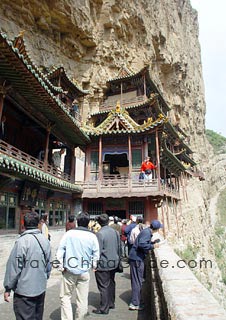
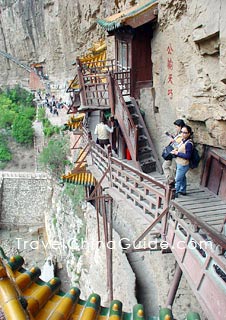
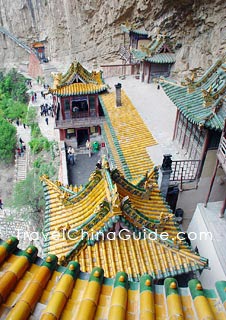
Hanging Monastery stands at the foot of Mt. Hengshan, 5 kilometers (3 miles) south of Hunyuan County, and 65 kilometers (40 miles) from downtown Datong City. Since it hangs on the west cliff of Jinxia Gorge more than 50 meters above the ground, it is called Hanging Monastery.
|
|
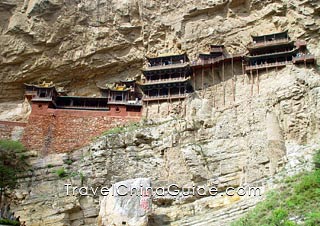

Construction experts from countries including Britain,Germany, and Italy, come to see the monastery. In their words, Hanging Monastery, which mixes mechanics, aesthetics, and Buddhism, is rare. The architecture and everything it symbolizes embodies a great cultural achievement of Chinese people.
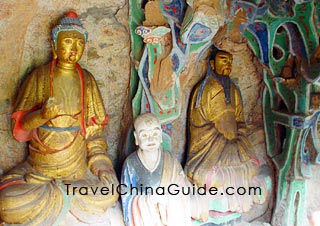
The second attraction of Hanging Monastery is that it includes Buddhism, Taoism and Confucianism. Inside the monastery, the sculptures of Sakyamuni, Confucius and Laotzu appear together, which is unusual. There are 40 halls and cabinets, which contain about 80 sculptures made of copper, iron, terracotta, and stone. The features are vividly carved.
Why build a monastery like this? Location is the first reason; building a monastery on the cliff could shield it from floods. In addition, the mountain peak protects it from rain and snow; and the mountain around it also diminishes damage from long-time sunshine. The second reason is that the builders followed a principle in Taoism: no noises, including those from rooster crowing and dog baying; so from the upper ground, all noises drop away.
 |  |  |
| Admission Fee: | CNY 130 (CNY125 in low season) |
| Opening Hours: | 9:00 to 17:00 |
| Recommended Time for a Visit: | two hours |
| How to Get There: | Get to Datong City first. Datong Coach Station in Yantong Road has buses to Hunyuan County. Then take bus 8 or take taxi to the monastery. It is advisable to take a taxi or hire a van from Datong. It should cost no more than CNY150 for a round trip for Datong-Hanging Monastery-Datong. |
- Last updated on Aug. 14, 2025 by Demi Li -