Lake Manasarovar
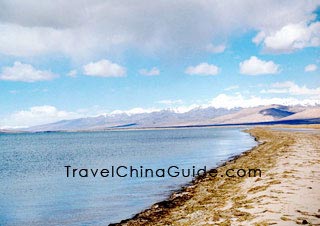
Lake Manasarovar, meaning “Invincible Jasper Lake” in Tibetan, is located in Burang County, Ngari, Tibet and 30 kilometers (10 miles) southeast of Mount Kailash. With an altitude of 4,588 meters (15,049 feet), it is one of the highest freshwater lakes in the world and the clearest lake in China. It is also renowned as one of three holiest lakes in Tibet. Buddhists believed that the Mansarovar Lake is a treasure given by the Buddha and that can cleanse the filth of their skin and in their inner hearts, and prolong their lives. Therefore a lot of believers circumambulate the lake or bath in the lake.
 |
 More Lake Manasarova Pictures More Lake Manasarova Pictures |
Lake Manasarovar Facts
 Area: 412 square kilometers (101,800 acres)
 Maximum depth: 77 meters (253 feet)
Best travel month: May and June Opening hour: All day
Distance for a circle: About 90 kilometers (56 miles) Average time for a circle on foot: about 4 - 5 days
Admission Fee: CNY150 for combo ticket with Mount Kailash  Free admission from Jan. 1 to Mar. 15 and Oct. 15 to Dec. 31, 2021.
A Holy Lake in Tibet
There are many stories and mysteries behind Lake Mansarovar. The best-known Lake Mansarovar stories and mysteries are the below two. Recorded in ancient Tibetan literature works, there was a dragon palace in the lake collecting countless treasures. As long as the pilgrims could get a small fish, stone, a bird’s feather or walk around the lake, they might live a rich and happy life. In Indian mythology, the Brahma the creator and his wife often bathed here so the lake became the holy lake.
Every summer or autumn, Buddhists at home and abroad come to the holy lake for pilgrimage. They circumambulate the lake for a circle so as to get immeasurable merits and profound knowledge, and get rid of vice and pain. They also take the water of the holy lake all the way home, as a precious gift to their relatives and friends. Most roads on the circumambulation route are close to the shoreline of the lake. There are sand beaches, gravels and swamps on the way and pilgrims also need to travel through several rivers in the southeast of the lake on foot. To complete a circle, it generally takes 4-5 days.
Manasarova Lake is the holy lake in the heart of Buddhists so they built eight temples in all directions of the lake. Only two temples are preserved well till now: Jiwu Temple on the west and Chugu Temple on the south. Jiwu Temple is the best position to take a panoramic view of Lake Manasarova. Chugu Temple is the biggest and suitable to take a ritualistic bath in every summer. These temples offer simple foods and rooms for pilgrims and travelers.
The Clearest Lake in China
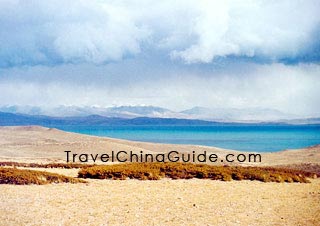 With a transparency of up to 14 meters (46 feet), Lake Manasarova is the clearest lake in China. The water is extremely clear that you can see fishes swimming below a dozen meters. The holy lake has different faces in different angles: dark blue in a distance, light blue or light green when getting closer. When standing by, one will see the snow mountains in the distance, like a pretty and graceful beauty wearing a white hada, is reflected in the clear lake like reflecting on a mirror. In different times of a day, the lake is also decorated differently: by blue sky and white clouds in the daytime which seems so close that can be touched with hands; by burning clouds of pink or orange in the evening.
 How to Get to Lake Manasarova
There is no direct bus operated to Lake Manasarova. You can first get to Lhasa by train or air, and then there are some transfer ways from Lhasa to the lake.
1. Rent a car with other tourists from Lhasa to Lake Manasarova, which may take about CNY1, 500 - 2,000 and 3 days at least. The fee is just for reference and you can make a bargain and settle the fare with the driver in person.
2. Take the long-distance bus at Lhasa Passenger Bus Station at northern suburbs to Ngari and get off midway at Jiwu Temple. It is about 24-hour ride and costs about CNY600 - 800.
3. Get to Shiquanhe first from Lhasa by plane and then hire a car or hitch a ride to Lake Manasarova.
Overseas tourists are only allowed into Tibet through tour agency. This also helps you solve the traffic problem and make your trip much smoother.You May Like

- Last updated on Aug. 15, 2025 by Demi Li -