Mount Everest Facts
Altitude: 8,848.86m (29,031.69 feet)
Mount Everest Location: in the border of Tingri County of Tibet and Nepal
Which Mountain Range is Mount Everest in: Himalayas
Mount Everest, also called Mt. Qomolangma, is the highest peak in the world. Its Tibetan meaning of 'Goddess the Third' adds more mysterious color and magic power to the subject. As a result, it has intrigued all kinds of people since it was first discovered. Pilgrims trek long distances to present a pious worship, climbing enthusiasts run great risks to challenge its high altitude and the common visitors also yearn for a reverent look at this holy peak. See Mount Everest Hiking.
Mount Everest is the dominant peak of Himalayas, the northern brae in Tingri County of Tibet and the southern in the Nepal. The area has 4 peaks above 8,000 m. (26,247 ft.) and 38 peaks above 7,000 m. (22,965 ft.), hence the laudatory title 'the Third Pole of the Earth'.
As the supreme point of the world, Mt. Qomolangma is also blessed with many extreme wonders. The top part of the mountain is covered with snow all the year round. When the glaring sun shines on the mountain, the peak is just like a white pyramid miraculously transformed by the Goddess, leading us to imagine her semblance further. More often than not, the thick freely moving clouds and fogs, seeming as if a flag with the mast of the peak was swinging, will shroud the peak. This peculiar phenomenon is known as 'Flag Cloud'. An additional wonder generated here are the bright glaciers, where ices are formed into various shapes like bridges, pagodas and others. You can also find miles of efflorescent rock physiognomy there, such as stalagmites, stelae, stone sword, and stone pagodas. The climbing pathfinders call this splendor at such high attitude 'the Largest Park on the High Mountain'.
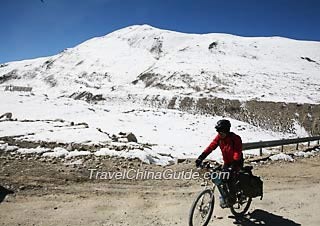
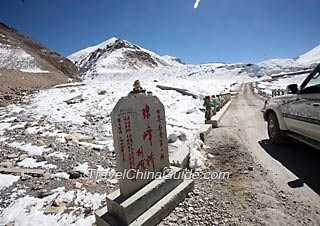
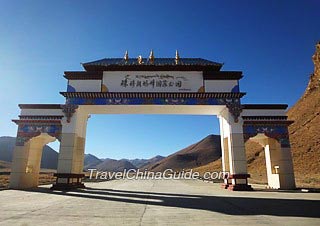 | | Gate to Mount Qomolangma National Park | | 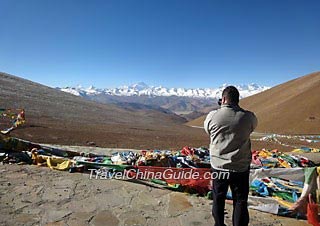 | | Blue Sky and Lofty Snow Mountains | |
The area of Mountain Everest has been built as one of the national natural reserves, wherein live thousands of kinds of plants, hundreds of varieties of wild animals and dense virgin forests. Many of these are precious and rare, like the first-class protected animal ounces and the valuable timber sandals, etc.
At the foot of this world's highest mountain is located the highest temple in the world,
Rongbuk Monastery. At the altitude of about 5,000 m. (16,404 ft.) and 25 km. (15.5 mi.) in the distance, it is also the best point to appreciate the scenery of Mount Everest. Rongbuk Glacier around this area is also the largest among all the glaciers here.
Climbing Mount Everest is very dangerous, only those who can endure the adverse weather and experienced climbers should venture onto it's slopes. The area is frequently beset with sudden storms, snow, wind and the weather may change quickly in a day. Only the periods between early March and late May, along with early September and late October are fit for climbing, among which less than 20 days are actually fine. So keep a very close eye on the weather changes there if you want to climb. The mountain lies in the borderline about 100 km. (62 mi.) south of Sino-Nepal Road, you can hire a car from Lhasa or take some vehicles by the way. For the dining and accommodation, Rongbuk Monastery is recommended.
How to get to Mount Everest from Lhasa
Visitors are suggested to hire a local car to visit the scenic area, and it normally charges around CNY 6,000 for four persons.

The Tibet Mountaineering Management Center plans to charge the climbers an environmental fee of 100 to 200 USD per person. According to the center, the collected money will be used to clear away the garbage left by the climbers on the mountain. Till now, it's still unclear when exactly the fee will be collected.
- Last updated on Apr. 22, 2026 by Gabby Li -
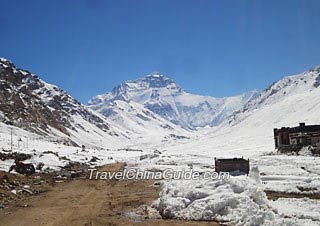
 Mount Everest Pictures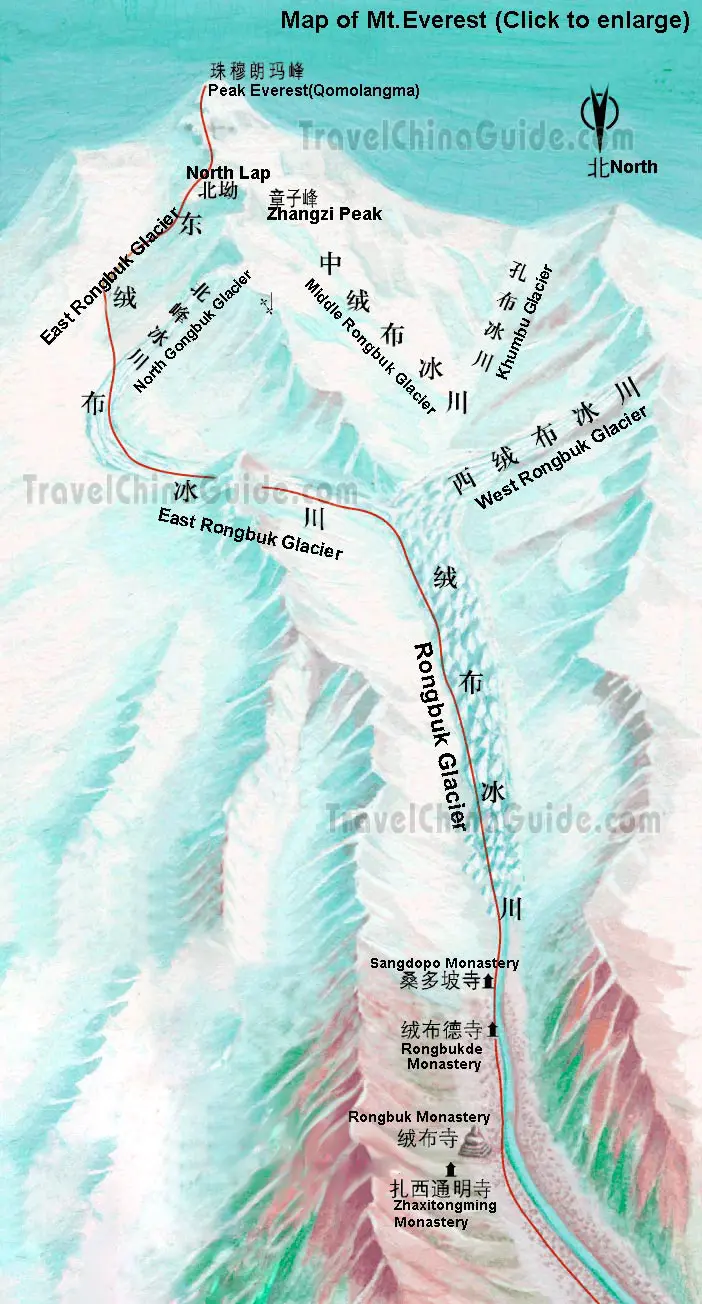
 Recommended Tour Itineraries:
 Top 10 Things to Do in Tibet