Shigatse Attractions
Shigatse is a prosperous Buddhism city as it is the traditional seat of the Panchen Lama. In the past it was the most important political and cultural center of Tsang. A series of majestic buildings added strength to its political status. Nowadays, these buildings, the former symbols of power, have been converted into tourist highlights of the city. These cultural relics, especially the monasteries, with their mystery and rich holy color tell the history of Shigatse and show the status of Buddhism in people's lives. In addition to the cultural relics, the area occupies a charming high-plateau land with attractive natural beauty. The complex landscape of this region endows it with various natural tourism resources. Many special types of natural scenery like Mount Qomolangma (Mount Everest), the world's highest peak and other snow-capped high peaks add much charm to this remote land.
 |
| Sangzhutse Fortress, Shigatse |
 In Shigatse City
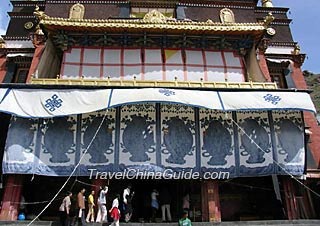
Dozens of monasteries in the region give this land heavy religious atmosphere. In Shigatse City, the resplendent Tashihunpo Monasterybuilt in 1447 is the most attractive building. It lies in the northwest of thecity. The shining golden roofs and bright red walls contribute to the holy andmagnificent atmosphere and its stately form can be seen from even tens of kilometersaway. This monastery houses the world's largest copper Buddha figure which isdecorated with numerous luxurious jewels. Every year in Tashihunpo Monastery,the Buddha Unveiling Festival showsthe huge portraits of Buddhas and attracts many pilgrims from all over China.Meanwhile, during Sorcerer's DanceFestival ,Tibetan dance of dispelling evils is performed. Another famous monastery, Shalu Monastery , is situated 20 kilometers (12 miles) southeast of Shigatse. It's a perfect combinationof Han and Tibetan architectural styles.
 |
In the city, you can also go to visit the Panchen Lama's Palace. It is situated in the southwest of the city and houses many historical relics of Tibet and manydelicate works of art. With a magnificent architectural style and peaceful environment,it is quite a good place for a summer visit. In addition to the Buddhist buildings,local residences in Shigatse are also worth a visit. In the north of the city,there is a clean and ordered old district. Most of the houses here are in typicalTibetan architecture style. The Tibetan people favor white so that walls of localhouses are in white color. In the front door of every home, there are paintingsof scenes and characters from the scriptures to dispel evil; while on the roofof each family dwelling prayer flags are hung.
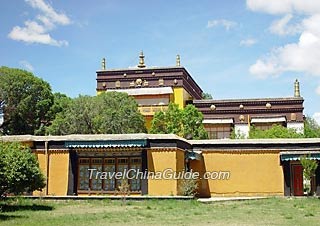 |
| Panchen Lama's Palace |
Additionally, Shigatse City boasts many other attractions worth seeing, including Shigatse Gold, Silver and Copper Crafts Factory and Sakya Kloster(Sakya Monastery). The factory, built up in 1955, produces silver, gold and copper ware vessels.You can go to visit it and buy some vessels as souvenirs. Sakya Monastery islocated on the way from the city to Tingri County. This monastery is nearly athousand years old and boasts the reputation of 'the second Dunhuang' in Chinafor there are numerous exquisite murals here.
 |
| Sakya Monastery |
Around Shigatse CityShigatse prefecture has seventeen counties. Some of them boast outstanding attractions. One of these is the world's highest peak Mount Everest. It lies at the junctionof Tingri County and Nepal. This 8,848.86-meter (about 29,031.69 feet) high mountainhas a beautiful Tibetan name 'Qomolangma' which means 'the peak of goddess'. With its holy appearance and unique altitude, Mount Everest attracts tourism and climbers from all over the world every year. Around this highest peak, there stand other four mountains with an altitude of over 8,000 meters (about 26,247feet) and fourteen mountains over 7,000 meters (about 22,966 feet). These snow-capped mountains form a great scenic area. To learn about hiking Mount Everest, please read Mount Everest Hiking.
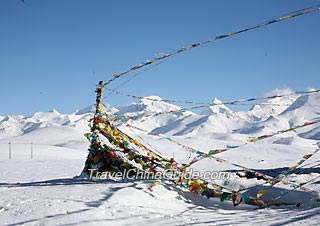 |
| Mount Everest |
In Tingri CountyIn Tingri County, the Rongbuk Monastery is an interesting place to visit not for the history or architecture of the monasterybut the scenery of Mount Everest seen from it. This monastery is the highest inhabitedlocation in the world.
In Gyangtse CountyThe Pala Manor in Gyangtse County is the best preserved landowner's manor in Tibet. The furnishingsand decorations in this manor illustrate the luxurious lifestyle of the nobility. In the center of the county exits the Dzong Fortress. It is the witness of the fierce fight between the unyielding Gyangtse people and British invaders.
 |
Besides, in the county, you can go to the Gyangtse Carpet Factory, the Old Street and the Palkhor Monastery (Pelkhor Choede or Palcho Monastery).
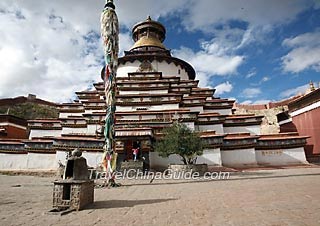 |
| Palkhor Monastery |
Zhangmu Town, Nylam CountyZhangmu Town has charming natural scenery embraced by wondrous mountains, flexuralrivers, lush pines and flourishing flowers almost all the year round.
When is the best time to visit Shigatse attractions and how about the weather? See Shigatse Weather.