Huangyaguan Great Wall
 |
| Huangyaguan Great Wall |
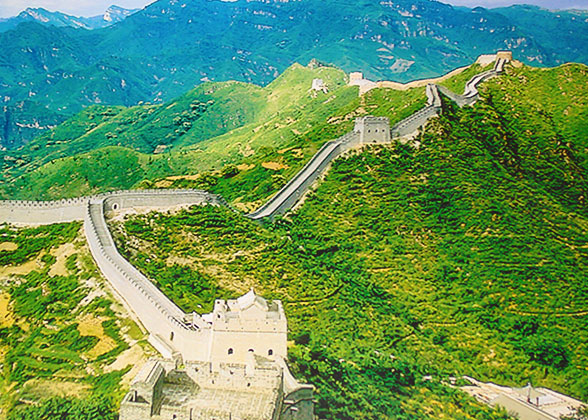
Nestled in the mountains 28 kilometers (17.5 miles) north of Jizhou District, Tianjin, Huangyaguan Great Wall stands as a miniature of the Great Wall of China. Its name, Huangya (Yellow Cliff) Pass, is derived from the predominantly yellow-brown rocks on the eastern cliffs, which transform into a stunning golden hue at sunset.
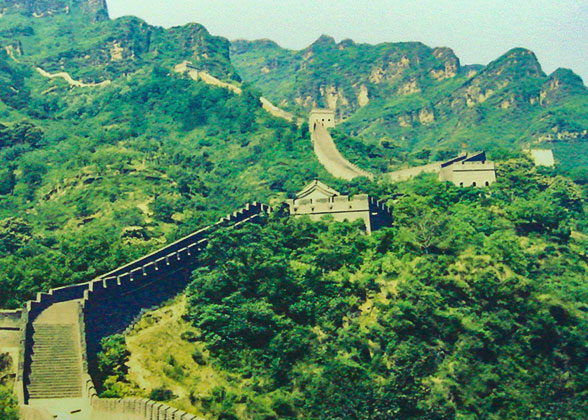
In this section, you can find the stone base built in the Northern Qi Dynasty (550 - 557) and the brick battlements laid in the Ming Dynasty (1368 - 1644). Watchtowers there are either solid or hollow and have different shapes, including round ones and square ones. Outside, you may see independent outposts a few meters away from each other; inside, there are also ramparts to reinforce the defense system.
Basic Facts of Huangyaguan Great Wall
 Huangyaguan Great Wall was first built during the Northern Qi Dynasty and repaired extensively during the Ming Dynasty under the supervision of Qi Jiguang, a renowned general of that time.
Stretching 42 kilometers (26 miles) from the General Pass in Beijing to Malan Pass in Hebei, there used to be 52 watchtowers and 14 beacon towers in total. However, most of this part of the wall has collapsed due to lack of renovation. Starting from 1984, people spent three years repairing 3,025 meters (3,308 yards) of the wall and 20 watchtowers.
The Huangyaguan Great Wall was built on a ridge about 740 meters (2,400 feet) above the ground, winding its way among the mountains. One side of it is a cliff while the other is a sheer rock face.
Best Things to Do and Visit in Huangyaguan Great Wall
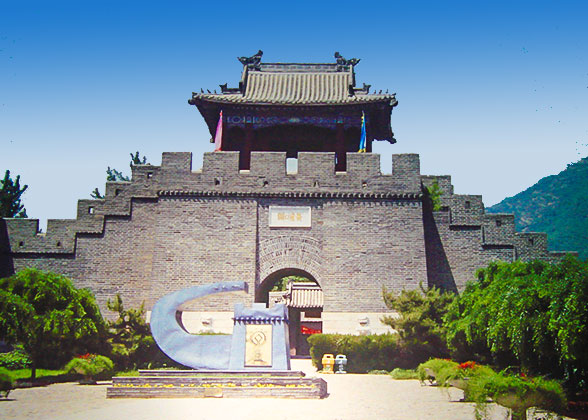
1. The Pass of Huangyaguan (Eight Diagram Fortification City)
 |
| Huangya Pass |
2. Huangya Water Gate
3. Taipingzhai
4. Widow Tower (Heroine Tower)
5. Huangya Sky Ladder
6. Longevity Garden
7. Huangyaguan Great Wall Marathon
 |
| Huangyaguan Great Wall |
8. Explore the Huangyaguan at Night
How to Tour the Huangyaguan Great Wall
 |
| Map of Huangyaguan Great Wall |
1. The Most Popular East-Section Tour
Great Wall Length: 2.2 kilometers (1.4 miles)
Route: Take a sightseeing bus from Huangyaguan Gate Tower to Taipingzhai → Explore the East Section → Huangya Pass → Visit Eight Diagram Fortification City → Return to Huangyaguan Gate Tower
Attractions: Taipingzhai Great Wall, Qi Jiguang Stone Statue, Widow Tower, Water Gate, Huangya Pass, Eight Diagram Fortification City
Applicable People: Most tourists
Advantages: This route is mainly downhill, making it relatively easy to walk.
2. Simple West-Section Tour
Great Wall Length: 1.1 kilometers (0.7 miles)
Route: Start from Huangyaguan Gate Tower → Visit Eight Diagram Fortification City → Huangya Pass → Explore the West Section → Reach Huangya Sky Ladder → Return to Huangyaguan Gate Tower
Attractions: Huangya Pass, Eight Diagram Fortification City, Longevity Garden, Huangya Sky Ladder, Huangyaguan Great Wall
Applicable People: Most tourists
Advantages: Except for the Huangya Sky Ladder, the terrain is relatively flat. It's energy-saving and doesn't require taking a sightseeing bus, which is a cost-effective option.
3. Full East and West Section Tour
Great Wall Length: 3.3 kilometers (2.1 miles)
Route: Take a sightseeing bus from Gate Tower to Taipingzhai → Explore the East Section → Reach Huangya Pass → Explore the West Section → Reach Huangya Sky Ladder → Return to Huangya Pass → Visit Eight Diagram Fortification City → Gate Tower
Attractions: Huangya Pass, Eight Diagram Fortification City, Longevity Garden, Huangya Sky Ladder, Huangyaguan Great Wall, Taipingzhai Great Wall, Qi Jiguang Stone Statue, Widow Tower, Water Gate
Applicable People: Tourists with good physical strength
Advantages: This route covers all the attractions, allowing for a more in-depth exploration of the scenic area.
Opening Hours:
| Day-time | April 1 - October 31 | 08:00 - 16:00 |
|---|---|---|
| November 1 - March 31 | 08:30 - 16:00 | |
| Night-time | July - October: 17:30 - 22:30, last admission at 20:30 | |
Tickets:
| Entrance Fee | CNY 85 CNY 45 for people over 60 years old Free for children under 1.2 m (3.9 ft.) |
|---|---|
| Sightseeing Bus | One-way: CNY 30 Round-trip: CNY 50 |
1. Entrance to the Eight Immortals Cave is encompassed within the ticket price.
2. The ticket price for the night tour varies depending on the types of performances, usually between CNY 10 and 60.
When is the Best Time for a Visit?
How to get to Huangyaguan Great Wall from Beijing
Huangyaguan Great Wall is situated in the northern part of Jizhou District, Tianjin. To arrive at the scenic area, the first step is to get to Jizhou District, which is approximately 100 kilometers (60 miles) away from Beijing. By coach
 By train
- First, take a train from Beijing Railway Station to Jizhou North Railway Station. The journey takes about 1.5 hours, and the price of a hard seat ticket is CNY 14.5.
- Then, take the tourist bus No. 11 from Jizhou North Railway Station to Yingbin Dajie Station. After that, transfer to Bus No. Ji3 and get off at Huangyaguan Village Committee Bus Station. This part of the journey takes 1.5 hours and costs CNY 8.
Another option is to take a taxi from Jizhou North Station to get there. The taxi journey takes about 50 minutes and costs around CNY 100.
Train Schedule:
| Beijing Railway Station Departure | Jizhou North Railway Station Arrival |
| 07:19 | 08:35 |
| 18:44 | 20:18 |
How to get to Huangyaguan Great Wall from Tianjin
By coach
Option 1: Take a long-distance bus from Tianjin Tongsha Bus Station to Huangyaguan Great Wall directly. The departure times are 10:10 and 14:40. The trip takes about 2 hours, and the fare is CNY 48.
Option 2: Take a bus from Tianjin Tongsha Bus Station to Jizhou Bus Station. The journey takes around 1.5 hours and the cost is CNY 20. The departure times are 11:00, 14:10, 15:10, 16:10, and 17:00. Once you arrive at Jizhou Bus Station, you can take Bus No. Ji3 or a taxi to reach the Huangyaguan Great Wall.
By Train
Take a train from Tianjin Railway Station or Tianjin North Railway Station to Jizhou North Railway Station. The travel time to Jizhou District ranges from 1.5 to 2.5 hours, and the cost is less than CNY 20. After arriving at Jizhou North Railway Station, you can take a bus or a taxi to the scenic spot.
Train Schedule:
| From | Departure | Jizhou North Arrival |
| Tianjin Railway Station | 07:27 | 09:59 |
| 09:27 | 11:19 | |
| Tianjin North Railway Station | 09:39 | 11:19 |
| 12:23 | 14:14 | |
| 16:23 | 17:48 | |
| 18:10 | 20:02 | |
| 19:08 | 21:02 |