Beijing Dining
What to Eat - Traditional Beijing Food
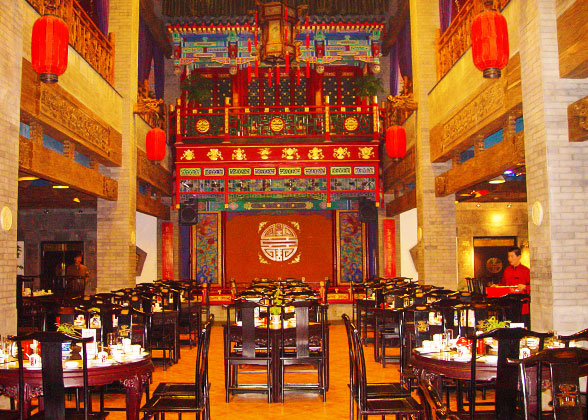
It is said that there are two things that you must do when visiting this city: One is to enjoy the roast duck and the other is to take a stroll on the Great Wall. There is simply quite nothing like a perfectly roasted duck with bronzed crispy skin and tender, succulent meat. There are literally dozens of restaurants that serve this famous dish, but perhaps the best known are Quanjude and Bianyifang.
Quanjude Restaurant Top 10 Peking Duck Restaurants
 |
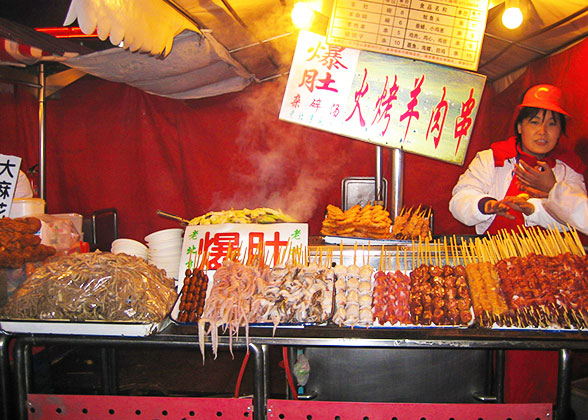
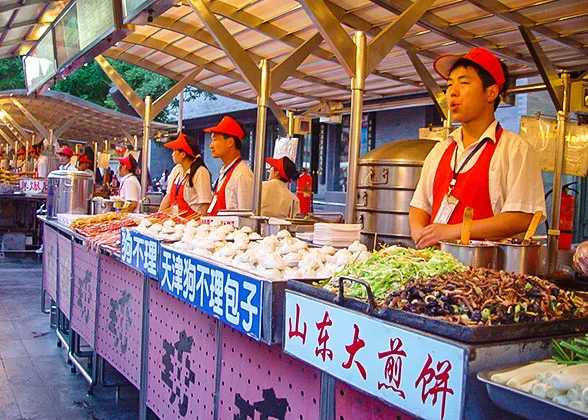
Fancy street food and local snacks are a must in tasting the authentic flavor. These dishes emanate from many different cuisines, but the Chinese Muslim influenceis the most apparent. There are probably 200 varieties of snacks and street food in Beijing. Most of them can be found at the top 15 snacks restaurants in the city, or in any of the 10 best night markets and snack streets, among which the Guijie Street, Wangfujing Snack Street, Guanganmen Food Street, Huguosi Hutong Snack Street, and Qianmen Food Streets are the most representative.
 Read more:
15 Must-eat Beijing Foods – Local Beginners’ Picks
5 Beijing Famous Foods Most People Dare NOT to Eat
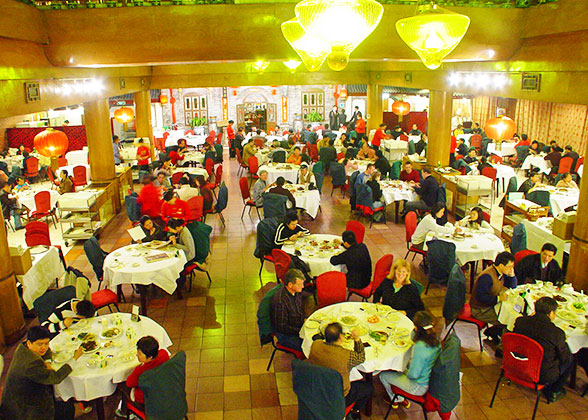
Where to Eat - Best Restaurants Recommended
In Beijing, visitors can go to Quanjude and Bianyifang to taste Peking Roast Duck and wander along the snack streets to try mouth-watering street food. Besides, they can also find a large number of great restaurants serving other Chinese cuisines and even foreign food.
Chinese Cuisines & Restaurants
Asian Restaurants
Are you still looking for the special food which could suprise you by totally different flavors? Why not try an Asian restaurant?
Western Restaurants
10 Michelin Restaurants in BeijingTo enjoy the food and service of Michelin Restaurants, you can go to some branches of the Michelin Guide Restaurants in the city.
 |
Vegetarian RestaurantsLike fastfood is for people in a hurry, the increasingly fashionable vegetarian dishes are for vegetarians or persons who love this healthy dining style, but not only for those vegetarians for the religion's sake. Merits and Virtues Vegetarian House is a time honored brand that was first founded in Shanghai. Absolutely, there are more vegetarian restaurants listed on page for references.
Halal FoodFeature food from Chinese ethnic minorities contributes a lot to Beijing's colorful dining culture. Characterized by its fresh yet dense flavor, Muslim Cuisine is also known as Islamic cai and Hui cai, the best dish of which is Whole Sheep Banquet which has won wide praise.
Seafood RestaurantsSeafood is a special dish in east and south part of China. It is well liked around the country with its fresh and special flavor.
Hot Pot RestaurantsYou will never be disappointed to look for various kinds of food. For the cold weather, Hot Pot is a good choice to try. It is no wonder that some love to have in summer too. Hot pot is so popular nationwide.
BuffetsHelping oneself in buffets restaurants is a popular and free dining style favored by multitudes of people. Many BBQ restaurants and cafes are of this kind. Here are many excellent cafeterias getting well spoken. For specialty cafeterias, Golden Jafuar, Amazon and Max's Cafeteria are all sound ones.
Fast FoodApart from KFC, McDonald's and other well-known western fastfood shops, there is no lack of Chinese, Japanese and special flavor (such as curry) fastfood restaurants in this city, some of which are chain shops.
Desserts & Drinks
If tired of big dishes all the time, small restaurants offering desserts, milk tea, ice cream, takeaway coffee, and Chinese tea are comfortable places to spend an afternoon. One can sit and enjoy in the small but delicately decorated shops or buy some drinks and candies by the way while roaming about.