Hunan Travel Guide
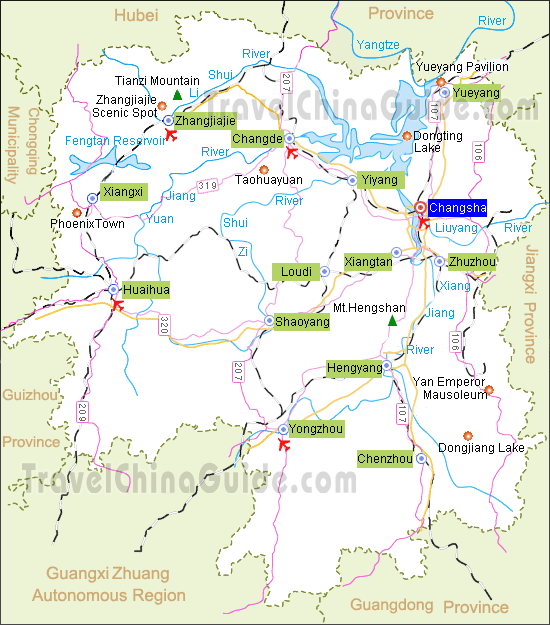
Hunan Facts
Chinese Name: 湖南 (hú nán)
Abbreviation: Xiang
Population: 69,184,000
Area: 211,800 square kilometers (81,776 square miles)
Location: in the south-central China
Administrative Division: 13 cities (Changsha, Zhuzhou, Xiangtan, Hengyang, Shaoyang, Yueyang, Changde, Zhangjiajie, Yiyang, Chenzhou, Yongzhou, Huaihua, Loudi); 1 autonomous prefecture (Xiangxi Tujia and Miao Autonomous Prefecture); 68 counties; 18 city-level counties; 36 districts
GDP (2019): CNY 3,975.21 billion (USD 576.201 billion)
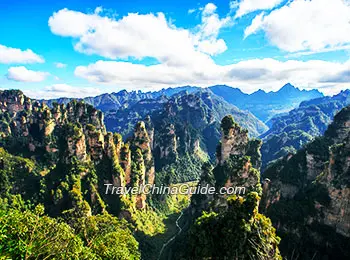
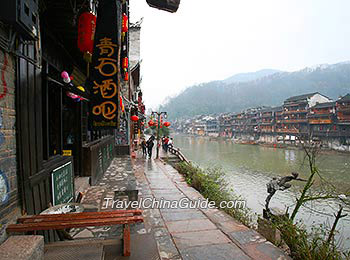
Hunan Province is located in the middle of China and the middle reaches of the Yangtze River. It is named "Hunan" because most of its areas are located in the south of Dongting Lake and the abbreviation of Xiang is for the Xiangjiang River, the largest river in Hunan, running through the whole territory. The provincial capital is Changsha. It is adjacent to Chongqing and Guizhou to the west, Guangdong and Guangxi to the south and Hubei to the north. With a long history, Hunan has many historical remains including city remains, tombs, bronzewares, bamboo slips used in the Qin Dynasty (221 BC – 207 BC) and historical buildings. Hunan is also a popular tourist destination featuring magnificent natural scenery in Zhangjiajie and ancient residential buildings in tranquil Fenghuang Ancient Town.
When to Go
Hunan has a humid, subtropical climate. The monsoon rain falls mostly in April, May, and June. July and August are uncomfortably hot and humid. The best time to visit is in the fall, when temperatures are cooler and the rainfall lighter. For persons who live in cold northern climate, visiting it in the winter can be pleasant. After all, any place that grows oranges can't be all that cold. Low temperatures in winter are usually above freezing, with daily highs around 10 C. Annual rainfall is around 1,250 - 1,750 millimeters (49.2 to 68.9 inches). Northern part of the province has more climate extremes than its southern part. It can get colder in the winter and hotter in the summer.
See also Hunan Weather
Cities in Hunan
What to See
The headspring of life, Dongting Lake, is frequently mist-covered in the early morning. It is the second largest lake in China. Yueyang City, located on the shore of Dongting Lake, is home to one of the country's three famous towers. Yueyang Pavilion was originally built during the Tang Dynasty (618-907). The present pavilion is of recent reconstruction, built in the style of the Song Dynasty (960-1279).
|
|
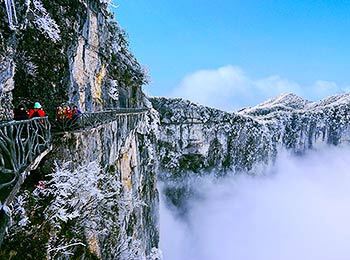
The high and steep Mt. Hengshan is frequently snow-capped in the winter, contrasting with the subtropical fields that one sees below it. It is one of the five most famous mountains in the country. Known for its precarious cliffs, it is a holy mountain for both Taoists and Buddhists.
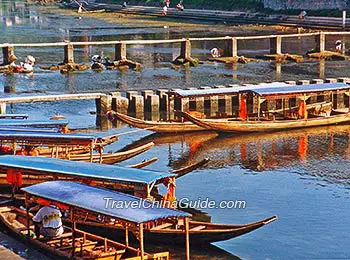
The region along the Yuanjiang River is especially well known for its serene beauty. It takes its name, the Peach Blossom Fountainhead, from a work of Chinese literature from the Jin Dynasty (265-420). Tao Yuanming wrote about an isolated Utopia-like paradise where generations of people had escaped from the difficulties that others had experienced. The Yuanjiang River region has been a travel destination since ancient times.
Historic Changsha, one of China's famous cultural centers, is the capital of the province. It is also a tourism center, offering its visitors many historical sites and other places of interest. Changsha Museum is a good place to learn more about the history and culture of Changsha.
|
|
Highlights
Hunan cuisine has its unique flavor. Here, nearly every dish tastes hot, and delicious. The local people like eating peppery foods.
The products here include Xiang embroidery, one of China's four famous embroideries. It has high artistic value. With 200 years of history behind them, the chrysanthemum stone carvings of Liuyang are vivid and exquisite. Liuyang City is known for its firecrackers, which are popular all over the country.
Many great people have come from this province. In ancient times, Quyuan, a patriotic poet, committed suicide by throwing himself into the Miluo River. The story of his death and the search for his body started the tradition of Dragon Boat Festival. Chairman Mao, idol of the Chinese people, was born in Mt. Shaoshan. Zhu Rongji, one of the important leaders in the country, also comes from this province. Such famous people show that Hunan is a place that has cultivated talent as well as being a destination for visitors.
With abundant natural resources, the province covers 210,000 square kilometers (81,000 square miles). It is adjacent to Jiangxi Province in the east, Chongqing Municipality and Guizhou Province in the west, Guangdong Province and Guangxi Autonomous Region in the south, and Hubei Province in the north. The province has a total population of 64,400,700. It is multiethnic, with Miao, Dong, and Yao being the most numerous minorities. Their unique cultures and ethnic customs attract numerous visitors.
China Tour Packages
 Reply
Reply 0
0 0Reply00Reply00Reply
After that, take a high speed train from Tongren Railway Station to Guiyang and the duration is around 2 hours. Remember to book train tickets in advance.
00ReplyReply00ReplyReply00ReplyReply00ReplyReplyMany thanks!
00ReplyDay 1: Li River cruise to Yangshuo, West Street
Day 2: Countryside trip around Yangshuo and then take bus back to Guilin
Day 3: Reed Flute Cave, Seven Star Park, Elephant Trunk Hill.
Day 4: Tianmen Mountain
Day 5: Zhangjiajie Grand Canyon with the Glass Bridge
Day 6: Yuanjiajie Scenic Area, Tianzi Mountain Nature Reserve, Golden Whip Stream, Ten-mile gallery