Guizhou Travel Guide
Guizhou Facts:
Chinese Name: 贵州 (guì zhōu)
Abbreviation: Gui or Qian
Administration Type: Province
Capital: Guiyang
Location: 24°37' to 29°13' N, 103°36' to 109°35' E
Climate: subtropical humid monsoon climate
Temperature: 15°C(annual average); 3-6°C(average of the coldest January); 22-25°C(average of the hottest July)
Perennial Relative Humidity: ≥70%
Area: 176,167 km² (68,018 mi²)
Population (2018): 36,000,000
Major Ethnic Groups: Miao, Dong, Yi, Tujia, Buyi
 Area Code & Zip Code 240h Visa-Free Transit
 Pictures
Cities in Guizhou
Recommended Guizhou Itineraries
- Kaili Miao Ethnic Minority Villages: Guiyang, Miao Villages
- Travel through Guizhou Minority Areas: 8 Days, Sandu, Rongjiang, Liping, Zhaoxing, Congjiang
Famous Attractions
 Huangguoshu
 Xijiang Qianhu
 Langde
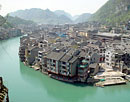 Zhenyuan
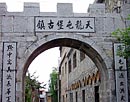 Tianlong Tunbu
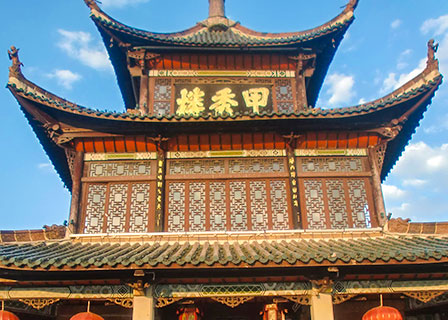
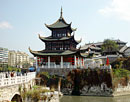 Jiaxiu Tower
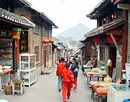 Qingyan Town
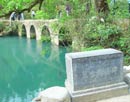 Xiaoqikong, Libo
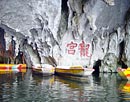 Dragon Palace Cave
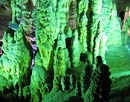 Zhijin Cave
Beipanjiang Bridge Fanjing Mountain
Guizhou Introduction
Located in southwest China, this province adjoins Sichuan and Chongqing to the north, Yunnan to the west, Guangxi to the south and Hunan to the east. It is a picturesque place with abundant natural and cultural scenic spots. Many Chinese ethnic minorities have been living on this land for centuries. Visitors to that area can not only appreciate various attractions, but also discover the rich and distinctive folk customs and cultures of the different ethnic groups. Landscape & Climate
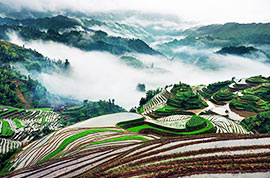
Landscapes in this province are broadly divided in to four types: plateaus, mountains, hills and basins. Among them, mountains and hills predominate. In addition, karst landforms are distributed widely on this land, which accounts for 61.9% of the province’s whole territory and forms a special Karst ecosystem. Due to these rugged landscapes, its development level is low, especially in the rural areas. However, it is these varied landscapes that hide an abundance of amazing and unique natural scenery, like Huangguoshu Waterfall, Dragon Palace Cave, Zhijin Cave and Danxia Landform. The Danxia Landform is listed as a UNESCO World Cultural & Natural Heritage. Guizhou has a subtropical humid monsoon climate, which is frequently cloudy and rainy. There are few seasonal changes here with the result that it is neither too cold in the winter nor too hot in the summer. As a whole, people here enjoy a pleasant climate. Its capital city, Guiyang, is considered a ‘world’s summer resort’ because of the moderate temperature.
Ethnic Groups
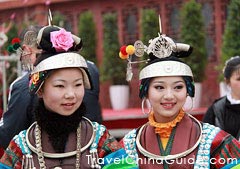
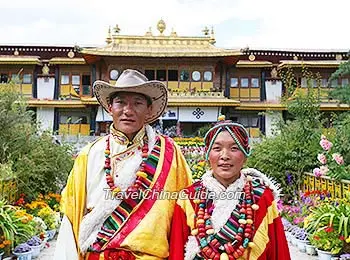
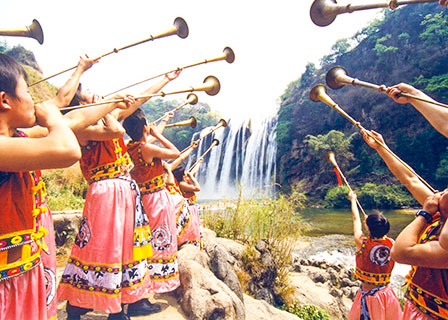
This province is home to 48 China’s ethnic groups, second only to Yunnan Province, each of which has developed their own unique customs and cultures. When traveling there, visitors should not miss the chance to experience their simple and original living habits, appreciate the unique architectural styles and try their exotic and colorful costumes, etc. For example, one can go to Langdeshang Miao Village or Xijiangqianhu Miao Village to admire their stilt-houses and colorful traditional clothes; to China’s last gunmen’s tribe, Basha Miao Village, to experience their unique life styles; to Buyi Stone Village to explore how this stone village was made without any other construction materials; to Dong villages to see Dong-style drum towers and wind-rain bridges, etc. What’s more, over 1,000 festivals are celebrated by ethnic groups each year in Guizhou, providing the best opportunities for visitors to experience these ethnic traditions. The most famous festivals include Sanyuesan Festival and Sister's Meal Festival in the spring, Liuyueliu Festival in summer, and the Shui New Year Festival in autumn. Delicacies & Specialties
Food there mainly consists of Qian cuisine and local snacks. Hot, spicy and sour are the three most featured flavors of Qian cuisine. The most famous dishes include Suan Tang Yu (Sour Soup Fish) and griddle cooked dishes. Well-known snacks include Chang Wang Noodle, Lian'ai Doufu Guo and Si Wa Wa. Another Guizhou specialty is Maotai Liquor, which is considered the national liquor of China national liquor and one of the world’s three best distilled liquors along with whisky from the United Kingdom and French brandy. Rice wine made by local farmers is also a famous specialty. The area is also famous for its batik fabrics, silver decorations of the ethnic groups, bacon and Chinese medicine.
See more about Guizhou Food – Cuisine of Guizhou in Southwest China