Transportation of China
Transportation is of particular importance in China, as it covers such vast territory and is home to such a large population. In 1876, the first railway was built in China, and in 1906 the first highway was constructed. In 1929, the government began work on civil aviation. The following decades saw tremendous developments within the transportation industry. See more about China Railway
|
|
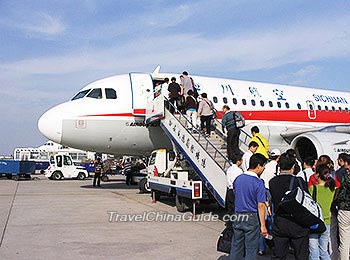
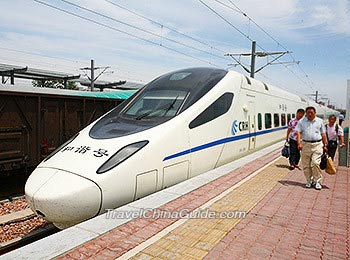
By the end of 2012, the total length of highway in China reached 2,633,060 miles (4,237,500 kilometers). In 2013, the number of passengers transported by rail reached 2 billions. As the transportation industry continues to expand in both quality and scale, it significantly contributes to the advancement of society as well as the national economy.
China currently has a comprehensive system of modern transportation, which includes civil aviation, railway, road traffic, and water transportation. As transportation in the country becomes more accessible and more reliable, it is also becoming more technologically advanced. Modern modes of transportation such as express highways, electrified railroads, metros, light railways, and maglev railways are becoming increasingly common, especially in larger cities.
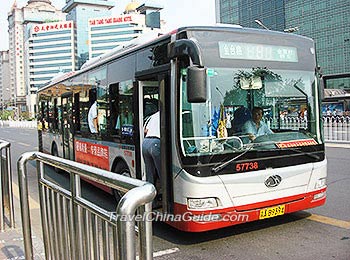 |
| Public Bus in China |
At the same time, because of the country's large population, sometimes the current numbers of vehicles cannot meet every person's needs. Especially during the public holidays, most people choose to travel. Some of them take excursions, whilst other people go to their hometown to see their families. During peak holiday times the transportation system may be stretched too the limit. Additionally, as many shopping malls or shops often provide discounted goods at festivals and many people prefer to go shopping at that time. As a result, streets as well as many vehicles become very crowded. As a visitor, you'd better avoid going to China during Chinese festivals like the Chinese New Year and National Day. Additionally, as the country's urban population is getting larger and larger, some big cities are facing very severe transportation stress. Tip: If you would like more information about your destination city, you can visit our website's Destinations column. In it, you can find the very practical transportation tips and many other aspects of visit, including dining, shopping, nightlife and so on. Further Reading:
 Reply
ReplyI have already purchased few electronic Gadgets from JD & MI online stores.
I have the invoice copy for the same. I don't have the tax refund form.
In this is there any possibility to get the tax refund?
 0
0 0ReplyReply
We are looking for a way to get from Guilin to the Zhangjiajie area and trying to avoid flights. As for the train connection, the best way we found is transferring trains in Changsha, with sleeper trains available on both segments of the route. Unfortunately this option is also really time-consuming...
Does anybody know a more direct way, long-distance buses maybe?
Thanks in advance =)
00ReplyReply00ReplyReplyCan I fly out internationally from Zhangjiajie?
10Reply