


Temple of Heaven
The Temple of Heaven has stood since 1420 as the place where the emperor offered sacrifices to Heaven. It is a masterclass in ancient design from its iconic blue-tiled roofs to its "round heaven, square earth" layout. This guide will lead you through the must-see structures, decode their deep symbolic meanings, and map out the best routes to experience both the serene majesty of the site and the lively local culture that fills it today.
Construction began in 1420 during the Ming Dynasty. Originally, it was the "Altar of Heaven and Earth," where both entities were worshipped together. In 1530, the rites were separated, and the site was renamed the Temple of Heaven. The landmark we see today took its final form in the 18th century when the Hall of Prayer for Good Harvests was fitted with its iconic blue-glazed tiles to better symbolize the sky.
The temple served three vital functions rooted in power, belief, and practicality:
To affirm the emperor's divine authority: In ancient China, rulers claimed the Mandate of Heaven. Their right to rule came straight from above. Holding grand ceremonies here showed everyone that his rule was sanctioned and protected by Heaven itself.
To pray for harvests and harmony: China was an agrarian society. Natural forces like rain, sun, and wind were all viewed from believed to be governed by Heaven. This temple became the nation’s central place to honor that power and ask for balance, fertility, and good seasons favorable weather.
Prior to its construction, emperors had to undertake arduous journeys to distant sacred sites like Mount Tai to perform major sacrifices. Building a dedicated, nearby altar complex allowed for these crucial ceremonies to be held regularly and efficiently, eliminating the need for exhausting travel and minimizing disruptions.
To make ritual efficient and accessible: Before the temple Prior to its construction, emperors had to travel far for major sacrifices, often to Mount Tai. Building a dedicated, nearby altar meant ceremonies could be held regularly, without exhausting journeys or last-minute delays.
 Read More: Heaven Worship Culture
The Temple of Heaven is a physical map of ancient Chinese cosmology, rooted in the philosophy of "Round Heaven, Square Earth". This is most visible in the park's perimeter: the northern walls are rounded to mirror the sky, while the southern walls remain square to represent the earth. As you move north, the ground elevation rises subtly, guiding visitors on a symbolic ascent from the terrestrial realm toward the celestial. This geometry extends to the monuments themselves, most notably where the circular altars rest upon square bases, fusing the two cosmic forces into a single architectural image.
This symbolism also explains the temple's staggering scale. Spanning 2.7 million square meters, the complex is nearly four times larger than the Forbidden City. This was not a display of imperial vanity, but an act of ritual humility. As the "Son of Heaven," the Emperor's earthly residence—the Forbidden City—could never surpass the majesty of the gods. By making the Temple of Heaven vastly larger and higher than his own palace, the Emperor visually signaled to his subjects that his authority was secondary to the divine, ensuring the architectural hierarchy matched the spiritual one.
See More about Temple of Heaven: Top 10 Facts & Top 15 FAQs
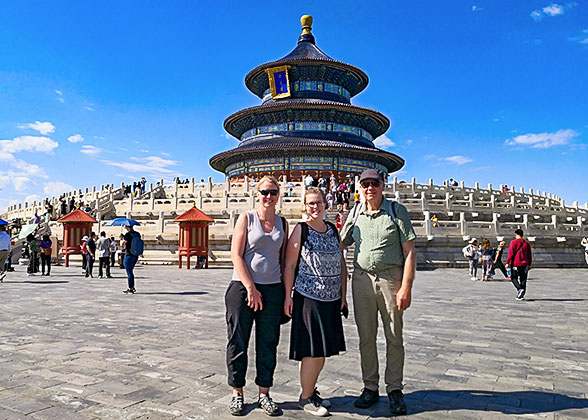
The temple's most iconic structure, this is where emperors held the Great Grain Prayer Ceremony. Its triple-eaved circular roof is covered in blue tiles to represent the heavens. Remarkably, the entire hall stands without steel, cement, or iron nails. Its massive weight rests on 28 towering wooden pillars joined by intricate mortise-and-tenon joints, a centuries-old engineering marvel known for exceptional strength and earthquake resilience.
This elegant circular building housed the spirit tablets used during sacrifices. It is famous for the Echo Wall that surrounds it. Due to the wall's smooth, continuous curve, a whisper at one end travels clearly to a listener 37 meters away on the opposite side, a sophisticated 15th-century acoustic design that allows sound waves to glide along the surface with minimal loss.
While the Hall of Prayer is more famous, this open-air altar was the temple's spiritual heart. Here, the Emperor performed the Winter Solstice sacrifices, the highest ritual act of communication with Heaven. Every design element reflects ancient reverence for the number nine, symbolizing the peak of yang (positive) energy and Heaven's absolute sovereignty: the altar's stone slabs, balustrade panels, and stair steps are all multiples of nine.
This 360-meter raised walkway connects the two main complexes above. It rises gently from south to north, symbolizing a climb from Earth to Heaven. It features three paths: the central "Spirit Way" for the gods, the "Imperial Way" for the Emperor, and the "Noble Way" for court officials.
The Temple of Heaven is more than its grand altars. If you have an extra hour, exploring these less-visited sites will add rich context and surprising stories to your visit. They reveal the intricate preparations and profound symbolism behind the rituals, which will turn your visit from a memorable sightseeing trip to a more complete understanding of this UNESCO masterpiece.
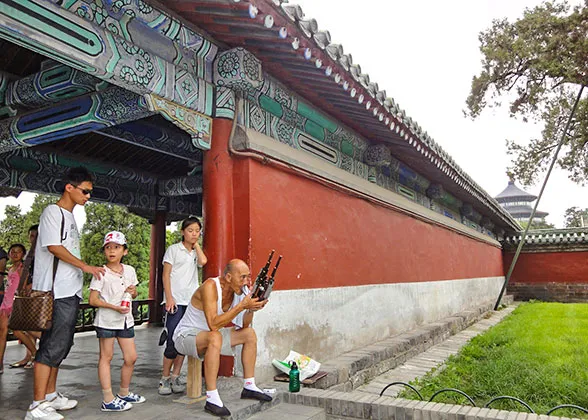
Long Corridor: Stroll this Beijing's Oldest Gallery where sacrificial offerings were once carried, now a vibrant spot to observe elegant beam paintings and local life.
Fasting Palace: Step into the emperor's secluded retreat for ritual purification, and explore exhibitions on ancient fasting traditions.
Divine Music Administration: Discover China's highest academy of ritual music, where you can see ancient instruments and costumes of imperial sacrificial music.
Altar of Prayer for Good Harvests Annexes: Explore the ritual's backstage: the North Divine Kitchen where sacred feasts were prepared, the North Animal-sacrifice Pavilion, and other auxiliary buildings that supported the grand ceremonies.
Seven Star Stones: These eight stones, arranged as the Big Dipper, originate from an emperor's magical dream.
Climb to the top of the Circular Mound Altar and stand on the Heart of Heaven, the exact center stone. Speak a wish, and your voice will bounce back with a resonant echo. It is said that this is the portal where your words are most audible to the divine, ensuring your prayers are echoed in the heavens.
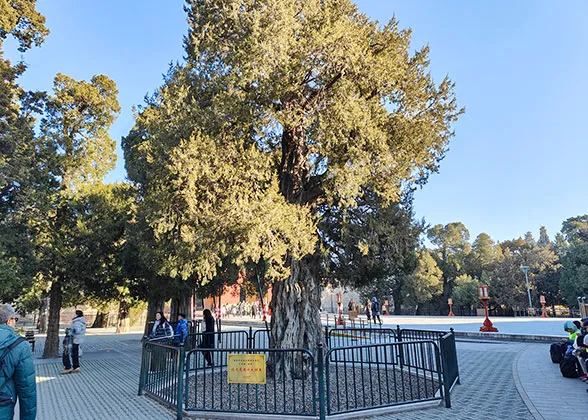
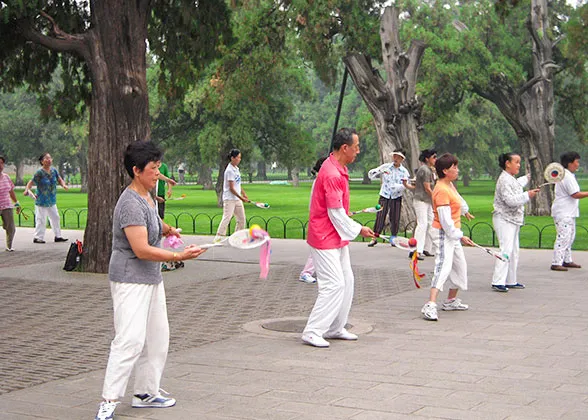
Arrive Temple of Heaven before 10:00 to see Beijing at its most authentic. You'll find retirees practicing Tai Chi, moving slowly but with deep focus. Others kick shuttlecocks high with heads, knees, and feet. Some crack long whips with sharp, rhythmic snaps. And on sunny mornings, people write Chinese characters on the pavement with giant water brushes. Stroll further and you'll encounter elders playing chess under the trees, or taking their caged birds for a walk. Join them if possible. Try a water brush or watch a chess match, which will make your experience more than being a tourist.
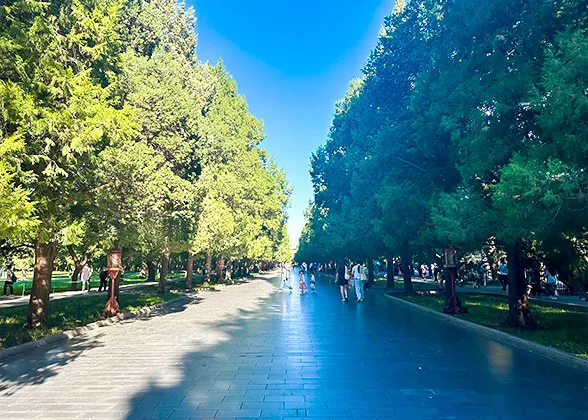
Step away from the main altars and into the ancient cypress forest. Many of the over 3,500 trees here are more than 600 years old. With towering, gnarled forms, they create a serene and ancient sacred atmosphere. Don't miss the famous Nine-Dragon Cypress; touching its coiled, weathered trunk feels like connecting directly with the deep, silent passage of time and the countless prayers that have lingered here.
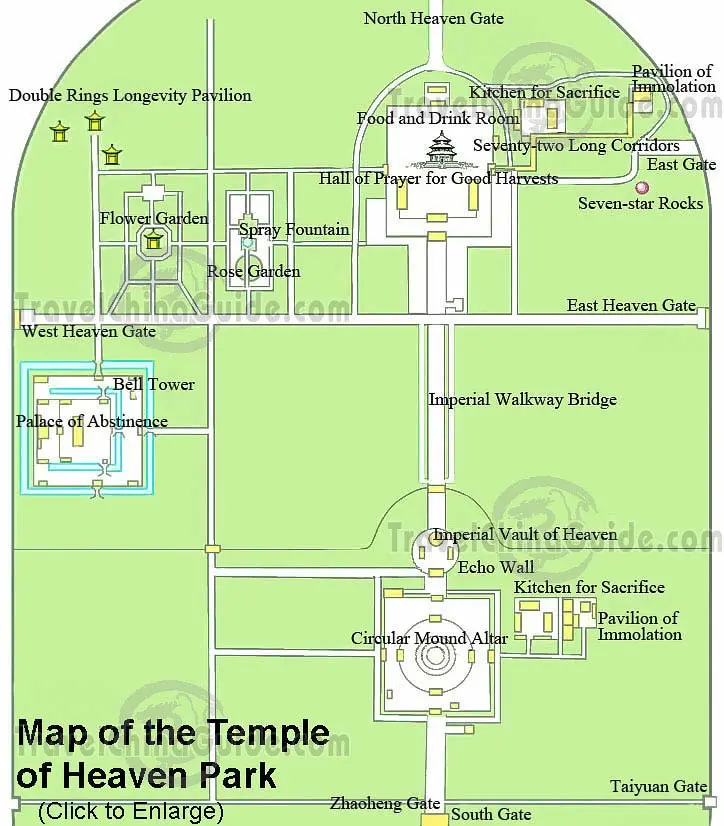
Enter through the North Gate, closest to the most highlighted Hall of Prayer for Good Harvests. Best if you are short on time or want to see the must visit first.
North Gate → Hall of Prayer for Good Harvests → East Annex Hall → West Annex Hall → Danbi Bridge → Echo Wall → Imperial Vault of Heaven → Three Echo Stones → Danbi Bridge → South Divine Kitchen → Circular Mound Altar → Lingxing Gates → Palace of Abstinence → Divine Music Administration
Follow the historical path of the Emperor, moving from south to north, low to high, and feeling the ceremony unfold step by step.
South Gate → Circular Mound Altar → South Divine Kitchen → Echo Wall → Imperial Vault of Heaven → Three Echo Stones → Red Stairway Bridge → East Annex Hall → Hall of Prayer for Good Harvests → West Annex Hall → Palace of Abstinence → Divine Music Administration
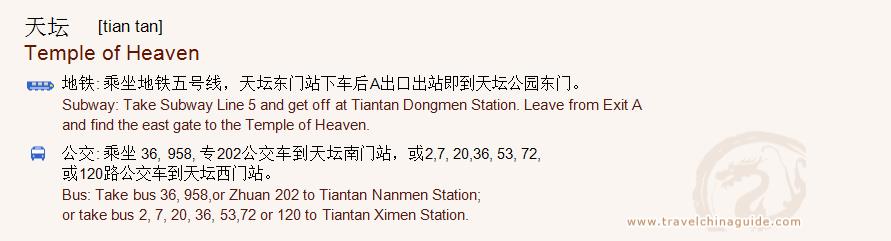
Take Subway Line 5 to Temple of Heaven East Gate Station; leave from Exit A, walk for about 5 minutes, and you'll find the East Gate of the Park.
Take Subway Line 8 to Tianqiao Station, take Exit C, walk eastward for about 10 minutes you will see the west gate.
South Gate: Take bus 36, 958 or 53 to Temple of Heaven South Gate Station.
North Gate: Take bus 6, 34, 35, 36, 72 or 106 and get off at Temple of Heaven North Gate Station.
East Gate: Take bus routes 6, 34, 35, 36, 39, 41, 43, 60, 72, 116, 128, 525, 599, or 684 and get off at Fahua Temple Station. Alternatively, take bus routes 54, 957, or 958 and get off at Temple of Heaven Stadium Station.
West Gate: Take bus 2, 7, 20, 36, 53, 72, 93, or 120 and get off at Temple of Heaven West Gate Station.
See more about Beijing Bus / Subway Search
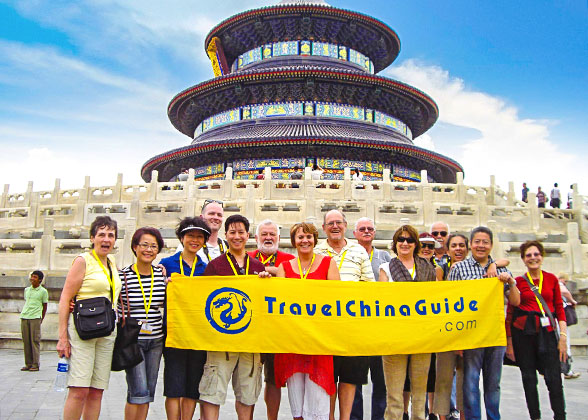 |
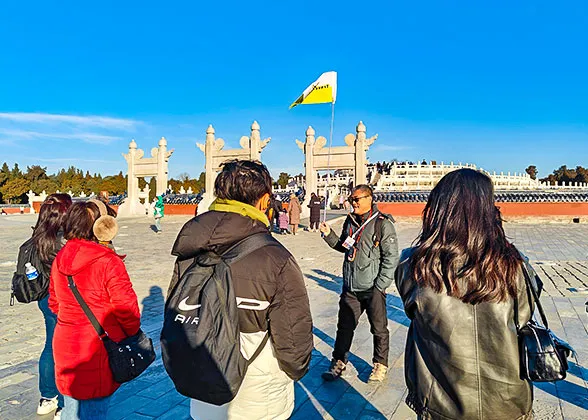
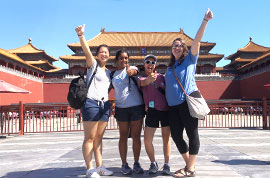
| Our Tour Group in the Temple of Heaven |
History: When & Why was the Temple of Heaven Built?
Construction began in 1420 during the Ming Dynasty. Originally, it was the "Altar of Heaven and Earth," where both entities were worshipped together. In 1530, the rites were separated, and the site was renamed the Temple of Heaven. The landmark we see today took its final form in the 18th century when the Hall of Prayer for Good Harvests was fitted with its iconic blue-glazed tiles to better symbolize the sky.
The temple served three vital functions rooted in power, belief, and practicality:
To affirm the emperor's divine authority: In ancient China, rulers claimed the Mandate of Heaven. Their right to rule came straight from above. Holding grand ceremonies here showed everyone that his rule was sanctioned and protected by Heaven itself.
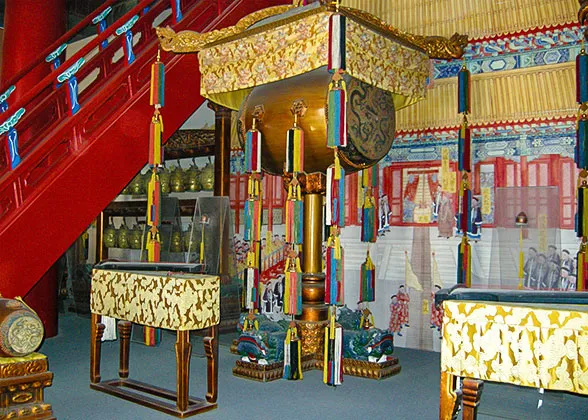 |
| Restored Ritual Scene, Temple of Heaven |
To pray for harvests and harmony: China was an agrarian society. Natural forces like rain, sun, and wind were all viewed from believed to be governed by Heaven. This temple became the nation’s central place to honor that power and ask for balance, fertility, and good seasons favorable weather.
Prior to its construction, emperors had to undertake arduous journeys to distant sacred sites like Mount Tai to perform major sacrifices. Building a dedicated, nearby altar complex allowed for these crucial ceremonies to be held regularly and efficiently, eliminating the need for exhausting travel and minimizing disruptions.
To make ritual efficient and accessible: Before the temple Prior to its construction, emperors had to travel far for major sacrifices, often to Mount Tai. Building a dedicated, nearby altar meant ceremonies could be held regularly, without exhausting journeys or last-minute delays.
Read More: Heaven Worship CultureTemple of Heaven Layout: "Round Heaven, Square Earth" & "Heaven Reigns Supreme"
The Temple of Heaven is a physical map of ancient Chinese cosmology, rooted in the philosophy of "Round Heaven, Square Earth". This is most visible in the park's perimeter: the northern walls are rounded to mirror the sky, while the southern walls remain square to represent the earth. As you move north, the ground elevation rises subtly, guiding visitors on a symbolic ascent from the terrestrial realm toward the celestial. This geometry extends to the monuments themselves, most notably where the circular altars rest upon square bases, fusing the two cosmic forces into a single architectural image.
This symbolism also explains the temple's staggering scale. Spanning 2.7 million square meters, the complex is nearly four times larger than the Forbidden City. This was not a display of imperial vanity, but an act of ritual humility. As the "Son of Heaven," the Emperor's earthly residence—the Forbidden City—could never surpass the majesty of the gods. By making the Temple of Heaven vastly larger and higher than his own palace, the Emperor visually signaled to his subjects that his authority was secondary to the divine, ensuring the architectural hierarchy matched the spiritual one.
See More about Temple of Heaven: Top 10 Facts & Top 15 FAQsMust-See Buildings
The temple's most iconic structure, this is where emperors held the Great Grain Prayer Ceremony. Its triple-eaved circular roof is covered in blue tiles to represent the heavens. Remarkably, the entire hall stands without steel, cement, or iron nails. Its massive weight rests on 28 towering wooden pillars joined by intricate mortise-and-tenon joints, a centuries-old engineering marvel known for exceptional strength and earthquake resilience.
|
|
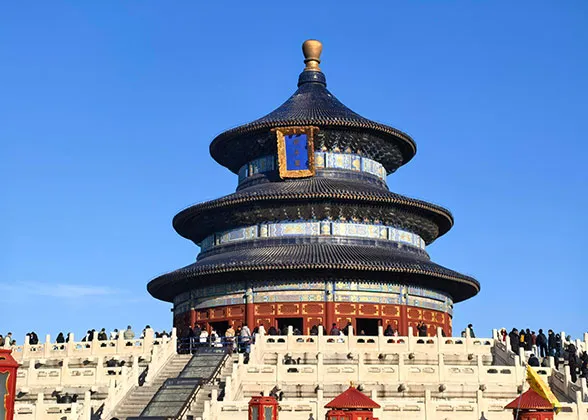
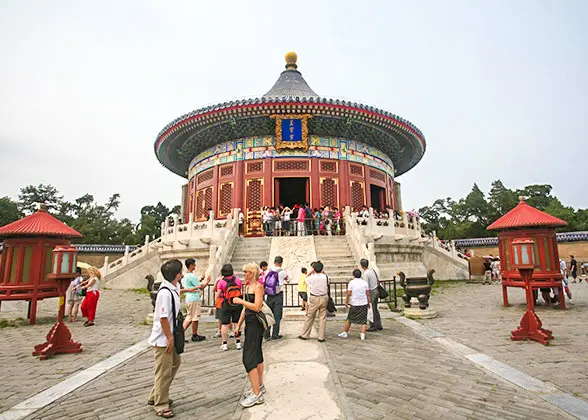
Imperial Vault of Heaven & Echo Wall
This elegant circular building housed the spirit tablets used during sacrifices. It is famous for the Echo Wall that surrounds it. Due to the wall's smooth, continuous curve, a whisper at one end travels clearly to a listener 37 meters away on the opposite side, a sophisticated 15th-century acoustic design that allows sound waves to glide along the surface with minimal loss.
While the Hall of Prayer is more famous, this open-air altar was the temple's spiritual heart. Here, the Emperor performed the Winter Solstice sacrifices, the highest ritual act of communication with Heaven. Every design element reflects ancient reverence for the number nine, symbolizing the peak of yang (positive) energy and Heaven's absolute sovereignty: the altar's stone slabs, balustrade panels, and stair steps are all multiples of nine.
|
|
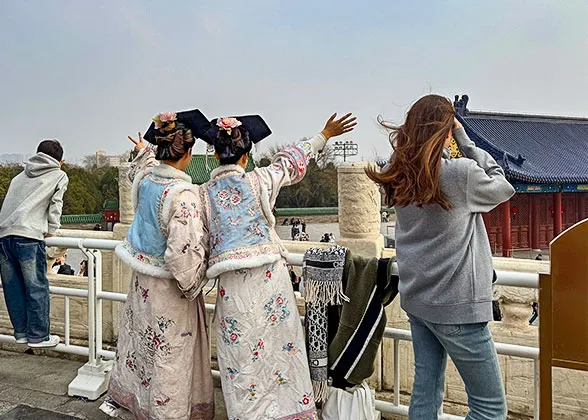
This 360-meter raised walkway connects the two main complexes above. It rises gently from south to north, symbolizing a climb from Earth to Heaven. It features three paths: the central "Spirit Way" for the gods, the "Imperial Way" for the Emperor, and the "Noble Way" for court officials.
Deepen Your Visit at Temple of Heaven
The Temple of Heaven is more than its grand altars. If you have an extra hour, exploring these less-visited sites will add rich context and surprising stories to your visit. They reveal the intricate preparations and profound symbolism behind the rituals, which will turn your visit from a memorable sightseeing trip to a more complete understanding of this UNESCO masterpiece.
Long Corridor: Stroll this Beijing's Oldest Gallery where sacrificial offerings were once carried, now a vibrant spot to observe elegant beam paintings and local life. Fasting Palace: Step into the emperor's secluded retreat for ritual purification, and explore exhibitions on ancient fasting traditions. Divine Music Administration: Discover China's highest academy of ritual music, where you can see ancient instruments and costumes of imperial sacrificial music. Altar of Prayer for Good Harvests Annexes: Explore the ritual's backstage: the North Divine Kitchen where sacred feasts were prepared, the North Animal-sacrifice Pavilion, and other auxiliary buildings that supported the grand ceremonies. Seven Star Stones: These eight stones, arranged as the Big Dipper, originate from an emperor's magical dream.Top Things to Do
Make a Wish on Heaven's Heart
Climb to the top of the Circular Mound Altar and stand on the Heart of Heaven, the exact center stone. Speak a wish, and your voice will bounce back with a resonant echo. It is said that this is the portal where your words are most audible to the divine, ensuring your prayers are echoed in the heavens.
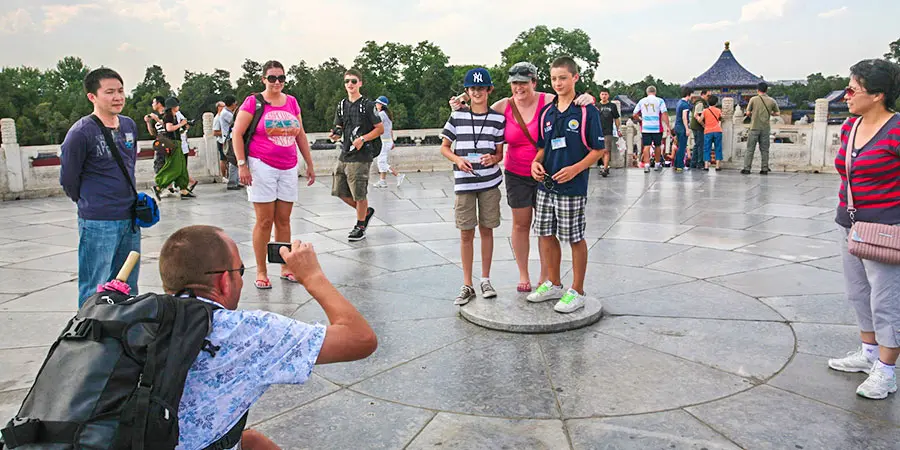 |
| Tourists on the Circular Mound Altar |
Watch & Join the Local Life
Arrive Temple of Heaven before 10:00 to see Beijing at its most authentic. You'll find retirees practicing Tai Chi, moving slowly but with deep focus. Others kick shuttlecocks high with heads, knees, and feet. Some crack long whips with sharp, rhythmic snaps. And on sunny mornings, people write Chinese characters on the pavement with giant water brushes. Stroll further and you'll encounter elders playing chess under the trees, or taking their caged birds for a walk. Join them if possible. Try a water brush or watch a chess match, which will make your experience more than being a tourist.
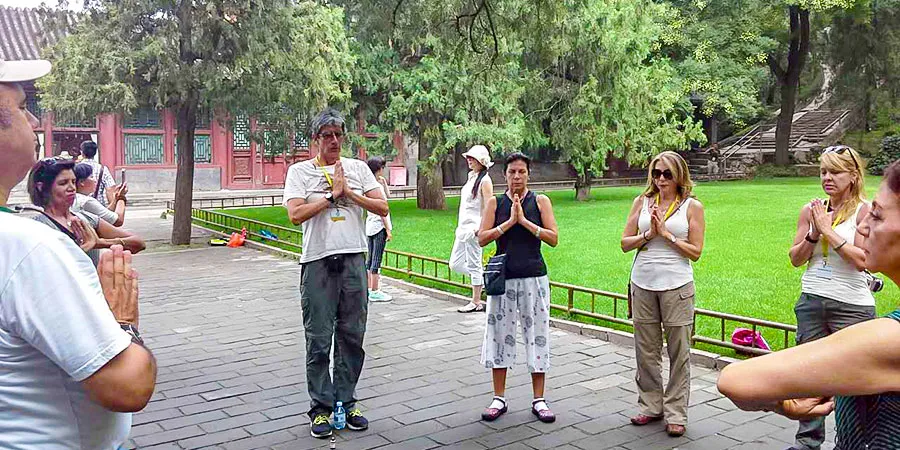 |
| Join the Local Life in Temple of Heaven |
Touch 600-Year-Old Guardian Cypresses
Step away from the main altars and into the ancient cypress forest. Many of the over 3,500 trees here are more than 600 years old. With towering, gnarled forms, they create a serene and ancient sacred atmosphere. Don't miss the famous Nine-Dragon Cypress; touching its coiled, weathered trunk feels like connecting directly with the deep, silent passage of time and the countless prayers that have lingered here.
|
|
Two Smart Ways to Explore Temple of Heaven
Quick & Impactful (2–2.5 Hours)
Enter through the North Gate, closest to the most highlighted Hall of Prayer for Good Harvests. Best if you are short on time or want to see the must visit first.
North Gate → Hall of Prayer for Good Harvests → East Annex Hall → West Annex Hall → Danbi Bridge → Echo Wall → Imperial Vault of Heaven → Three Echo Stones → Danbi Bridge → South Divine Kitchen → Circular Mound Altar → Lingxing Gates → Palace of Abstinence → Divine Music Administration
|
|
The Imperial Pilgrimage Route (3–3.5 Hours)
 |
| Map of Temple of Heaven (Click to enlarge) |
Follow the historical path of the Emperor, moving from south to north, low to high, and feeling the ceremony unfold step by step.
South Gate → Circular Mound Altar → South Divine Kitchen → Echo Wall → Imperial Vault of Heaven → Three Echo Stones → Red Stairway Bridge → East Annex Hall → Hall of Prayer for Good Harvests → West Annex Hall → Palace of Abstinence → Divine Music Administration
How to get to Temple of Heaven
By Subway
Take Subway Line 5 to Temple of Heaven East Gate Station; leave from Exit A, walk for about 5 minutes, and you'll find the East Gate of the Park.
Take Subway Line 8 to Tianqiao Station, take Exit C, walk eastward for about 10 minutes you will see the west gate.
By Bus (all within 5-minute walk after getting off)
South Gate: Take bus 36, 958 or 53 to Temple of Heaven South Gate Station.
North Gate: Take bus 6, 34, 35, 36, 72 or 106 and get off at Temple of Heaven North Gate Station.
East Gate: Take bus routes 6, 34, 35, 36, 39, 41, 43, 60, 72, 116, 128, 525, 599, or 684 and get off at Fahua Temple Station. Alternatively, take bus routes 54, 957, or 958 and get off at Temple of Heaven Stadium Station.
West Gate: Take bus 2, 7, 20, 36, 53, 72, 93, or 120 and get off at Temple of Heaven West Gate Station.
See more about Beijing Bus / Subway SearchTicket Fee
| Ticket Type | Apr. - Oct. | Nov. - Mar. |
|---|---|---|
| Entrance Fee | CNY 15 | CNY 10 |
| Hall of Prayer for Good Harvests, Circular Mound Altar & Echo Wall | CNY 20 | CNY 20 |
| Divine Music Administration | CNY 10 | CNY 10 |
| Combo Ticket (including all above) | CNY 34 | CNY 28 |
| Audio Guide | Position: At the four gates Time: 8:00—17:00 Languages: Cantonese, English, Japanese, Korean, French, German, Spanish Rental: CNY 40; CNY 100 as deposit. | |
Temple of Heaven Tickets BookingOpening Hours
| Apr. - Oct. | Nov. - Mar. | |
|---|---|---|
| Main Entrances | 06:00 - 22:00; last entry 21:00 | 06:30 - 22:00; last entry 21:00 |
| Main Attractions Inside | 08:00 - 18:00; last entry 17:30 | 08:00 -17:00; last entry 16:30 |
Recommended Time for a Visit: 2-4 hours.
The main attractions inside close on Mondays except for public holidays.
 Nearby it, there are many interesting places to see. Taoranting Park is few blocks west of it, with Beijing Ancient Architecture Museum in between. Beijing Museum of Natural History is next to the west gate. Get out of Tiantan Dongmen Subway Station of Line 5 from Exit A, you can see the Hongqiao Pearl Market on the other side of the road. Walk north and you will see the Ming Dynasty City Wall Relics Park. Top 10 Things to Do in Beijing 15 Wonderful Places to See Snow in Beijing Top 10 Beijing Historical Sites You Should Not Miss
Recommended Tours
- Last updated on Apr. 23, 2026 by Jally Zhang -