Chongqing China Three Gorges Museum
 |
| Three Gorges Museum |
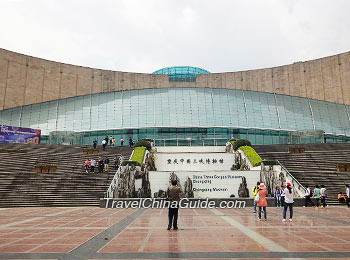
The exterior of the museum has cambered walls and vitreous dome, representing the historical culture of Three Gorges Dam Project and its origins. In addition, there are large-scale reliefs, bronze sculptures and an 'Ecological Corridor' that is 1,100 yards in length (about one kilometer).
Chongqing Three Gorges Museum occupies a whole area of 50,828 square yards (about 42,497 square meters). The exhibition hall covers 27,778 square yards (about 23,225 square meters) and houses more than 180 thousand collections, including chinawares, ancient coins, jade wares and silk products.
Four Basic Displays:
 Glorious Three Gorges - reflects the cultural and historical spirits of the Three Gorges. Ancient Ba-Yu - introduces the ancient civilization of Chongqing and origin of the more than 3,000 years of history by showcasing cultural heritages in the Stone Age and Bronze Age. Chongqing: the City Road - describes the changes and challenges this city experienced in the 20th century. Years of the Anti-Japanese War (1937-1945) - records the wartime ordeals people in this city had gone through.
Six Themed Displays:
- Paintings and calligraphies through the ages
- Porcelain articles of various dynasties
- Coins of various dynasties
- Sculptures of the Han Dynasty (206BC-220AD)
- Folk customs of the people in southwest China
- Cultural relics donated by Li Chuli
Another important exhibit is a 180 panorama of war-torn Chongqing depicting the city, when as the provisional capital of China, it was subjected to substantial bombardment by the Japanese over several years. There is also a 360 cinema for the Three Gorges that mainly shows the natural and social sceneries of the Three Gorges prior to the construction of the Three Gorges Dam. The cinema can hold 250 audiences.
Chongqing China Three Gorges Museum appeals to visitors from all over the world by its special culture, advanced high-tech and unique management. It has been an important platform of cultural exchanges of the Three Gorges area.
|
|


Transportation
 By Subway:
Take metro line 2 and get off at Zengjiayan Station.
 By Bus:
1. Take tourism bus line 480 and get off at Three Gorges Museum Station.
2. Take bus line 112, 132, 145, 152, 181, 262, 322, 338, 421, 810, 829, 862 or 881 and get off at Da Li Tang (People's Assembly Hall) Station.
| Entrance Fee | Free (visitor limitation is 5,000 every day) |
| Three Gorges Circular-screen Movie | Free, available at 10:30, 14:30 and 15:30. Visitors should enter the cinema 10 minutes in advance. |
| Opening Hours | 09:00 - 17:00 (Last entry at 16:00) * Close on Monday. |
| Guide Service | The museum provides guide service which costs CNY 100-200 per time for a group (60-90 minutes including four basic exhibition halls). There are volunteer guides also, but periodically. You can enquiry at the entrance to the Ancient Coins Exhibition Hall. Audio guide can be rent with a payment of CNY 10 per person with a deposit of CNY 300 (CNY 100 if showing you ID card or passport). |
Top 10 Things to Do in Chongqing