Dunhuang Museum
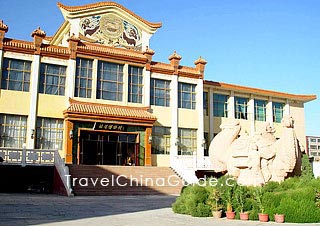 |
| Dunhuang Museum, Gansu |
Generally speaking, all of the exhibits in Dunhuang Museum are displayed in three sections. In the first section the written sutras from the No.17 cave of the Mogao Caves in Dunhuang are shown. The written sutras are real evidence of Buddhist activities in Chinese history. In the second section next to the sutras a selection of the relics excavated from the graves in the Han Dynasty (206B.C.-220), Jin Dynasty (265-420), Sui Dynasty (581-618), and Tang Dynasty (618-907) are displayed. In this section you will see the stone pagoda, pottery box and stone beast figure which was set in a grave and believed to drive the monsters or evil away. Kylin brick is a special kind of brick carved in high relief (a method of carving in which the design stands out from the flat surface) containing an incised inscription. Kylin is a mythical unicorn in Chinese legends and it was carved on the brick so vividly that it seems to gallop and fly. As an important city on the Silk Road, Dunhuang once was a major trade center in Western China. The third section of the display holds a number of exhibits which illustrate Dunhuang's flourishing culture including some exquisite silk floret brocade and bamboo slips used for writing. Additionally, iron and bronze tools and weapons are also displayed in Dunhuang Museum.
Dunhuang Museum also exhibits relics excavated from the local area, such as paper, coins, a model of the Great Wall as it appeared during the Han Dynasty and a torch from one of its beacon towers. There is a special room for the paintings and calligraphy work of well-known artists through the ages. This room also holds priceless hand-copied books on ancient geography, military history and sutras written in the Tibetan language.
The Dunhuang Museum reflects the flourishing social development and cultural exchange between China and the West during the time when Dunhuang was a major center along the Silk Road. A trip to the Dunhuang Museum will provide visitors with a greater understanding of the history and culture of the Chinese people and their ancient civilization.
How to get to Dunhuang Museum
2. Take Dunhuang Bus 1 to Jinya Binguan, and then walk north for 5 minutes to the museum.
| Entrance Fee | Free |
|---|---|
| Opening Hours | May - Sep.: 9:00 - 18:30; Oct. - Apr.: 9:00 - 18:00; Closed on Mondays; Ticket hours stops an hour earlier. |
 Nearby Attractions:
 White Horse Pagoda
- Last updated on Aug. 01, 2018 -