Bund No.1 : Former Asia Building
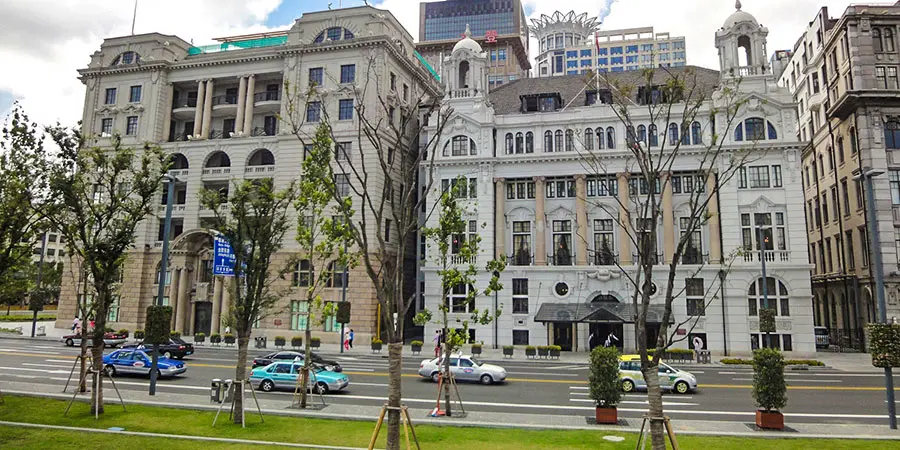
The Former Asia Building, located at the southernmost part of the Bund in Shanghai, is the first building on the Bund and so is renowned as “Bund No.1”. Built in 1916, it was originally called the McBain Building, but later renamed “Asia Building” due to the presence and influence of the Asiatic Petroleum Company in China. It now houses the headquarters of China Pacific Insurance Company. The eight-story building features an eclectic architectural style, constructed with granite and exposed brick; its base and top incorporate Baroque elements, while the central section adopts a modernist design. If you want to experience the splendor of the historical architectures along the Bund, this building is the perfect starting point.
Bund No.2 : Former Shanghai Club Building
Shanghai Club Building, also known as Bund No.2, was once the principal social club for British nationals in Shanghai constructed in 1861, featuring three stories and red bricks. It was then partly torn down and rebuilt in 1910 with reinforced concrete in a neo-classical design. The second-generation building has six floors, including five floors above ground and one underground. The central part of the building is supported by six Ionic stone columns, and two Baroque observation towers are built at the top on the north and south sides. Over time, this building has successively become the East Wind Hotel, the location of the first KFC in Chinese mainland, and now it is the Waldorf Hotel. Visitors can enter and take photos without making a reservation, witnessing the 34-meter-long bar counter in Far East, enjoying the retro spiral staircase and manual triangular elevator, as well as the magnificent century-old crystal chandeliers and arched glass ceilings.
Bund No.3 : Former Union Building
This Renaissance-style building, constructed in 1916, is the earliest one in Shanghai to use steel frames. It was named after the original investor, the Union Insurance Society of Canton. The building has six floors, with its facade located at the corner of the Bund on Guangdong Road and decorated in Baroque style. Both sides are symmetrical, with Ionic columns supporting them, and the top features a gourd-shaped roof with Islamic style. It used to be the residence of insurance companies and architectural design firms, but now it has been transformed into Bund No.3, becoming a high-end consumer venue that includes luxury brand stores, art galleries, and restaurants.
Bund No.5 : Former Nissin Building
Built in 1925, this six-story architecture was used to house the Japanese shipping firm, Nissin Navigation Company. Its main facade is divided into three sections, blending elements of modern Japanese-Western style and European classicism. Currently, the first floor is used by Evergrowing Bank, while the upper floors are for upscale dining. Except for the rooftop terrace and the interior of the restaurants which require consumption to enter, other public areas can be visited for free.
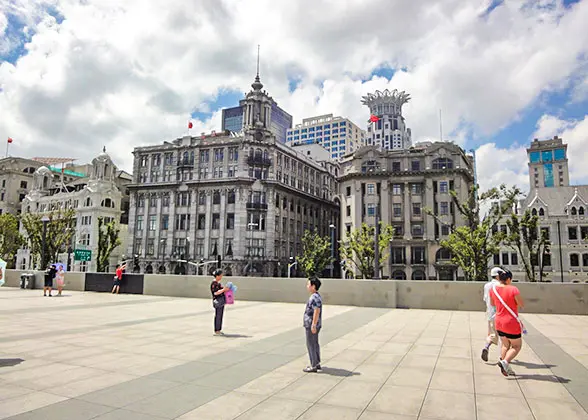 | | Bund No.3 and Former Nissin Building (No.5) | | 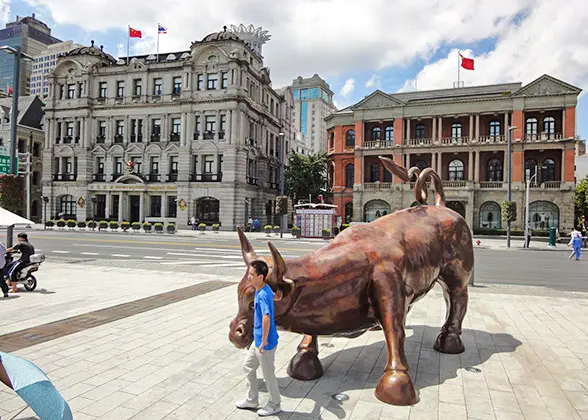 | | Bund No.6 and China Merchants Company Building (No.9) | |
Bund No.6 : Former Commercial Bank of China Building
This is the first modern bank founded by Chinese in 1897, later used by the Yangtze River Shipping Company. It is now commonly known as Bund No.6, one of the oldest buildings remaining on the Bund, and combines luxury flagship stores with high-end restaurants. The building, featuring an overall style of Victorian Gothic, has four floors, with a row of small spires on the top floor. The second and fourth floors house a Japanese restaurant and an Italian restaurant respectively, both having terraces, which are particularly suitable for enjoying delicious meals while appreciating the outdoor scenery of the Bund. As a reminder, advance reservations via the WeChat Mini Program are required. Besides, there are public areas open to visitors free of charge, where you can admire the spiral staircase, architectural decorations, and pointed arch windows, ect.
Bund No.7 : The Former Great Northern Telegraph Company Building
The building was completed in 1907. It is four-story high, with the main facade designed entirely in the style of European Renaissance architecture. Both horizontally and vertically, it presents a three-section division and symmetrical composition. The main entrance and window frames have Baroque columns and decorations, with an elegant appearance. Compared to other buildings on the Bund, its decorative details are more abundant. Approaching this building, the most prominent sign is the deep red image of the Thai national emblem, the roc bird, on the lintel. It is awarded by the Thai royal family to institutions that have made outstanding contributions to Thailand, which also indicates the current identity of this building, namely the Shanghai branch of Bangkok Bank of Thailand. It should be noted that the building is only accessible to bank customers and not open to the public.
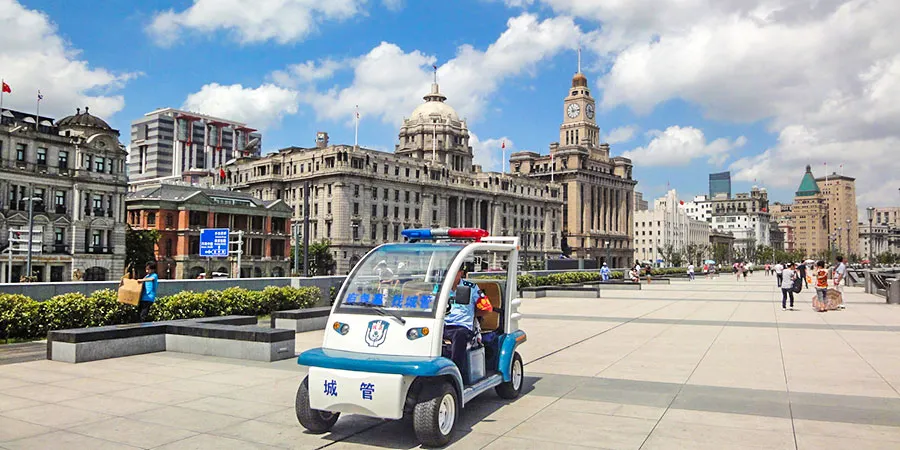 |
| Building Group along the Bund |
Bund No.9 : China Merchants Company Building
China Merchants Company Building is an important witness to China’s early modernization and is also a national key cultural relic protection unit. Its history dates back to 1877, when the Qing Dynasty’s Ministry of Trade acquired the bankrupt American Russell Company and established the China Merchants Steam Navigation Company. Having weathered numerous renovations over the years, its appearance today bears little resemblance to its original form from a century ago. The structure features a distinctive architectural style—a late Victorian-era neoclassical external corridor design, making it one of only two red-brick buildings in the Bund’s gray architectural ensemble (the other being the South Building of the Peace Hotel). The ground floor boasts stone-clad walls, while the second and third floors showcase clean red-brick facades. The central section of the main facade features a double-columned external corridor, and the roof incorporates traditional Chinese light green stone slabs, blending Eastern and Western elements masterfully. Today, it remains the Shanghai office of the China Merchants Group, with a “Century Voyage of China Merchants” exhibition hall on the first floor displaying ship models, old seals, and other artifacts. Though not open to the public, this meticulously restored century-old structure continues to stand as a unique presence in the Bund’s “International Architectural Ensemble”, embodying both historical depth and architectural beauty.
Bund No.10-12 : Shanghai Pudong Development Bank
Constructed in 1923, the building used to house Hongkong and Shanghai Banking Corporation Limited (HSBC) and it was once known as “the most exquisite building from the Suez Canal to the Bering Strait in the Far East”, and was also the world’s largest bank building in the Far East, second only to the Bank of Scotland building in the United Kingdom.
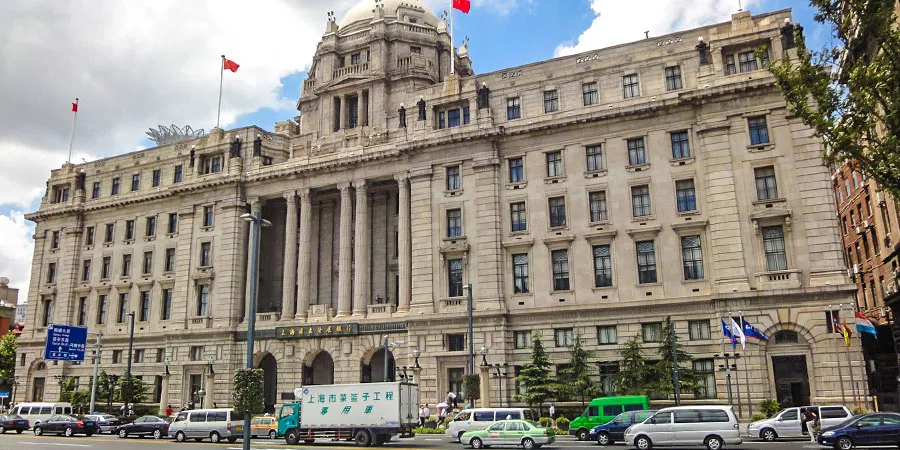 |
| Shanghai Pudong Development Bank (No.12) |
The building has 7 floors, with a brick and stone structure on the outer layer, adopting a classical style. The main body of the building is divided into three sections vertically and horizontally, symmetrical on both sides. The middle section at the bottom is supported by three stone arches, while the upper section is supported by six Ionic round columns. The top is a Greek style dome, which is very spectacular. On both sides of the main entrance of the building are copper lions with open and closed mouths, which have become important symbols of this wonder. The interior decoration of the building is even more exquisite, especially the 33 murals on its dome, which can be directly seen from the entrance hall. The murals mainly feature the twelve constellations and images of the sun and moon gods. In addition, there is a delicate scissor shaped marble staircase at the southern end of the hall, with a large clock embedded above the intersection of the stairs. Its internal movement drives the operation of the entire building’s 12 sub-clocks. Nowadays, it has become the headquarters of Shanghai Pudong Development Bank Co., Ltd. and is still recognized as the most beautiful building in the Bund complex. Along with the Customs House (Bund No. 13) to the north, it is also the venue for the Bund 4D Light Show every New Year. Tourists who come to the Bund and are obsessed with architectural aesthetics can make an appointment in advance through WeChat official account to have an immersive visit.
 FAQ on the Bund
- Last updated on Feb. 13, 2026 by Shelly Wang -
 Huangpu River and the Bund Pictures
 Video of the Bund of Shanghai